
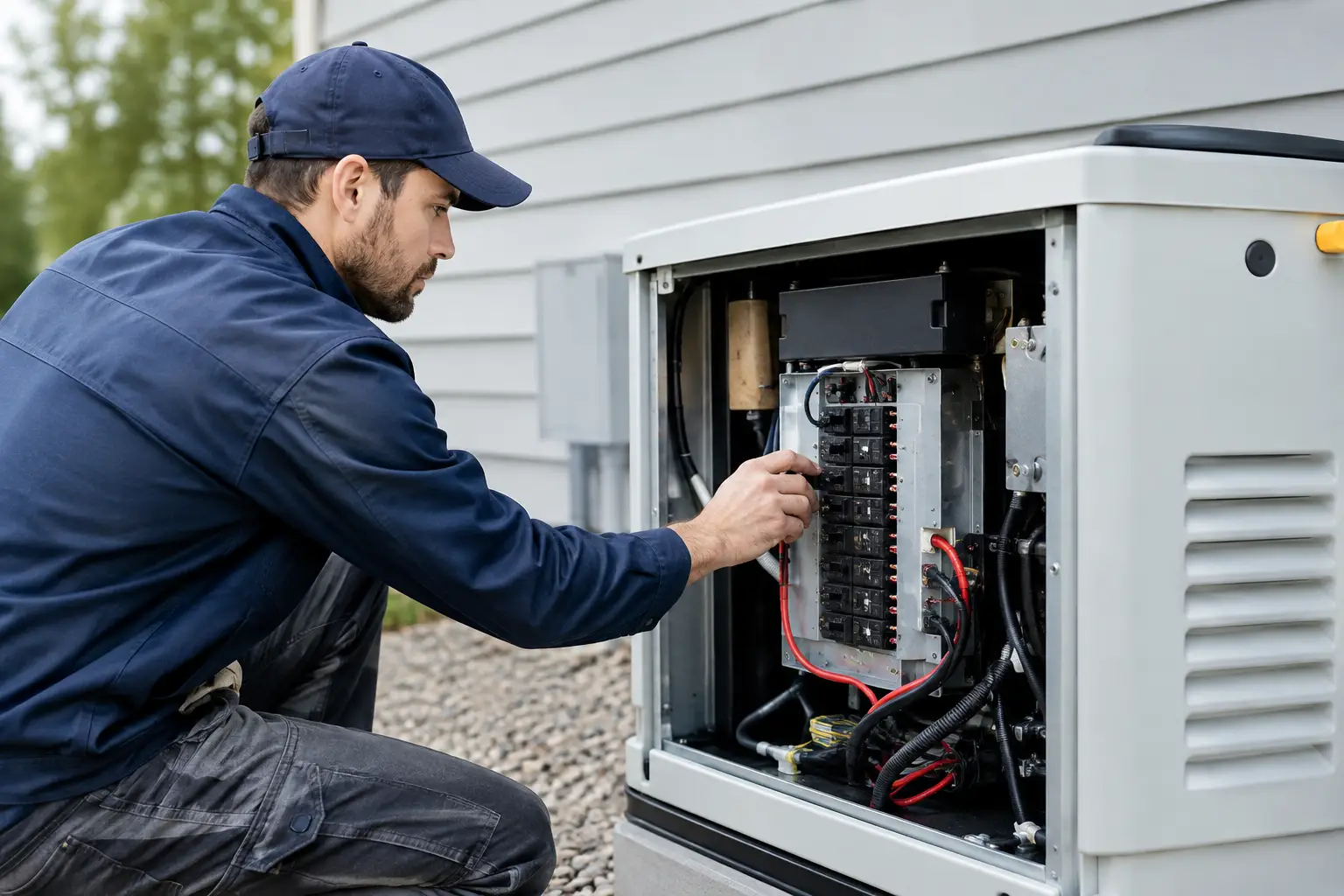
A generator that starts correctly but suddenly loses power can be frustrating, especially when Houston-area storms have already taken the utility grid down. So, why does generator breaker trip? The breaker is doing its job: it opens the circuit when it detects a condition that could overheat wiring, damage equipment, or create a fire or shock hazard.
The cause may be as simple as too many appliances starting at once. It can also point to an electrical fault, an undersized system, a failing breaker, or a problem in the generator itself. The right response is not to keep resetting the breaker. A repeated trip needs a methodical diagnosis before backup power is placed back in service.
First, Identify Which Breaker Tripped
A standby generator system has more than one protective device. The breaker on the generator protects the generator’s output circuit. A branch breaker inside the home’s main electrical panel protects an individual circuit, such as the kitchen outlets or air conditioner. The automatic transfer switch also controls how utility and generator power are isolated and transferred.
That distinction matters. If the generator’s main output breaker trips, the issue may involve total electrical demand, generator wiring, or the generator’s alternator and controls. If one breaker in the electrical panel trips, the problem may be limited to a connected appliance, a circuit, or wiring within the building.
For commercial properties, the same principle applies on a larger scale. A tripped generator breaker may relate to a motor load, rooftop HVAC equipment, pumps, refrigeration, or a distribution-panel fault. Identifying what was running immediately before the trip gives a technician a useful starting point.
Why Does a Generator Breaker Trip Under Load?
The connected load exceeds generator capacity
Overload is one of the most common causes. Every generator has a defined electrical output limit. When the home or facility asks for more power than the generator can safely provide, the breaker trips to prevent excessive heat and equipment damage.
High-demand equipment often creates the problem. Central air conditioning, electric heat strips, electric water heaters, dryers, ovens, well pumps, pool equipment, compressors, and commercial refrigeration can consume significant power. Even when a generator is sized to carry the normal running load, several motors starting at the same time can create a short but substantial surge.
A properly designed standby system accounts for essential loads, motor starting demand, and the customer’s priorities during an outage. It may be practical to power one or two air-conditioning systems, refrigeration, lighting, internet equipment, security, and selected outlets. It may not be practical to run every large electric appliance at the same time. The balance depends on the generator’s capacity and the electrical design of the property.
A short circuit or ground fault is present
A breaker can also trip because current is taking an unintended path. Damaged wiring, loose connections, moisture in an outdoor box, a failing appliance, or rodent damage can create a short circuit or ground fault.
These faults can occur only when a particular circuit is energized. For example, the generator may run normally until power reaches a detached garage, an outdoor receptacle, a condensate pump, or a piece of commercial equipment. Resetting the breaker without isolating the affected circuit can worsen the damage.
Storm conditions deserve extra attention. Standing water, wind-driven rain, and damaged exterior equipment can introduce moisture where it does not belong. If a breaker trip follows severe weather, do not assume the generator is the source of the problem.
A motor is struggling to start or failing
Motors draw more electricity at startup than during normal operation. An aging air-conditioning compressor, blower motor, freezer compressor, sump pump, or commercial motor may draw excessive current and trip the breaker when it tries to start.
This is not always a generator sizing problem. A generator that previously handled the same load may begin tripping because the connected equipment is deteriorating. A qualified technician can measure startup and running demand, inspect the circuit, and determine whether the equipment, controls, or generator capacity is the limiting factor.
The generator output breaker is weak or damaged
Circuit breakers are mechanical and electrical components. Heat, vibration, corrosion, age, and repeated overload events can affect their performance. A weak breaker may trip below its rated capacity, feel loose, fail to reset firmly, or show signs of heat discoloration.
Breaker replacement is not a do-it-yourself repair. The replacement must be correctly rated and compatible with the generator equipment. Installing a larger breaker to stop nuisance trips is unsafe because it can leave conductors and generator components without proper protection.
Generator Conditions That Can Lead to Trips
The breaker may not be the original problem. A generator that is poorly maintained or operating outside normal parameters can cause protective devices to respond.
Low fuel pressure is one example. Natural gas and propane generators need adequate fuel supply under load, not merely enough pressure to start and idle. An undersized gas line, restricted regulator, low propane level, or fuel-system issue can make the engine struggle when large loads come online. The result may be unstable frequency or voltage, engine shutdown, or electrical protection events.
Battery and charging problems can also affect reliable operation, although they more commonly cause starting concerns. On liquid-cooled commercial units, cooling-system problems, low oil pressure, and engine faults may trigger shutdowns that owners sometimes mistake for a breaker trip. The controller’s fault history helps separate an engine protection shutdown from an actual electrical breaker event.
Alternator, voltage-regulator, control-board, and internal wiring issues are less common but require professional testing. These components should be evaluated with the generator de-energized and according to manufacturer procedures. Standby generators contain high voltage, automatic starting capability, and fuel sources that demand careful service practices.
What to Do When the Generator Breaker Trips
Start by reducing risk. Turn off or disconnect large nonessential loads if you can do so safely. Do not open live panels, bypass a breaker, or repeatedly force a breaker back on. If you smell burning insulation, see smoke, hear arcing, or find water near electrical equipment, leave the system off and arrange immediate professional service.
If the breaker has tripped once and there are no signs of damage, note what was operating at the time. Was the air conditioner starting? Did the dryer, oven, or pump come on? Did the outage begin during heavy rain? Was a new appliance or piece of equipment recently added? These details help narrow the diagnosis.
After loads are reduced, a single reset may be appropriate only if the equipment instructions permit it and there is no evidence of an electrical fault. If the breaker trips again, stop resetting it. Persistent trips mean the underlying condition has not been corrected.
For an automatic standby generator, check the controller display for warning messages and fault codes. Do not clear a fault code before recording it. That record can help a service technician determine whether the event involved overload, low voltage, overspeed, fuel supply, or another operating condition.
Preventing Future Breaker Trips
Prevention begins during system design. Load calculations should reflect how the property actually operates during an outage, including air conditioning, refrigerators and freezers, medical equipment, security systems, internet connectivity, pumps, and business-critical loads. A smaller generator may cost less initially, but it requires more load management. A larger unit may provide greater comfort and operational continuity, but it also changes equipment, fuel, and installation requirements.
A turnkey installation should also address correctly sized electrical conductors, the automatic transfer switch, fuel supply, permits, grounding and bonding requirements, and final operational testing. Those details determine whether the generator can carry intended loads safely when the grid is unavailable.
Scheduled maintenance is equally practical. Exercise cycles confirm that the generator starts, but a service visit can also inspect connections, test battery condition, review fault history, check fuel performance, and identify issues before an outage exposes them. Properties with changing electrical needs should have their generator capacity reviewed before adding major HVAC equipment, pumps, appliances, or commercial loads.
Texas Direct Generators helps homeowners and businesses address these issues from system evaluation and repair through load planning, fuel coordination, and ongoing maintenance. A properly sized and professionally serviced standby system is designed to protect the equipment as well as the comfort, safety, and operations that depend on it.
When a generator breaker trips, treat it as useful protection rather than an inconvenience to override. A clear record of the conditions, paired with a qualified electrical and generator inspection, is the safest path back to dependable power.