
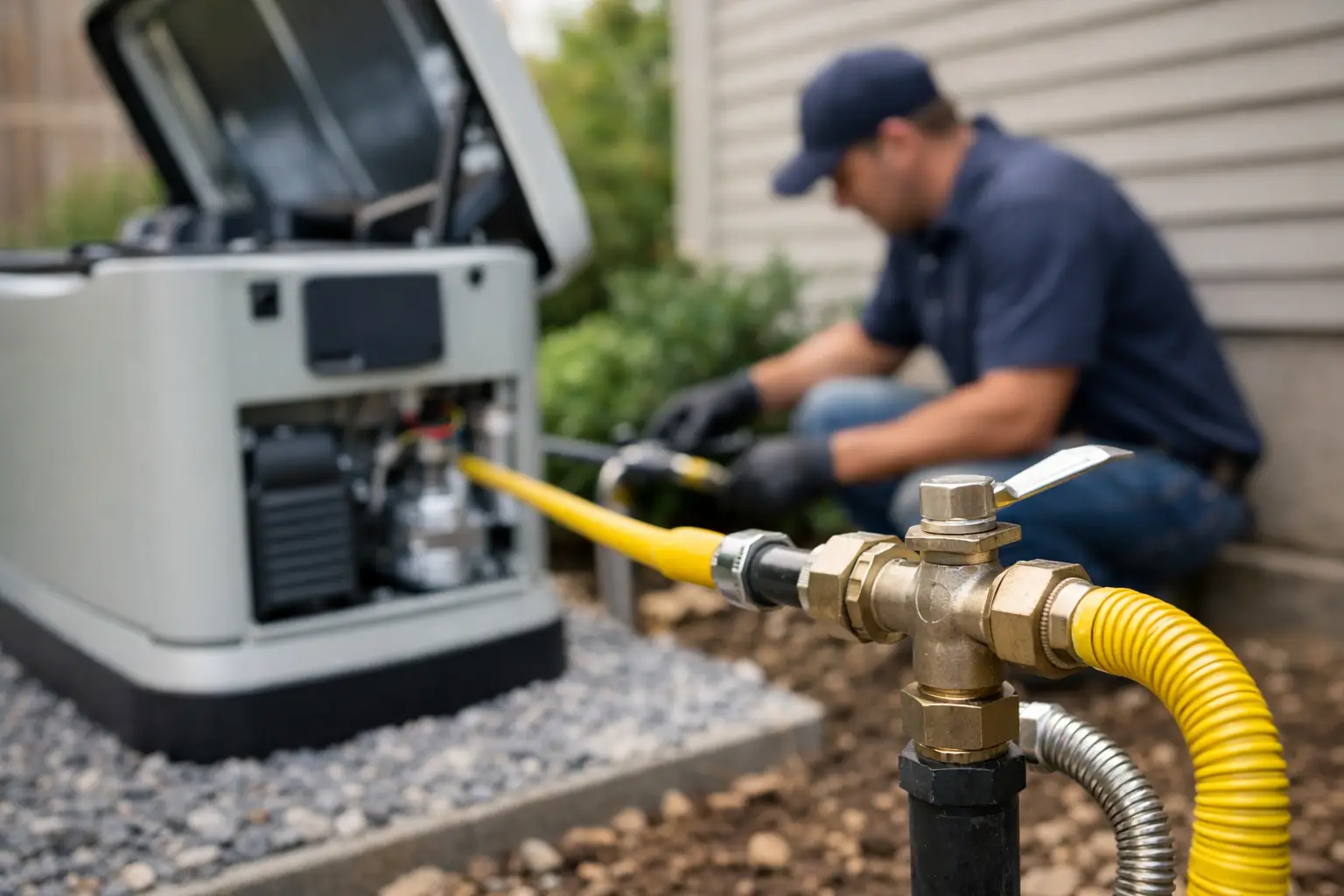
A standby generator can only protect your property if it receives enough fuel when the utility power is out. Generator gas line installation is not a small add-on to the project. It is a carefully planned part of the system that determines whether the generator can start, carry the intended load, and keep running through a long Houston-area outage.
For homeowners, that may mean keeping air conditioning, refrigeration, security, internet, and medical equipment operating. For businesses and facilities, it can mean protecting inventory, communications, lighting, critical equipment, and customer service. The right fuel connection turns a generator from equipment on a pad into dependable backup power.
Why Generator Gas Line Installation Deserves Careful Planning
Natural gas and propane are dependable fuel choices for standby generators, but both require correct sizing, approved materials, proper routing, shutoff access, pressure considerations, and local code compliance. A line that is undersized or poorly planned may allow the generator to start but prevent it from producing its rated output when the demand is highest.
That problem often appears during the exact conditions when a generator is needed most. The unit may run unevenly, shut down on a fuel-related fault, or fail to support large loads such as central air conditioning. An installation should be designed around the generator’s actual fuel demand, not just the size of an existing gas stub near the house.
A professional assessment begins with the generator model, the electrical loads it is expected to carry, the available fuel source, and the distance from the meter or propane tank to the generator location. It also considers other gas appliances already serving the property. A home with multiple furnaces, water heaters, fireplaces, pool equipment, and cooking appliances has a different fuel-demand picture than a home with only a few gas appliances.
Natural Gas or Propane: The Right Choice Depends on the Property
Natural gas is a practical option for many Greater Houston homes and commercial properties because it does not require on-site fuel storage. When utility gas service remains available, the generator has a continuous fuel source without scheduled refueling. That convenience is one reason natural gas is common for permanently installed home standby systems.
Still, natural gas service must be evaluated, not assumed. The gas meter, service capacity, existing appliance demand, line length, and generator fuel requirements all matter. In some cases, the existing meter or service needs review by the utility provider before a generator can be added.
Propane gives properties without natural gas service a reliable alternative. It is also a strong option for rural locations, new construction, and sites where the owner wants an independent on-site fuel supply. Propane projects require tank sizing and placement to match anticipated runtime, generator demand, local requirements, and access for fuel delivery.
Neither fuel is automatically better for every property. Natural gas may offer convenience where adequate utility service is available. Propane may provide the practical path where natural gas is unavailable or where a properly sized tank better fits the site. The best choice comes from a site-specific evaluation, not a one-size-fits-all recommendation.
What a Proper Gas-Line Scope Includes
A complete generator project coordinates fuel work with the electrical installation, concrete pad preparation, automatic transfer switch, permits, and final commissioning. Treating each item as a separate task can create delays, duplicate work, or gaps in accountability.
The fuel portion typically includes a route from the gas meter or propane supply to the generator, an accessible shutoff valve, approved piping and fittings, protection for exposed sections, pressure testing, and final connection to the generator. The route must account for the building layout, landscaping, gates, utility equipment, and required clearances around the generator.
Piping size is calculated using fuel demand and distance. As the route becomes longer, the pipe may need to be larger to deliver sufficient volume at the required pressure. This is why an existing line that appears large enough to the eye may still be inadequate for a standby generator.
For natural gas installations, licensed professionals also verify how the new generator demand interacts with the rest of the property’s appliances. A generator should not be added in a way that compromises furnace, water-heater, or cooking performance. For propane systems, the tank, regulator arrangement, and fuel line must work together to provide stable fuel delivery through startup and full-load operation.
Permits, Codes, and Placement Are Part of Safety
Generator placement affects more than appearance. The unit needs adequate clearance from the home or building, doors, windows, vents, utility meters, and other site features. These requirements help manage exhaust, service access, airflow, and fire safety. Local rules, manufacturer instructions, and property conditions all influence the final location.
Permitting requirements can vary by municipality and project scope across Houston and Fort Bend County. Electrical, mechanical, plumbing, and fuel-gas requirements may overlap depending on the installation. A properly managed project identifies the required permits before work begins and schedules inspections as needed.
This process protects the property owner. It documents that the installation was completed to applicable requirements and helps avoid problems during a future sale, insurance review, service call, or equipment upgrade. It also reduces the risk of costly corrections after the generator, pad, electrical work, and landscaping are already complete.
Common Shortcuts That Create Long-Term Problems
The most expensive generator fuel issues often begin with an attempt to save time upfront. Connecting to the closest available gas pipe without a sizing calculation can leave the system starved for fuel. Using unqualified labor may lead to improper fittings, unsupported piping, inaccessible shutoffs, failed inspections, or leaks.
Another common issue is planning the gas line before the generator size and load plan are finalized. A homeowner may initially expect to power only essentials, then decide to include air conditioning or additional circuits. That changes the generator’s demand and can change the fuel-line design.
Commercial properties require the same discipline at a larger scale. A generator supporting a small office has different needs than a medical office, restaurant, retail location, multifamily property, warehouse, or critical facility. The electrical load profile, operating hours, fuel source, and continuity needs should guide system design from the start.
From Site Review to Final Power-On
A dependable installation begins with a conversation about what must stay on during an outage. From there, the contractor can evaluate electrical loads, recommend a properly sized Generac system, identify the best generator location, and determine the fuel requirements.
Once the design is established, the project moves through permits, pad preparation, equipment placement, electrical connection, automatic transfer switch installation, and gas-line work. Coordinating these steps under one accountable provider helps prevent the customer from having to manage separate electricians, plumbers, utility contacts, inspectors, and equipment suppliers.
After the physical installation is complete, testing matters. The generator must be commissioned according to manufacturer requirements, checked for proper startup and transfer operation, and verified under appropriate load conditions. Fuel delivery should be confirmed as part of that process, not treated as an assumption.
Texas Direct Generators manages standby power projects from permits to power-on, including generator selection, electrical work, fuel coordination, testing, and ongoing maintenance. That direct project ownership gives homeowners and business owners one local team responsible for the system when reliability matters.
Keep the Fuel System Ready After Installation
A generator’s fuel connection should be included in long-term service planning. During scheduled maintenance, technicians can inspect visible piping, valves, connections, and operating performance while confirming the unit runs as intended. Properties with propane should also maintain a practical fuel-delivery plan before severe weather approaches.
If you remodel, add major gas appliances, expand a facility, or upgrade your generator, revisit the fuel supply. Changes that increase gas demand can affect a system that previously performed well. Addressing that change early is far easier than discovering a limitation during an outage.
The goal is simple: when the lights go out, your generator should receive the fuel it was designed to use and deliver the protection your family, employees, customers, or tenants are counting on. A properly planned gas line makes that confidence possible.