
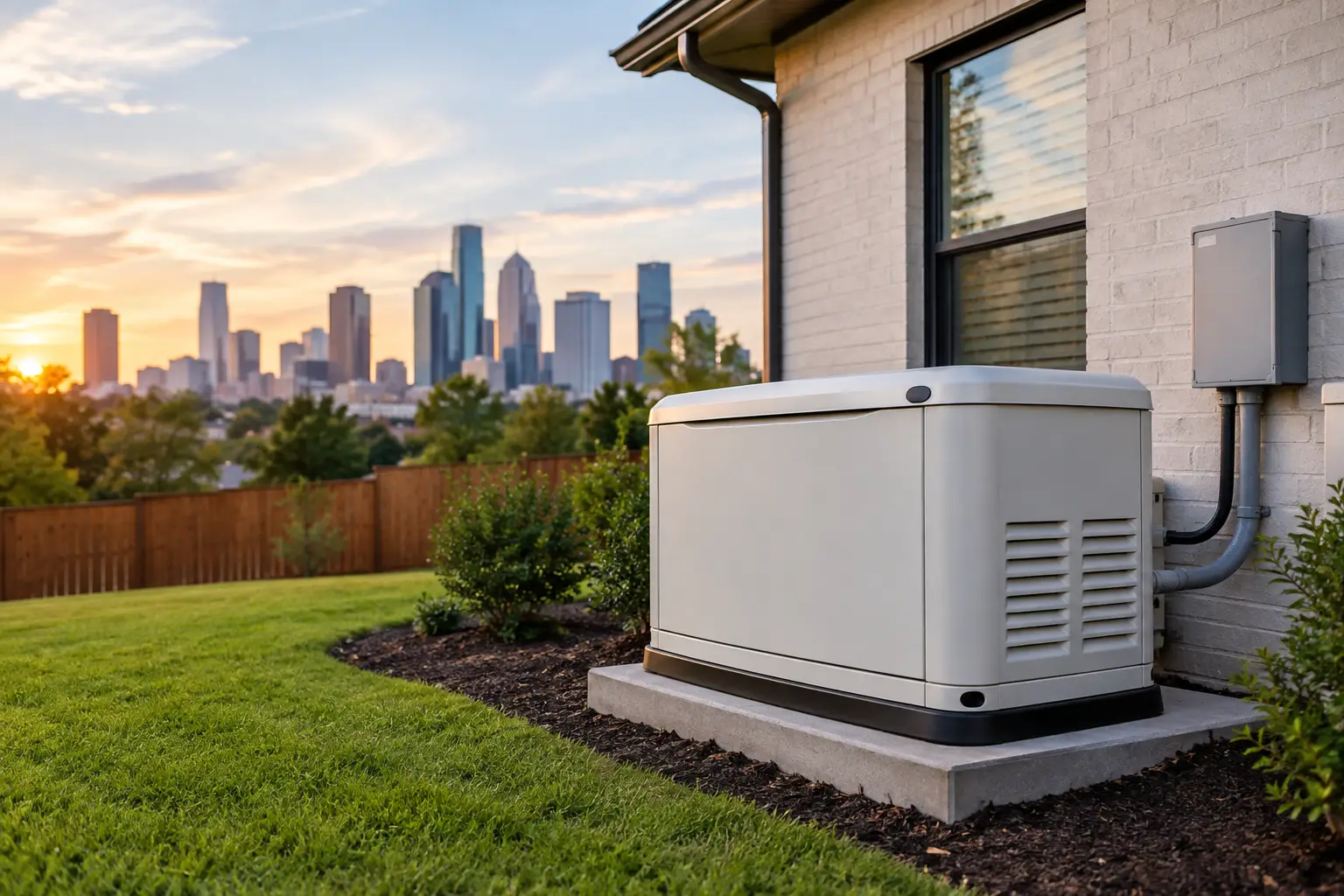
A standby generator should be ready long before the next storm warning appears on your phone. But before a Generac system can protect your air conditioning, refrigeration, medical equipment, security, or business operations, it must be installed legally and safely. This generator permitting guide explains what Houston-area property owners should expect between choosing a generator and hearing it power on for the first time.
For most homeowners and commercial facilities, permits are not an administrative detail to handle after the equipment arrives. They shape the generator’s location, electrical design, gas connection, inspection schedule, and project timeline. A qualified turnkey contractor plans for those requirements from the beginning, protecting you from costly corrections, failed inspections, and unsafe shortcuts.
Why standby generator permits matter
A permanent standby generator connects to your electrical system and fuel supply. That means the installation affects more than the generator pad in the yard. It can involve electrical wiring, an automatic transfer switch, natural-gas or propane piping, clearances from doors and windows, and local fire-safety requirements.
Permitting gives the local authority having jurisdiction a chance to verify that the work meets applicable codes and local amendments. The exact rules depend on your city, county, neighborhood, and property type. A home in Sugar Land may have a different permit process than a property in Houston, Missouri City, Katy, Pearland, or an unincorporated part of Fort Bend County.
The permit process also protects the next step: inspection. An inspector can confirm that licensed work was completed correctly before the system is placed into regular service. That matters when you need dependable backup power during a hurricane, severe thunderstorm, freeze, or grid disruption.
Generator permitting guide: what may be required
Most permanently installed standby generator projects require at least an electrical permit. Depending on the fuel source, location, and local jurisdiction, the project may also require a mechanical, plumbing, gas, or fire-related permit. Commercial projects can involve additional review because of load size, occupancy type, emergency systems, site access, and equipment placement.
A permit application commonly identifies the property, generator model, electrical equipment, proposed location, and the licensed contractor responsible for the work. Some jurisdictions request a site plan or plot plan showing the home, property lines, existing utilities, and the proposed generator location. For commercial properties, plans may need more detail, including equipment specifications and electrical drawings.
Homeowners should not assume a permit is unnecessary because the generator is outside. The key issue is not simply where the unit sits. It is the permanent connection to fuel and electricity, along with safety clearances around the equipment.
Electrical permits and the transfer switch
The automatic transfer switch is central to a safe standby-power installation. It separates utility power from generator power and transfers the selected loads when an outage occurs. This prevents dangerous backfeeding and ensures the generator operates as designed.
Electrical permitting typically covers the transfer switch, feeder wiring, breaker changes, grounding and bonding, disconnects, and the connection between the generator and service equipment. The inspector may verify conductor sizing, overcurrent protection, labeling, working clearances, and access to equipment.
The electrical scope varies. A smaller residential system protecting essential circuits is different from a whole-home generator with load management. A commercial system serving refrigeration, communications, life-safety equipment, or critical operations may require a more detailed engineering and permitting review.
Natural gas and propane permits
Fuel planning cannot be an afterthought. A generator needs a properly sized and approved fuel supply to perform under load, not merely start for a short test. Natural-gas installations may require a gas permit for new piping, pipe modifications, pressure testing, and connection to the generator.
Propane-fueled systems require coordination around tank sizing, tank location, supply lines, regulators, and local setbacks. The correct propane capacity depends on the generator size, anticipated runtime, household or facility loads, and how the property will use fuel during a prolonged outage.
A common problem is choosing a generator before confirming whether the existing gas meter and piping can support it. Gas capacity must account for the generator and the appliances already using the system. A professional assessment identifies this early, before a pad is poured or equipment is delivered.
Placement rules affect your project from day one
Generator placement is one of the most visible parts of permitting, and one of the easiest places for a project to go wrong. Manufacturers provide installation clearance requirements, while local code officials may enforce additional rules. Your homeowner association may also have separate architectural or placement requirements.
The generator must be positioned away from building openings, vents, and other locations where exhaust could enter the structure. It also needs adequate working space for service, proper airflow, and a stable base. Distance from property lines, fencing, gas meters, air-conditioning equipment, pools, and combustible materials can also affect the final location.
This is why a site visit matters. The most convenient spot may not be the compliant spot. A good installer evaluates the practical trade-offs: keeping the generator accessible for maintenance, limiting trenching and electrical runs, preserving yard use, managing noise considerations, and meeting required clearances.
For commercial properties, placement can be even more complex. Equipment may need to remain accessible for service crews without blocking delivery routes, emergency access, accessible parking, or customer traffic. Flood-prone areas may require additional consideration for equipment elevation and pad design.
What inspections typically cover
Permit approval is not the finish line. Most jurisdictions require one or more inspections as work progresses or once the installation is complete. The schedule varies, but the final inspection generally occurs after the generator, transfer switch, electrical connections, fuel connection, and required safety components are installed.
Inspectors may review the generator’s location, pad, electrical wiring, grounding, disconnecting means, gas piping, shutoff valves, pressure-test results, and equipment labeling. They may also confirm that the installation matches the approved permit information.
An inspection is not the same as commissioning. Inspection confirms code compliance. Commissioning confirms the system operates correctly. A complete power-on process should include testing the transfer from utility power to generator power, verifying selected loads, checking fuel performance, confirming battery charging, and reviewing operation with the owner or facility representative.
How a turnkey contractor keeps permitting on track
The cleanest generator projects have one accountable team managing the work from permits to power-on. That team begins with a site assessment and generator sizing conversation, then plans the equipment location, concrete pad, electrical scope, automatic transfer switch, and fuel connection around the property’s actual conditions.
Texas Direct Generators manages the technical details that often become stressful for property owners: permit coordination, licensed installation, gas or propane planning, inspections, testing, and final commissioning. Keeping those responsibilities under one roof reduces the risk of different trades blaming one another when a question arises.
Permit timing still depends on the jurisdiction. Some permits move quickly, while others require plan review, corrections, or additional documentation. Weather, inspection availability, utility conditions, supply availability, HOA approval, and unexpected site conditions can also influence the schedule. A dependable contractor communicates those variables instead of promising an unrealistic install date.
What property owners can do before work begins
You can help the process move efficiently by gathering any information your installer may need early. Confirm your property address and jurisdiction, provide HOA requirements if they apply, identify known easements or site constraints, and share your electrical goals. For example, decide whether you want essential loads protected or whole-home coverage, and tell the installer about large loads such as multiple air conditioners, pool equipment, well pumps, elevators, or commercial refrigeration.
For natural gas, know where the meter is located and whether you have experienced low gas pressure or supply concerns. For propane, discuss where a tank could be placed and how it will be refilled. Commercial decision-makers should also identify critical equipment, required runtime, operational priorities, and any site access restrictions.
Do not pull permits under your own name simply to speed up the process unless the contractor and local authority specifically direct you to do so. Permit responsibility should be clear. When licensed contractors are responsible for their portion of the work, there is a documented chain of accountability for corrections, inspections, and closeout.
A properly permitted generator is more than a code requirement. It is the foundation for a safer installation, a smoother inspection process, and a backup-power system you can trust when the lights go out.