
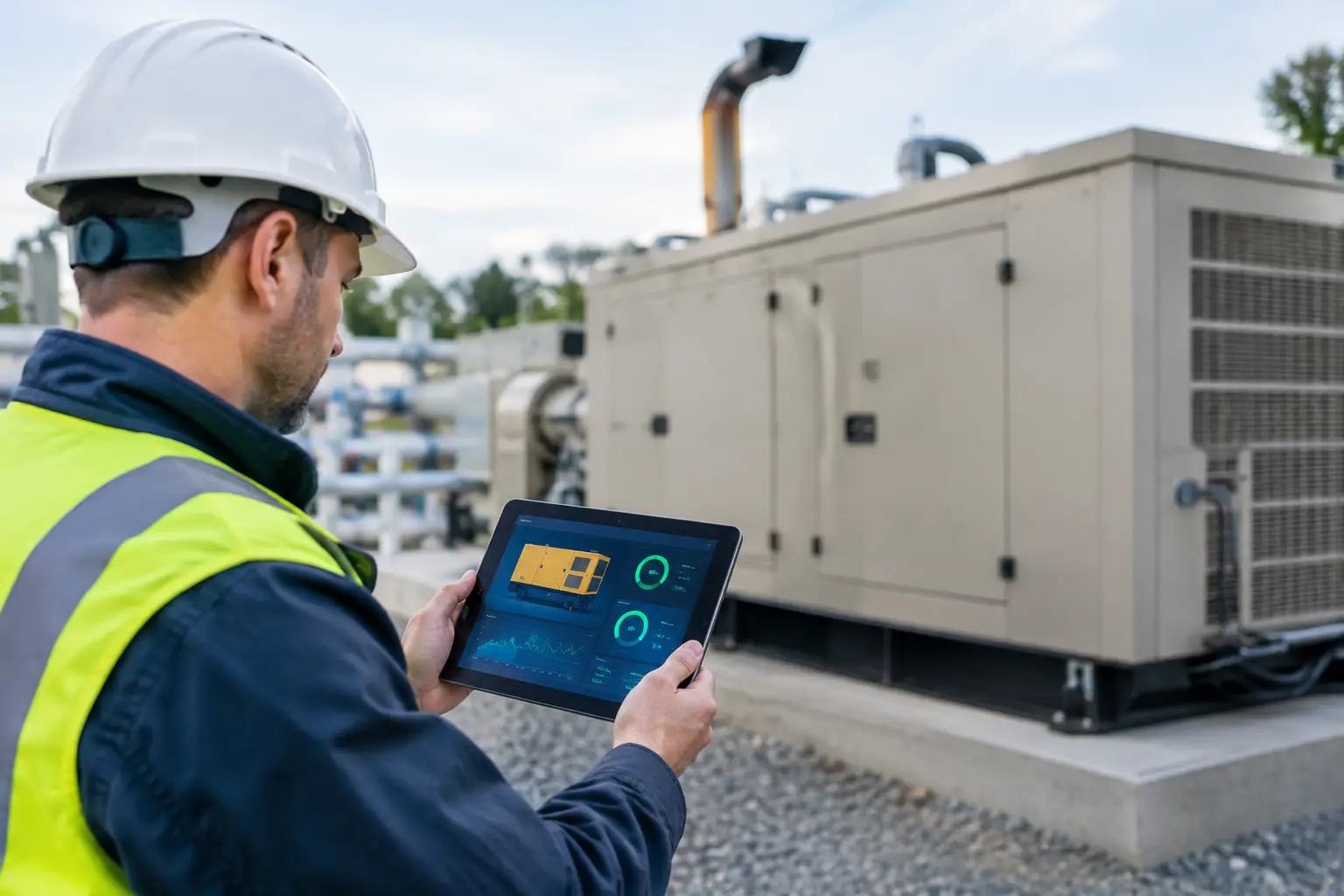
A standby generator is built to respond when utility power fails, often when no one is standing beside it. Generator remote monitoring adds visibility to that protection. From a phone, tablet, or computer, an owner can check operating status, review alerts, and see whether the system has exercised as scheduled. For Houston-area homes and facilities, that information can prevent a small maintenance issue from becoming an unwelcome surprise during the next storm.
Remote monitoring is not a replacement for professional maintenance or a properly designed installation. It is an early-warning tool that helps owners and their service provider act while there is still time to correct a problem.
What generator remote monitoring actually does
A connected standby generator communicates operating information through its controller and an internet connection. Depending on the generator model, monitoring platform, and configuration, it may report whether the unit is ready to run, currently operating, in an exercise cycle, or displaying a fault condition.
Many systems can also send notices when utility power is lost and restored. That can be especially helpful for a second home, an unoccupied commercial building, or a property manager responsible for several sites. Instead of waiting for a tenant, employee, or neighbor to report an outage, the responsible party can see what the generator is doing.
The most useful alerts are usually practical ones: a failed exercise, low battery voltage, an active fault code, a maintenance reminder, or a condition that needs service. The exact information available depends on the equipment. A qualified installer can explain what a specific Generac model supports before the system is purchased or upgraded.
Monitoring does not mean every issue can be repaired remotely. A low battery, fuel supply concern, wiring issue, engine problem, or transfer-switch fault still requires trained diagnosis. Its value is that the warning arrives earlier, with useful details, instead of appearing for the first time when the generator is needed most.
Why monitoring matters in Greater Houston
In this area, outages can follow hurricanes, tropical weather, thunderstorms, high winds, equipment failures, and extreme heat. During a prolonged outage, a standby generator may be protecting air conditioning, refrigeration, security systems, internet service, medical equipment, sump pumps, or essential business loads.
That makes readiness more than a convenience. A generator that has not completed its weekly exercise, has a weak starting battery, or has an unresolved controller message may still look fine from across the yard. Remote status reporting gives the owner a reason to investigate before storm season or before a planned absence.
For commercial operations, the stakes can be broader. A restaurant may need refrigeration protected. A medical or professional office may rely on communications and climate control. Property managers may need to keep access control, safety lighting, elevators with approved backup provisions, or other critical systems operating according to their emergency plans. Monitoring helps decision-makers document that a generator is available and identify when attention is needed.
There is a trade-off. A connected system relies on communications equipment and internet access. If the property loses internet during an outage, some information may not update until service returns. That does not stop the generator from operating as designed, but it can limit what an owner sees remotely. For critical sites, it is worth discussing communication options, notification settings, and the facility’s broader continuity plan during system design.
The alerts worth taking seriously
Not every message means an emergency, but no alert should be ignored indefinitely. Exercise notifications and routine maintenance reminders help owners stay ahead of normal service needs. A fault alert, failed exercise, low battery notice, or repeated shutdown deserves timely attention.
A scheduled exercise is one of the best indicators that the generator remains prepared. During an exercise cycle, the unit starts and runs for a set period. On many installations, this occurs without carrying the home or building’s electrical load. It verifies important parts of the system, but it is not the same as a full outage event.
That distinction matters. A generator can start during exercise and still have an issue that appears only when the automatic transfer switch transfers the property to generator power. Professional commissioning, periodic inspection, and load-aware testing are still part of responsible ownership.
If an alert appears, record the message or fault code and note whether the generator is running. Do not repeatedly reset alarms without understanding the cause. Resetting a controller may clear a visible message while leaving the underlying condition unresolved. If there is a gas odor, visible damage, overheating, or an electrical safety concern, keep clear of the equipment and contact a qualified professional promptly.
Monitoring works best with scheduled maintenance
Remote visibility is strongest when it supports a regular maintenance plan. Standby generators contain an engine, battery, controller, fuel connection, electrical components, and automatic transfer equipment. Like any engine-driven system, they need attention even if they run only during tests and outages.
A professional service visit can include inspection of battery condition and connections, oil and filter service when due, air filter checks, enclosure inspection, controller review, exercise verification, and operational testing appropriate for the equipment. The technician can also look for fuel-system concerns, corrosion, pest intrusion, loose connections, or signs that the generator pad and surrounding area need attention.
For natural gas and propane systems, fuel planning remains essential. Monitoring may show that a generator is running, but it does not eliminate the need for a correctly sized fuel supply. Propane customers should maintain an appropriate fuel level, particularly before severe weather. Natural gas customers should have a system designed with generator demand in mind. Fuel connection and sizing should be handled as part of the original project, not treated as an afterthought.
What to ask before adding remote access
Before selecting a monitored standby system, ask how the generator connects, what alerts are available, who will receive them, and whether there are subscription or account requirements. Homeowners may want alerts sent to more than one family member. Businesses may need notices directed to a facilities manager, property manager, or after-hours contact.
Also ask who owns follow-up. An alert is only useful if someone knows what to do next. The best arrangement is clear: the owner receives the notification, understands which messages require action, and has a dependable local service team to call. For managed facilities, establish escalation steps before hurricane season rather than trying to organize contacts during an outage.
Existing generator owners should ask whether their unit can be connected or upgraded. Compatibility depends on the generator’s age, controller, installed accessories, and site connectivity. Some units can be added to a monitoring platform with the right equipment, while others may have more limited options.
From permits to power-on, the details affect readiness
Remote monitoring is most effective when the generator itself has been designed and installed correctly. Generator sizing, load priorities, the automatic transfer switch, electrical routing, gas piping, concrete pad placement, permits, and final testing all affect how the system performs when utility power drops.
Texas Direct Generators manages those details from system selection through commissioning, so customers are not left coordinating separate electrical, fuel, permitting, and equipment providers. Once the system is in service, scheduled maintenance and repair support help keep the information shown in the monitoring app meaningful: a generator that is maintained, tested, and ready to carry the loads it was built to protect.
Before the next stretch of severe weather, open the monitoring account, confirm the right contacts receive alerts, and review the most recent exercise status. If anything does not look right, address it while utility power is still available and service schedules are not under storm pressure.