
A summer storm knocks out power at 8 p.m., the house is still holding heat, and the refrigerator, internet, security system, and medical equipment are suddenly at risk. A properly planned standby system changes that experience. This natural gas generator guide explains what Houston-area homeowners and businesses should consider before choosing backup power that starts automatically and supports the loads that matter.
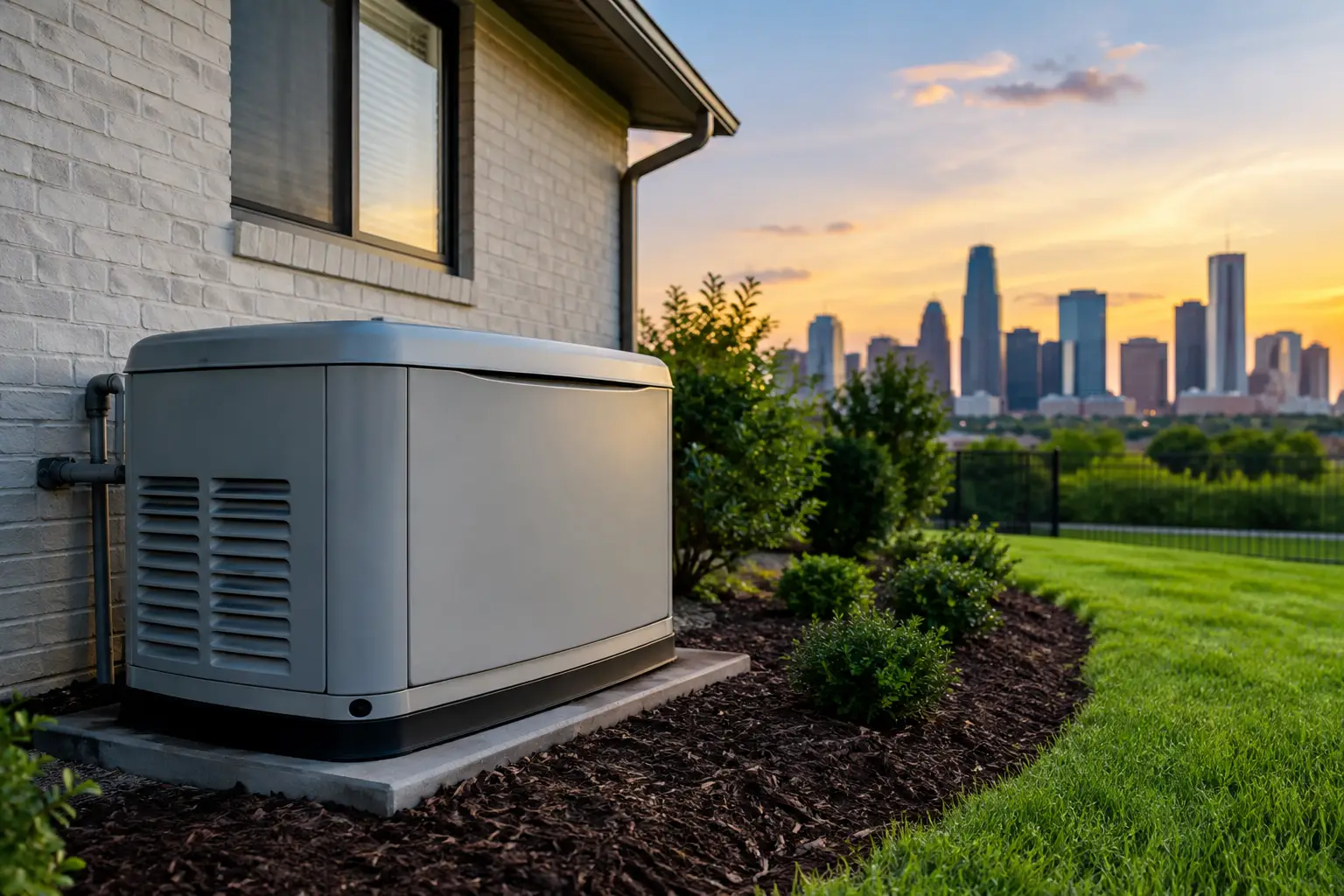
A natural gas standby generator is permanently installed outside your home or facility and connected to an automatic transfer switch. When utility power fails, the transfer switch safely separates your property from the grid, signals the generator to start, and transfers selected electrical loads to backup power. When utility service returns, the system transfers back and the generator shuts down after a short cooling period.
For properties served by a reliable natural gas utility, this setup can offer a major advantage over portable generators and limited fuel tanks: a continuous fuel source. That does not make every project identical. Correct sizing, gas capacity, electrical design, placement, permitting, and ongoing maintenance determine whether the system performs as expected during an outage.
Why Natural Gas Works for Standby Power
Natural gas is delivered through a utility line, so most homeowners do not need to store, refill, or manually rotate fuel. During a multi-day outage, that can be especially valuable in Greater Houston, where high temperatures and humidity make air conditioning more than a convenience for many households.
Natural gas also supports automatic operation. Unlike a portable unit that must be brought out, fueled, started, and connected after the storm has already arrived, a standby generator monitors utility power and responds on its own. That matters for families traveling away from home, older adults, people relying on powered medical devices, and business owners who cannot be onsite every time conditions change.
There are trade-offs. Natural gas service must be available at the property, and the existing gas meter and piping must be capable of supplying the generator at full demand while other gas appliances are operating. A system that looks correctly sized on paper can still underperform if the fuel supply is not evaluated properly. In areas without natural gas service, propane may be the better standby fuel option.
Natural Gas Generator Guide: Start With Your Loads
Generator size should follow the electrical loads you need to protect, not a guess based on square footage alone. A 2,000-square-foot home with one central air conditioner, an electric range, a pool pump, and a well pump has different backup needs than a similar home with gas appliances and two HVAC systems.
Some homeowners want essential-circuit protection. This typically covers refrigeration, lighting, internet equipment, select outlets, garage doors, security, and perhaps one air conditioner. Others want whole-home coverage that allows the household to function with fewer restrictions during an outage. Neither approach is automatically better. The right choice depends on your budget, the comfort level you expect, and the electrical demands of the property.
A professional load assessment considers both running wattage and the higher power required when motors start. Air conditioners, pumps, refrigerators, and some commercial equipment can create substantial starting loads. Modern load-management equipment can sometimes allow a generator to support large systems by prioritizing and cycling selected loads, but it should be designed intentionally rather than treated as an afterthought.
For commercial properties, the conversation is usually more specific. The goal may be to protect refrigeration, point-of-sale systems, emergency lighting, network equipment, access control, elevators where applicable, communications, or a limited production process. A commercial generator does not always need to carry every circuit in the building. It needs to protect the functions that keep people safe and operations stable.
Questions That Help Define the Right Size
Before a site visit, think through what cannot go without power for several hours or several days. Consider air conditioning, refrigerators and freezers, medical equipment, home offices, sump or well pumps, security systems, gates, servers, inventory, and essential business equipment.
Also consider what you are willing to manage during an outage. A system designed for essential loads may require you to avoid operating certain high-demand appliances at the same time. A larger system provides more flexibility, but it costs more to purchase and may require additional fuel infrastructure and electrical work. Good design is about matching real expectations to a system that can reliably meet them.
Fuel Supply Is Part of the Generator System
The generator, gas line, meter, regulator, and connected appliances must work as one system. Natural gas generators are rated at different output levels depending on whether they run on natural gas or propane, so fuel type affects sizing calculations.
A qualified installer should review the distance from the meter to the generator, pipe diameter, appliance demand, meter capacity, and local utility requirements. Long runs or undersized piping can reduce available gas pressure when the generator is under load. This is not a detail to leave until the final stage of installation.
If a gas meter upgrade is required, it should be coordinated early. Homeowners should also understand that the utility controls its equipment and timeline, while the generator contractor manages the generator-side planning, piping coordination, and installation scope. Clear responsibilities prevent avoidable delays before final startup.
Site Planning, Permits, and Safe Installation
A standby generator needs more than a clear spot beside the house. It must meet manufacturer clearances, local codes, and practical service-access requirements. Placement affects airflow, exhaust direction, noise, drainage, distance from doors and windows, and the path for gas and electrical connections.
In Houston and Fort Bend County communities, permit requirements and site conditions can vary by municipality, neighborhood, and property layout. Flooding concerns, drainage patterns, easements, utility locations, HOA rules, and existing landscaping may all influence the final location. Concrete pad preparation is equally important because the equipment needs a stable, level foundation that keeps it above standing water and supports long-term serviceability.
The electrical side includes installation of an automatic transfer switch and the circuits or service equipment it will control. This work must be completed correctly to prevent dangerous backfeeding into utility lines. Proper transfer equipment protects your property, utility workers, and the generator itself.
A turnkey contractor should manage the project from permits to power-on: equipment selection, site review, pad preparation, electrical work, fuel connection, inspections, testing, and customer orientation. Texas Direct Generators approaches standby projects this way because homeowners and facility managers should not have to coordinate separate trades while preparing for the next outage.
What Happens During Installation
The exact schedule depends on equipment availability, permitting, utility coordination, and the complexity of the property. The process typically begins with a site assessment and load evaluation. Once the generator and transfer equipment are selected, permits can be submitted and the installation plan finalized.
On installation day, the crew prepares the pad, sets the generator, installs the transfer switch and electrical connections, and completes the fuel connection within the project scope. After required inspections and utility-related steps are complete, the system is commissioned. Commissioning is more than turning the unit on. It includes verifying operation, transfer behavior, load performance, safety settings, and communication features where included.
At final power-on, the owner should understand how the system exercises, what it sounds like during normal operation, where to find status indicators, and who to call if an alert appears. A generator is there to reduce stress, not create uncertainty.
Maintenance Protects the Investment
Standby generators need scheduled maintenance even if they have never carried a major outage. Exercise cycles help confirm that the engine starts, but they do not replace professional service. Oil, filters, battery condition, spark plugs where applicable, electrical connections, enclosure condition, and fault history all require attention on a planned schedule.
Maintenance is particularly valuable before hurricane season and after extended run time. A technician can identify battery weakness, fluid issues, error codes, rodent damage, corrosion, and fuel or electrical concerns before they become a failure during an emergency. Keep the area around the generator clear of leaves, storage items, vegetation, and anything that could restrict airflow or service access.
If your system has a problem, avoid repeatedly resetting it without identifying the cause. Low oil pressure, battery faults, overload conditions, and fuel issues are warnings worth addressing. Prompt repair protects the equipment and helps ensure it is ready when utility power is not.
Plan Before Storm Season
The best time to choose a standby generator is before a forecast puts every homeowner and business on the same schedule. Start with the loads you need protected, verify your natural gas capacity, and work with a licensed, insured local contractor that can own the details from design through testing. A well-planned system gives your family or operation a dependable next step when the lights go out.