
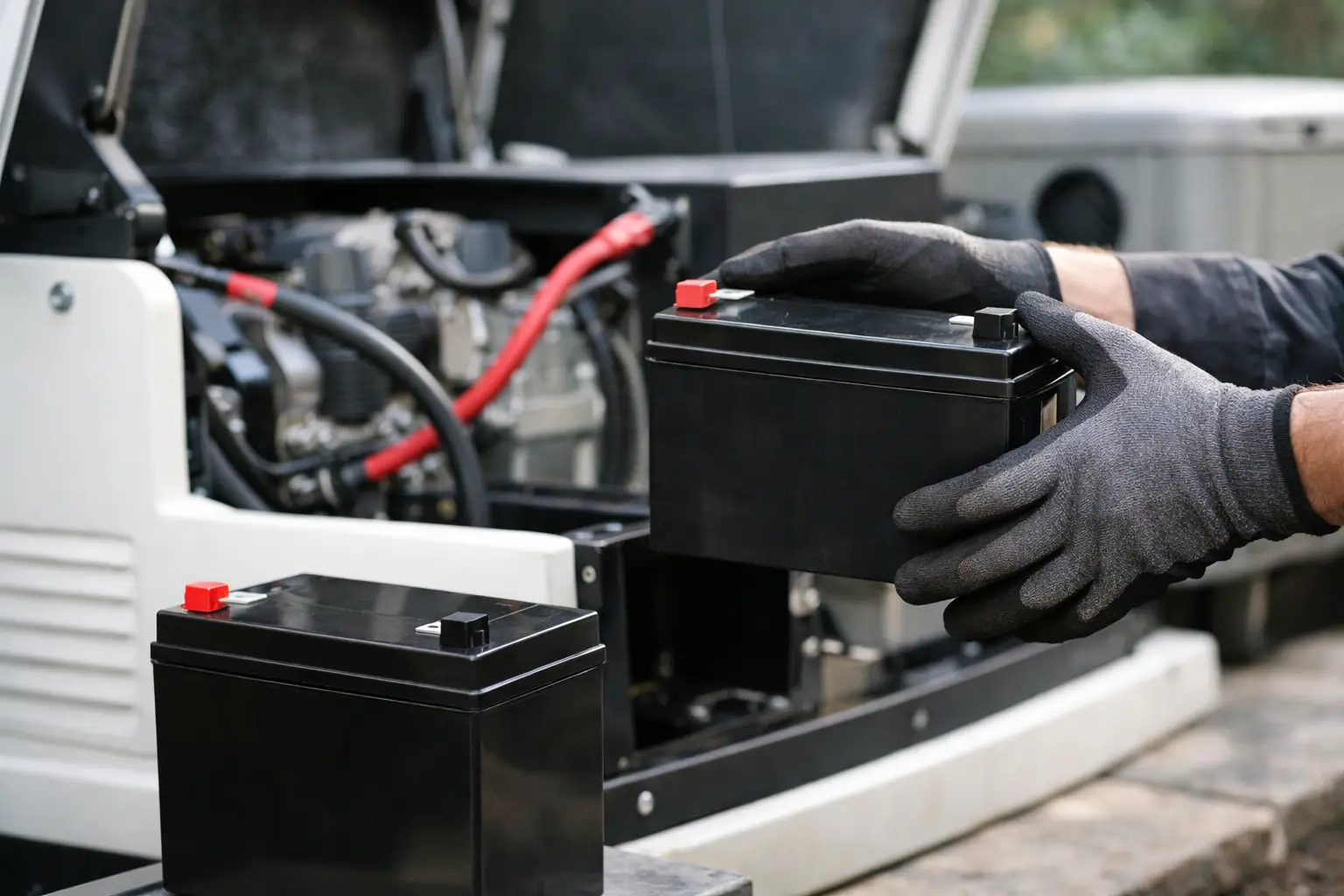
A standby generator can have fresh fuel, a clean enclosure, and a properly sized transfer switch, yet still fail at the one moment it is needed if its starting battery cannot deliver enough power. Watching for generator battery replacement signs gives Houston-area homeowners and facility managers time to correct a small maintenance issue before a storm, grid interruption, or equipment failure turns it into a no-start event.
Generator Battery Replacement Signs You Should Not Ignore
The most obvious sign is slow or labored cranking during an exercise cycle. A healthy battery should turn the engine over promptly. If the starter sounds weak, drags, or takes repeated attempts to engage, the battery may be losing its ability to hold a charge. Do not assume the generator will start reliably just because it eventually starts on a mild day. High heat, cold weather, and a longer outage can expose a weak battery quickly.
An alert on the generator controller also deserves prompt attention. Many modern standby systems monitor battery voltage and can display a low-battery, charger, or service warning. The alert may be intermittent at first, but it should not be ignored or cleared without finding the cause. A low-voltage message can point to an aging battery, a failed battery charger, loose connections, corrosion, or another charging-system concern.
Visible battery condition matters as well. Swelling, cracks, leaks, severe corrosion around terminals, or loose cables call for professional attention. Corrosion can restrict electrical flow even when the battery itself still has usable life. A damaged battery can also create a safety hazard, especially when acid or gas buildup is involved.
Other warning signs may be less direct. Consider scheduling service if you notice any of the following:
- The generator misses or aborts its scheduled weekly exercise.
- The battery case feels unusually hot after charging or operation.
- The generator starts only after a jump-start or external charging.
- Battery voltage repeatedly drops below the manufacturer’s acceptable range.
- The battery is near or past its expected service life, even without an active warning.
A battery that appears fine between outages is not automatically dependable. Standby generator batteries work in the background for long periods, then must provide a high burst of power without notice. That makes age and testing just as relevant as visible symptoms.
Why Standby Generator Batteries Fail in Greater Houston
Heat is one of the biggest reasons batteries wear out sooner in this area. Long stretches of high temperatures accelerate internal chemical breakdown and can shorten battery life. A generator installed outdoors also faces humidity, wind-driven rain, insects, dust, and seasonal storms. The enclosure protects the equipment, but it does not eliminate the need for inspections and scheduled service.
Battery life also depends on how the generator is used and maintained. A unit that runs weekly under normal exercise conditions may reveal a problem early. A unit with interrupted exercise cycles, charger issues, or infrequent professional inspections can develop a weak battery without the owner realizing it. Commercial systems may have different demands than a residential unit, particularly when they support longer run times, critical loads, or more frequent operation.
Not every battery issue means the battery alone is at fault. The charging circuit may not be maintaining the correct voltage. Cable connections can loosen over time. Corrosion can form where it is not immediately visible. In some cases, a starting problem may involve the starter, controller, fuel supply, or engine components rather than the battery. That is why replacing a battery without testing the charging and starting systems can leave the underlying issue unresolved.
How Long Does a Generator Battery Last?
There is no single expiration date that applies to every standby generator battery. Many batteries last roughly two to three years, but actual life depends on battery quality, heat exposure, charging performance, maintenance history, and operating conditions. In Greater Houston, intense summer temperatures can make proactive replacement a sensible decision before the battery reaches the end of its expected range.
Age alone should not be the only deciding factor. A newer battery with a charging problem may fail early, while an older battery that tests well may still have some useful service life. The practical approach is to record the installation date, inspect the battery during routine maintenance, and test its condition before hurricane season and periods of heightened outage risk.
For homes with medical equipment, refrigerated medications, security systems, or a strong need to maintain air conditioning during outages, waiting for a battery failure is a poor trade-off. The cost and inconvenience of a planned battery service are usually far lower than discovering a no-start condition while the utility power is out.
What to Do When You See a Battery Warning
Start by checking the generator controller for the exact message and avoid repeatedly trying to start the unit. Repeated cranking can further drain a weak battery and may complicate diagnosis. If the unit is connected to a monitoring system, document the alert and any recent exercise-cycle failures.
Do not handle a swollen, leaking, or heavily corroded battery without proper precautions. Generator batteries can involve corrosive materials and electrical hazards. Turning off power or disconnecting cables in the wrong sequence can also affect the generator controls or create a short circuit. A trained technician can inspect the battery, terminals, charger output, cables, controller history, and starting system safely.
For a generator that is currently powering the property during an outage, do not attempt a battery replacement while the equipment is operating unless you are qualified to perform that work under the manufacturer’s procedures. Protecting continuous power and avoiding equipment damage should come first. Call for professional generator service and explain whether the unit is running, displaying an alarm, or unable to start.
Battery Replacement Is More Than Swapping a Part
A proper battery replacement service should verify more than the new battery’s fit. The technician should confirm that terminal connections are clean and secure, assess cable condition, check battery charger performance, and make sure the generator can start and exercise correctly after service. If the old battery failed unusually early, the charging system and controller settings deserve closer review.
For a standby generator, that final operational check is essential. The equipment must communicate properly with the automatic transfer switch, start when utility power is lost, and carry the intended electrical loads. A new battery helps only if the complete system is ready to perform from utility loss through power restoration.
Texas Direct Generators provides local standby generator maintenance and repair for customers who need a clear answer, not a guess at the cause of a warning light. As an authorized Generac dealer, the team can evaluate the battery and the related systems that determine whether the generator will start when called on.
Plan Service Before the Next Severe Weather Event
The best time to address a questionable generator battery is when the grid is stable and there is time to test the full standby system. Schedule maintenance before the peak of storm season, keep a record of battery age and service dates, and respond promptly to controller alerts or missed exercise cycles. This small step helps protect the larger investment in your generator, fuel connection, transfer equipment, and the comfort or operations that depend on them.
When your generator is meant to protect a home, business, tenants, inventory, or essential equipment, a dependable starting battery is not a minor detail. It is the first step between an outage and the power your property is counting on.