
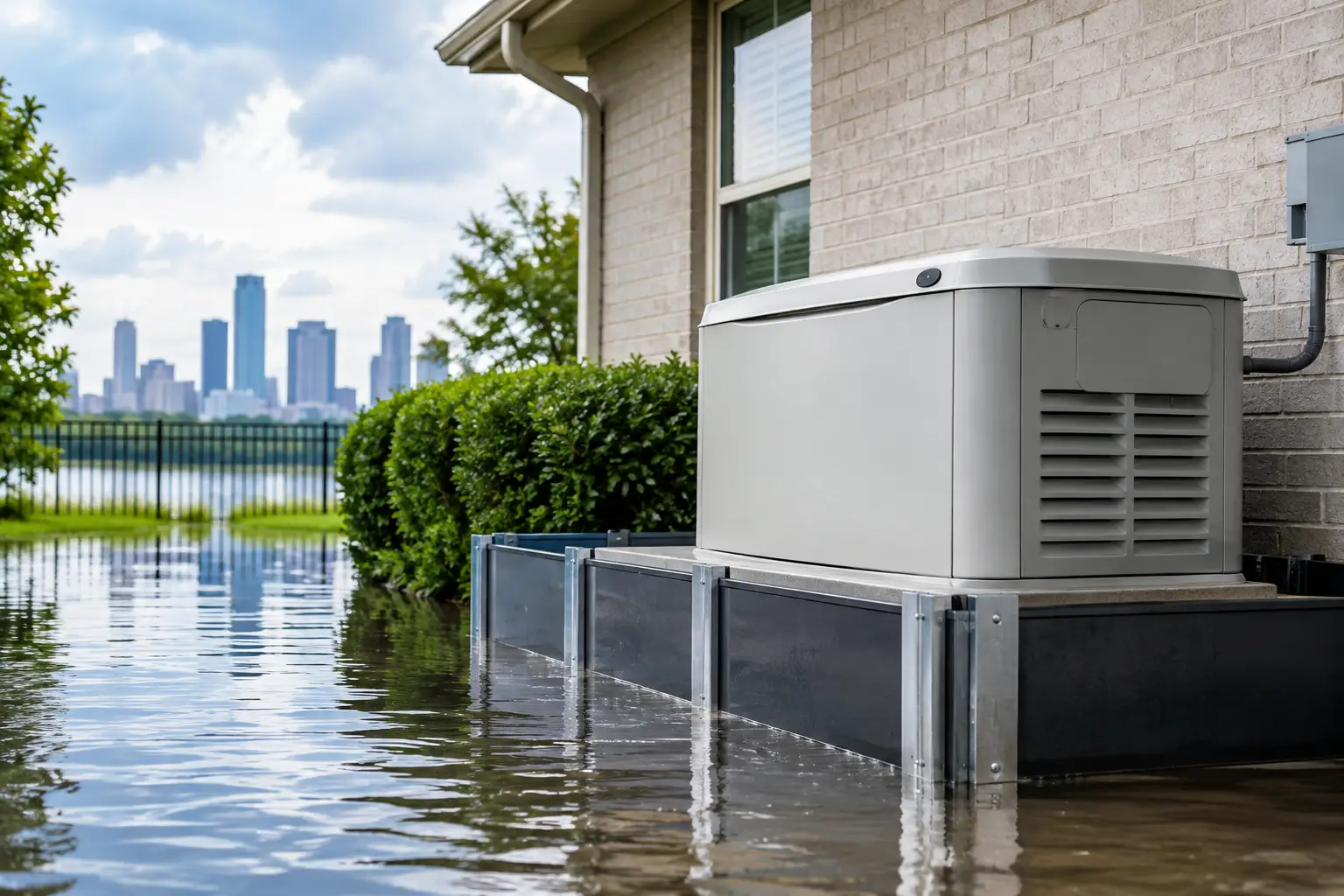
A standby generator is meant to carry your home or business through the worst weather conditions. But if the generator, fuel connection, or electrical equipment sits where floodwater can reach it, the system may be unavailable precisely when an outage begins. Generator flood protection is not an accessory added after installation. In Greater Houston and Fort Bend County, it should be part of the project plan from the first site visit.
Flooding creates more than a temporary inconvenience. Water can damage controls, corrode electrical connections, undermine a concrete pad, block access for service, and create serious safety concerns around electrical equipment. The right installation plan accounts for the property, local drainage, equipment clearances, permitting requirements, and the way water moves across the site during a heavy storm.
Why generator flood protection starts with placement
A generator needs a stable, level location with proper airflow and safe clearances from doors, windows, vents, combustible materials, and property features. In flood-prone areas, it also needs elevation. The goal is to keep critical equipment above anticipated water levels while maintaining manufacturer requirements and local code compliance.
That does not mean every generator needs to be placed on a tall platform. Some homes may need a raised concrete pad, while others have a naturally higher area that provides better protection. A commercial property may require a more engineered approach because of equipment size, site drainage, vehicle traffic, or the importance of uninterrupted operations. The right answer depends on the elevation of the property, its flood history, mapped flood risk, drainage design, and the authority having jurisdiction.
A contractor should inspect more than the open space beside the house. Downspout discharge, swales, patio drainage, driveway runoff, pool equipment, fences, and neighboring grades can all influence where water collects. A location that looks dry on a normal day may become the lowest point on the property during a sustained storm.
A concrete pad must do more than hold the generator
A properly prepared generator pad provides a secure base that supports the equipment and helps keep it level over time. For flood protection, pad design and elevation deserve additional attention. Water flowing beneath or around an inadequately prepared pad can erode surrounding soil, create settlement, or leave the generator out of level.
The pad should be planned as part of the complete site layout, not treated as a quick final step. Raising equipment without considering access, gas piping, electrical conduit, and service clearance can create new problems. A professional installation coordinates those details before the concrete work is complete.
Protect the full standby power system, not just the generator
The generator enclosure gets most of the attention, but standby power depends on several connected components. The automatic transfer switch, electrical connections, fuel supply, breakers, and low-voltage control wiring must all be installed correctly for the system to operate safely.
The automatic transfer switch is the equipment that senses a utility outage and directs power to the generator. Its placement must account for accessibility, code requirements, and exposure to water. If a transfer switch or critical connection is damaged by floodwater, a generator in perfect condition may still be unable to serve the building.
Fuel planning matters as well. Natural gas piping, propane tanks, regulators, and connections must be properly sized, protected, and routed for the installation. Floodwater can move debris, affect access to shutoff points, and expose weak or poorly supported piping. Propane systems require particular attention to tank location, anchoring, and applicable safety requirements. A qualified provider can coordinate fuel considerations with the electrical and generator work rather than leaving the homeowner to manage separate trades.
For businesses, the planning scope may extend to the electrical distribution system and the loads that must remain online. Refrigeration, communications, security, pumps, servers, lighting, medical equipment, and life-safety systems do not all carry the same priority. Selecting critical loads in advance helps ensure the generator is sized and configured for what must keep operating during an outage.
Flood protection is not the same as waterproofing
A standby generator enclosure is designed for outdoor use, but it is not designed to operate underwater or in standing water. Do not assume a weather-resistant enclosure makes the system floodproof. Floodwater can enter openings, affect internal controls, contaminate fuel-related components, and leave behind sediment and corrosion that are not always visible at first glance.
Homeowners and property managers should also avoid placing temporary covers over a running generator. Generators need ventilation for cooling and exhaust. Restricting that airflow can create overheating and carbon monoxide hazards. Permanent flood protection should come from proper elevation, placement, site preparation, and professionally planned installation – not from improvised coverings during a storm.
If your property is undergoing landscaping, drainage, fence, pool, or patio work after the generator is installed, protect the original clearances and drainage path. A new retaining edge, raised flower bed, or redirected downspout can send water toward equipment that was previously well positioned.
What to do before a heavy-rain event
A standby generator should be maintained year-round, but a few checks before severe weather can reduce avoidable problems. Confirm that the area around the generator is clear of lawn furniture, branches, mulch buildup, and loose materials that could block airflow or drain toward the unit. Make sure no storage items are placed against the enclosure.
Look for standing water near the pad after ordinary rainfall. It may be an early sign that drainage needs attention before a larger event. Check that visible gas piping and electrical conduit appear secure, and keep access paths clear for service if the system needs inspection before or after a storm.
Your generator should also receive scheduled maintenance and periodic exercise according to the manufacturer’s recommendations. Exercise confirms that the unit starts and runs, but it does not replace a full professional inspection. Technicians can identify battery concerns, oil or filter needs, warning codes, enclosure issues, and connection problems before they become an outage-day failure.
If floodwater reaches the equipment
Safety comes first. Do not operate, open, or attempt to reset a generator that has been submerged or has standing water around electrical components. Do not touch damaged wiring, transfer equipment, or gas connections. If you smell gas, leave the area and follow the appropriate emergency safety procedures.
Once conditions are safe, arrange for a qualified generator professional to inspect the system before it returns to service. Flood exposure can damage equipment in ways that are not obvious from the outside. A proper evaluation may include the generator, transfer switch, electrical connections, fuel components, pad condition, and any evidence of corrosion or contamination.
Plan early, especially for new installations
The best time to address flood risk is before equipment is selected and installed. Retrofitting a generator to a new elevation or location later can involve electrical changes, fuel-line modifications, pad work, permitting, and recommissioning. It is often more efficient to account for those requirements from permits to power-on.
For a homeowner, that planning begins with a site assessment and a clear discussion of the loads that matter during an outage. For a commercial facility, it may include operational priorities, access needs, fuel strategy, and the consequences of even a short interruption. In both cases, the decision should be based on the property and the electrical system, not on a one-size-fits-all installation diagram.
Texas Direct Generators helps customers coordinate generator selection, permits, pad preparation, transfer switch installation, fuel connections, testing, and ongoing maintenance as one accountable project. That approach gives flood-related installation details the attention they need before severe weather places the system under pressure.
A generator is a long-term investment in comfort, safety, and continuity. Place it where it can do its job when water is rising, power is out, and getting a repair crew to the property may be difficult.