
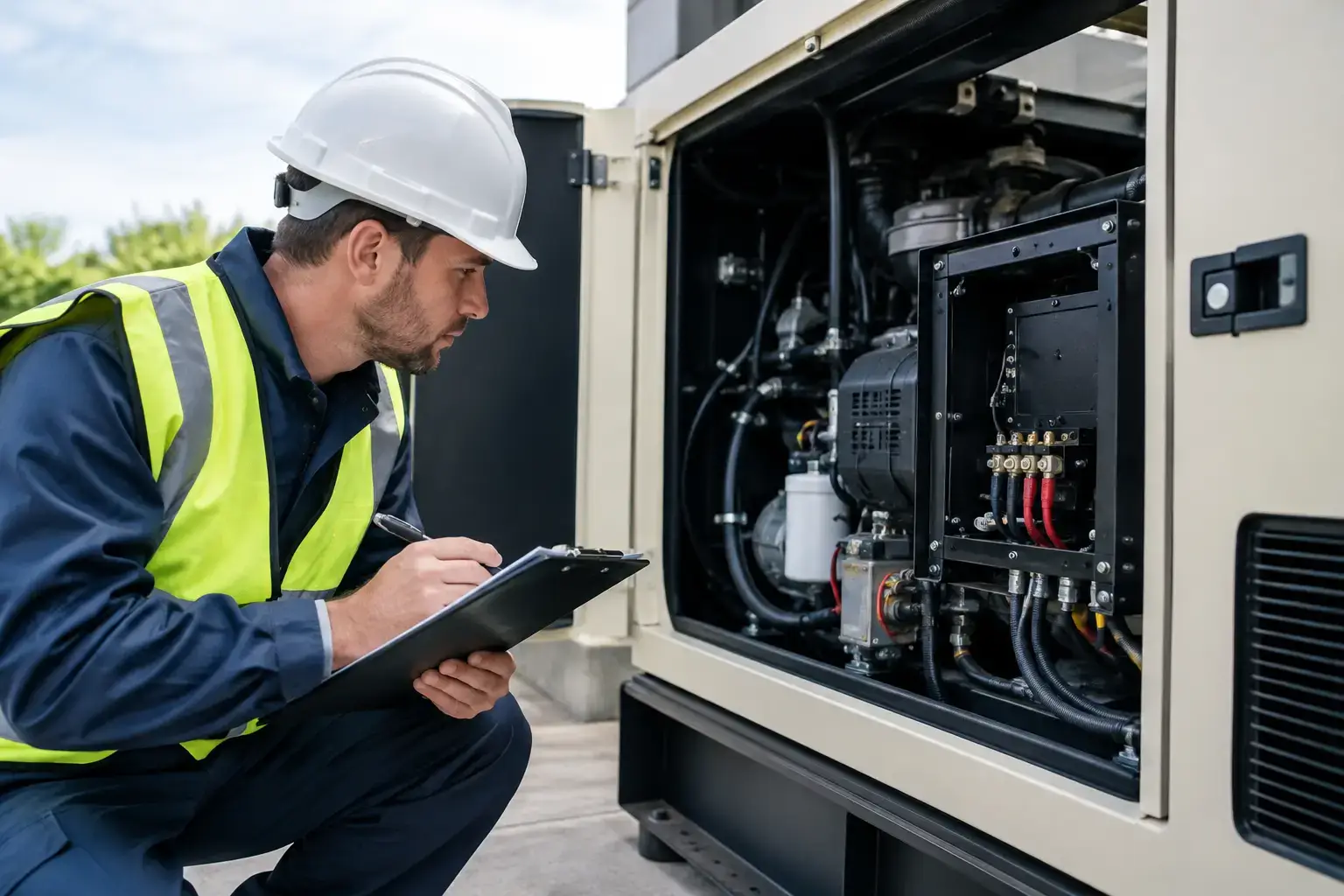
A standby generator can be ready to start and still leave a property vulnerable if the electrical side of the system is not operating correctly. Generator electrical inspections look beyond the engine to verify that power can transfer safely, critical circuits are protected, and the installation is prepared to perform when a Houston-area storm or grid disruption hits.
For homeowners, that can mean protecting air conditioning, refrigeration, security systems, medical equipment, and internet access. For businesses and facilities, it can mean preserving communications, safety equipment, inventory, operations, and customer service. The inspection is not paperwork for its own sake. It is a practical check that the equipment, wiring, transfer system, and electrical service work together as intended.
What Generator Electrical Inspections Should Cover
A complete inspection begins with the generator’s connection to the building, not just the generator enclosure. The goal is to identify conditions that can prevent reliable operation, create a safety hazard, or lead to code issues before the system is needed.
The automatic transfer switch deserves close attention. This component senses a utility outage, signals the generator to start, and moves selected electrical loads from utility power to generator power. A transfer switch that is incorrectly sized, poorly wired, damaged, or not configured for the property can create failures that are only discovered during an outage. Inspectors should verify the switch rating, connections, labeling, breaker condition, and operation under an appropriate test.
Electrical panels and protected circuits also need review. A generator has a defined capacity. The system must be designed so the generator can carry the intended loads without frequent overloads or unnecessary strain. For a home, those priorities may include HVAC equipment, refrigerators, lighting, well pumps, selected outlets, and essential appliances. A commercial property may need to prioritize server equipment, refrigeration, emergency lighting, access control, communications, or process loads.
Grounding and bonding are another critical part of the inspection. These requirements are technical, but the purpose is straightforward: provide a controlled path for fault current and help protective devices respond properly. Grounding, neutral handling, and transfer-switch configuration must be evaluated as a system. A change to an electrical panel, service equipment, or generator installation can affect how those pieces work together.
Inspectors should also examine conduit, conductors, terminations, disconnects, weatherproofing, and equipment clearances. Loose connections can create heat. Damaged insulation can create a fault risk. Improper outdoor fittings can allow moisture into electrical components. These are often manageable corrections when caught early, but they should not wait until the next emergency.
Why an Exercise Cycle Is Not Enough
Most standby generators run a scheduled exercise cycle, often once each week. That exercise confirms the engine can start and operate for a short period, but it is not the same as verifying the full electrical system under real conditions.
During a routine exercise, many systems do not transfer the home or business onto generator power. The generator may run without carrying the electrical loads it is expected to support during an outage. That means an exercise cycle may not reveal a transfer-switch issue, a load-management problem, a loose electrical connection, or an overloaded circuit plan.
A properly planned operational test can confirm that the transfer switch responds, selected loads receive generator power, and the system returns to utility power correctly. The right testing approach depends on the property, equipment, occupancy, and local conditions. A commercial facility with sensitive equipment requires a more controlled plan than a typical residence, and some tests should be scheduled to avoid disrupting operations.
For that reason, electrical inspections and maintenance should work together. Maintenance focuses on the generator itself, including the engine, battery, oil, filters, fuel supply, and controller. Electrical inspection focuses on the path from the generator to the property and the way power is managed once an outage occurs. Both are necessary for dependable backup power.
When to Schedule an Electrical Inspection
Annual review is a sensible baseline for many standby generator owners, particularly in areas that experience severe weather, high heat, heavy rainfall, and repeated utility interruptions. However, certain events call for an inspection sooner.
Schedule a professional review after a prolonged outage, a lightning event near the property, flood exposure, storm damage, electrical panel work, a generator repair, or a transfer-switch alert. It is also wise to inspect the system after adding major electrical loads such as a new air conditioner, pool equipment, electric vehicle charger, kitchen remodel, workshop equipment, or commercial machinery.
Load changes matter because they can alter what the property expects from the generator. A system that was correctly sized and configured five years ago may need adjustment after an addition, renovation, tenant change, or equipment upgrade. The generator itself may still be in good condition, but the electrical plan may no longer match the property.
New owners should also arrange an inspection if a generator was already installed when they purchased the home or building. Confirming the system’s size, service history, fuel arrangement, transfer-switch operation, and protected loads provides a clear starting point. It is far better to learn what the generator supports on a planned service visit than during a summer outage.
Warning Signs That Need Prompt Attention
Some problems are obvious, while others appear as small changes in normal operation. If the generator starts but the property does not receive power, the transfer switch, breaker, wiring, or controller may require diagnosis. If certain circuits lose power unexpectedly during generator operation, the issue could involve load management, breaker protection, or the generator’s available capacity.
Pay attention to repeated alarms, unusual clicking at the transfer switch, burning odors, discolored electrical components, tripped breakers, flickering lights, or a generator that shuts down when loads come on. Do not repeatedly reset a breaker or bypass an alarm to keep the system running. Those actions can mask the cause and increase the risk of equipment damage or electrical injury.
For commercial sites, the warning signs can include equipment that restarts unexpectedly during transfer, loads that do not return in the intended sequence, or critical areas that are not included in the emergency power plan. These conditions may require coordination between the generator contractor, electrician, facility manager, and equipment provider. The objective is not simply to make power available, but to make sure it reaches the right loads in the right order.
Code Compliance Protects More Than the Permit
Permits and inspections are a central part of a properly managed generator project because standby power connects several systems: electrical service, fuel supply, equipment placement, and local building requirements. Requirements can vary by jurisdiction, property type, generator capacity, and fuel source.
Code-compliant work helps protect occupants, service personnel, and the property. It also supports future repairs, insurance documentation, property sales, and expansion plans. An installation that looks acceptable from the outside can still have hidden concerns involving conductor sizing, disconnect placement, grounding, working clearances, or transfer equipment.
This is why a turnkey provider matters. Texas Direct Generators manages standby power projects from system selection and permits through pad preparation, electrical installation, fuel coordination, testing, and final power-on. That single point of accountability helps prevent the gaps that can occur when multiple contractors handle separate portions of the project without a shared plan.
Prepare for the Inspection Before the Next Outage
Keep the generator area accessible and clear of stored materials, vegetation, and debris. Have recent alarm messages, service records, outage notes, and details about new electrical equipment available for the technician. If there are circuits or devices you expect to remain powered, say so clearly. That conversation helps confirm whether the current generator and electrical configuration still match your priorities.
Do not wait for storm season to find out whether the transfer switch is functioning, the protected loads are realistic, or the electrical connections are secure. A scheduled inspection gives you time to correct issues on your terms, with a clear plan and without the pressure of an active outage.
Reliable backup power is built one verified connection at a time. Arrange generator electrical inspections before the next outage puts your home, business, or facility to the test.