
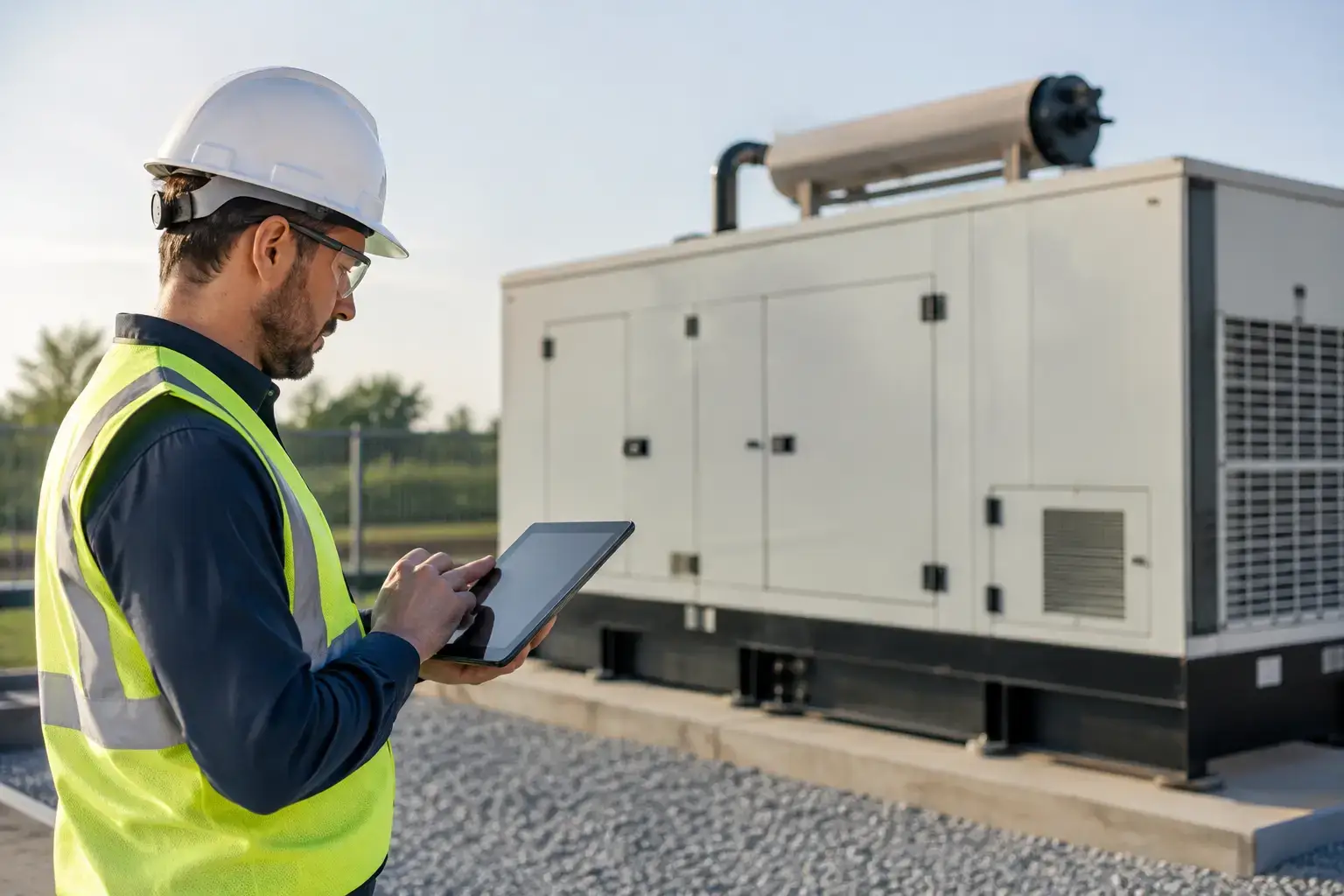
A generator that starts during a Houston-area outage but cannot carry the equipment your business depends on is not real backup power. Air conditioning, refrigeration, servers, pumps, access controls, lighting, communications, and life-safety equipment all place different demands on a system. A commercial generator load assessment identifies those demands before equipment is selected, permits are filed, or installation begins.
For a business owner or property manager, this assessment is the foundation of a dependable standby power project. It prevents two expensive outcomes: buying a generator too small to support operations and paying for far more capacity than the facility will use. The right system is based on how your building actually operates, what must remain online during an outage, and how those loads behave when power transfers.
What a Commercial Generator Load Assessment Measures
A load assessment is more than adding the wattage shown on equipment labels. It is a detailed review of the electrical loads the generator will support, their operating patterns, and their starting requirements. The goal is to establish the generator capacity, transfer equipment, electrical distribution approach, and fuel supply needed to keep priority operations running safely.
The assessment begins by separating essential loads from nonessential ones. A medical office may need refrigeration, network equipment, selected lighting, security, and HVAC for occupied areas. A restaurant may prioritize walk-in coolers, freezers, point-of-sale systems, hood controls, and limited comfort cooling. A warehouse may need dock equipment, communications, emergency lighting, and a fire pump or other code-required systems.
The answer is rarely to power every circuit in the building. For many commercial properties, selective backup provides stronger value and a more manageable project cost. For others, such as facilities with continuous processes or highly perishable inventory, broader coverage may be necessary. The assessment gives decision-makers a clear basis for that choice.
Running Load Is Only Part of the Picture
Equipment consumes one amount of power while running and often requires substantially more when starting. Motors are the most common reason a generator that looks adequate on paper struggles in the field. Compressors, HVAC condensers, pumps, elevators, refrigeration equipment, and certain shop machinery can create a short but significant startup surge.
A qualified assessment considers both the steady operating load and the highest expected demand when equipment starts. It also considers whether loads start at the same time after an outage. If every compressor and air handler attempts to restart together, the required capacity can be very different from the total running wattage.
Load sequencing can sometimes reduce the generator size required. Controls can delay noncritical equipment, allowing priority loads to stabilize before larger motors start. This approach must be planned carefully. It should support business operations without creating safety issues, equipment conflicts, or unacceptable downtime for customers and staff.
Why Nameplate Math Can Lead to the Wrong Generator
Nameplate information is useful, but it does not tell the complete story. Electrical panels may include circuits that are no longer used, equipment may have been replaced, and tenant spaces may have changed since the original construction. A facility may also use equipment differently during extreme heat, peak business hours, or severe weather – precisely when generator performance matters most.
A professional review compares available documentation with the actual building. That may include panel schedules, electrical one-line diagrams, utility data, equipment nameplates, operating schedules, and field observations. When appropriate, technicians can measure demand rather than relying only on estimated values.
Voltage and phase matter as well. A commercial facility may have 120/208V three-phase service, 277/480V service, or multiple electrical systems. The generator, automatic transfer switch, and distribution equipment must match the building requirements. A system sized in kilowatts but mismatched to the facility voltage or load characteristics will not solve the problem.
Power factor also affects generator sizing for certain commercial loads. Nonlinear loads from electronics, variable frequency drives, LED lighting, and UPS equipment may require additional consideration. This is why commercial sizing should not be treated like a simple residential appliance calculation.
Build the Assessment Around Operational Priorities
The best question is not, “How large of a generator can we install?” It is, “What must this property accomplish during an outage?” That discussion should involve the people who understand daily operations: the owner, facility manager, maintenance lead, IT contact, and, where relevant, tenant representatives.
Start with the first hour of an outage. Which systems protect people, property, inventory, and communications? Then consider the next day. Can the business serve customers, process payments, receive deliveries, maintain temperature-sensitive inventory, or keep essential personnel productive?
A practical priority plan often places life-safety and code-required loads first, followed by security, communications, critical equipment, and comfort systems. This does not mean comfort is optional in every situation. In Greater Houston, loss of air conditioning can quickly affect employees, tenants, customers, sensitive equipment, and occupancy. The appropriate level of HVAC backup depends on the building use, available fuel, budget, and expected outage duration.
Future changes should be part of the discussion. If a medical practice expects to add imaging equipment, a warehouse plans to expand refrigeration, or a retail center may add tenants, reserving reasonable capacity now can be less disruptive than replacing or reworking the system later. Oversizing without a reason is not efficient, but planning for documented growth is sound facility management.
Fuel Supply Must Support the Load and Runtime
Generator capacity and fuel planning are connected. A larger generator can carry more load, but it will also consume more fuel. Natural gas is a practical option for many commercial sites, but the gas line and meter must be evaluated for adequate flow at full generator demand. Existing service that supports normal building gas appliances may not automatically support a large standby generator.
Propane can be a strong solution where natural gas is unavailable, unreliable, or insufficient. It requires the right tank size, placement, clearance, and refill plan. Diesel may suit some large commercial applications but brings different fuel storage, maintenance, and permitting considerations.
Runtime decisions should reflect the risks your property faces. A short outage plan is different from a system intended to operate through multi-day storm disruptions. The assessment should account for fuel availability, site access after severe weather, and the operational consequences if refueling is delayed.
Installation Details Affect Generator Performance
A properly sized generator still needs a properly engineered installation. The automatic transfer switch must be rated and configured for the loads it serves. The generator requires an appropriate concrete pad, electrical connections, grounding, required clearances, ventilation, and access for service. Local permits, inspections, and applicable codes are part of the project, not afterthoughts.
For occupied commercial properties, installation planning also needs to minimize disruption. Electrical shutdown windows, tenant communications, trenching routes, noise considerations, gas work, and final testing should be coordinated before work begins. A turnkey contractor manages these details from permits to power-on so the property is not left coordinating multiple trades during a critical project.
Commissioning is the final proof point. The generator should be tested with the transfer equipment and intended loads, including realistic startup conditions where feasible. Staff should know what the system supports, what it does not support, and who to call for service. Scheduled maintenance then helps ensure the system is ready long after installation day.
When to Request an Assessment
A commercial generator load assessment is especially valuable before a new installation, a major tenant improvement, an HVAC replacement, an electrical service upgrade, or a facility expansion. It is also worth revisiting when an existing generator has struggled during an outage, when essential equipment has been added, or when the business continuity plan has changed.
Texas Direct Generators helps commercial customers turn that assessment into an accountable project, coordinating equipment selection, permits, installation, fuel connections, transfer equipment, testing, and ongoing service. The objective is not simply to place a generator beside the building. It is to establish a backup power system that performs as intended when utility power is unavailable.
Before the next outage tests your facility without warning, document the loads that matter most, the equipment that starts hardest, and the operations your team cannot afford to lose. That preparation makes every later decision – from generator size to fuel strategy – clearer and more defensible.