
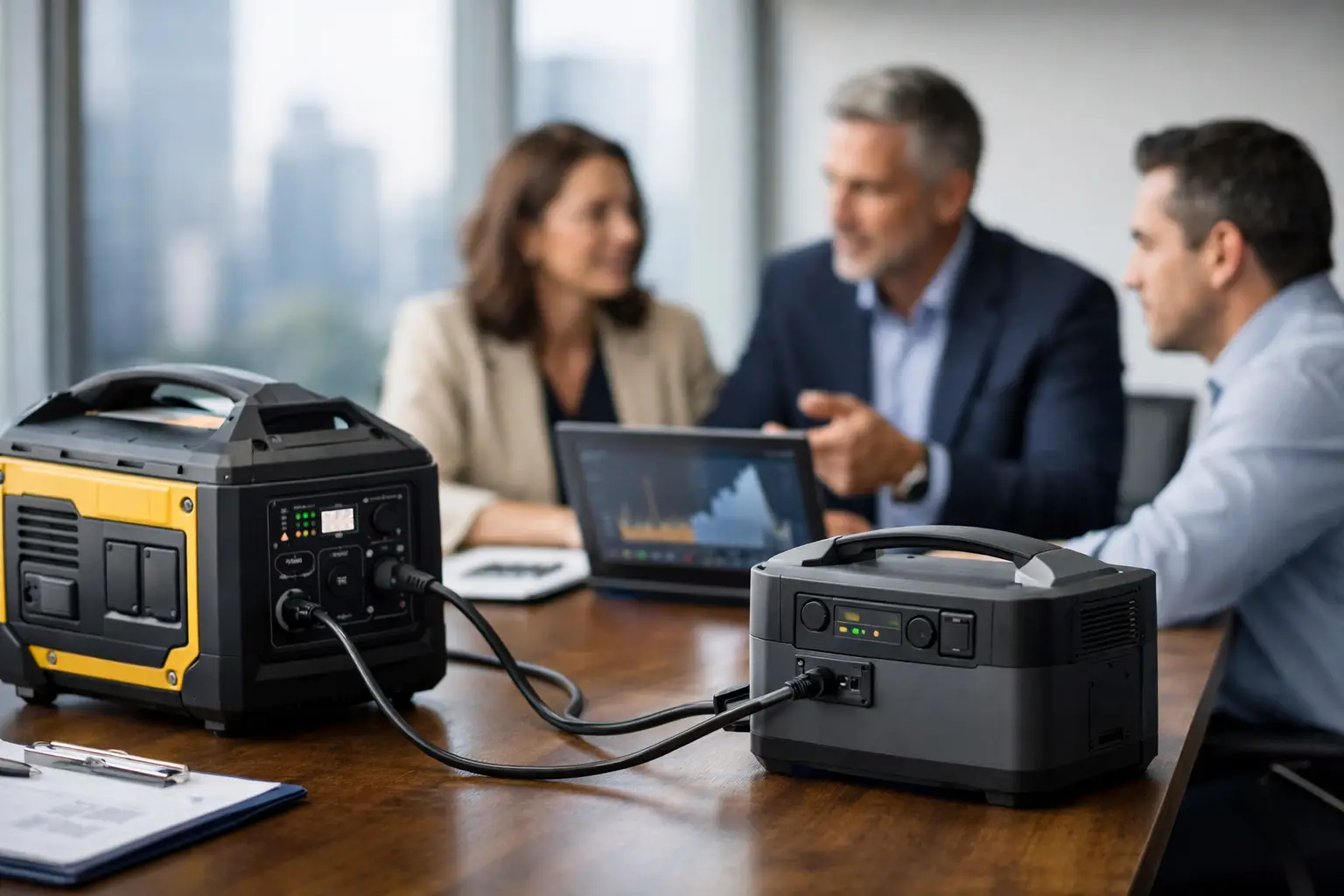
A power outage at a business is rarely just a lighting problem. In Greater Houston, it can mean a restaurant loses refrigerated inventory, an office loses communications, a property manager loses access control, or a care facility must protect essential equipment in dangerous heat. Business continuity power planning turns those risks into clear decisions before the grid goes down.
The goal is not necessarily to power every circuit in a building. It is to keep the people, systems, inventory, and operations that matter most functioning safely for as long as the outage lasts. That requires more than choosing a generator by square footage. It requires an accurate load review, dependable fuel planning, proper transfer equipment, permits, installation, and testing under real operating conditions.
Start With the Cost of Being Offline
The right generator plan begins with a practical question: What happens in the first hour, first day, and third day without utility power?
For a medical or senior-care setting, the priorities may include climate control, refrigeration, lighting, communications, security, and designated medical equipment. A retail location may need point-of-sale systems, network equipment, emergency lighting, refrigeration, and a limited amount of air conditioning to remain open. For offices, a smaller critical-load plan may protect servers, internet connectivity, phones, security, and a controlled work area rather than every workstation and comfort load.
Property managers should also consider common-area lighting, gates, elevators where applicable, fire and life-safety requirements, sump pumps, leasing-office systems, and communication with tenants. The best plan reflects the building’s actual role during an outage, not a generic checklist.
Quantify the exposure where possible. Lost sales, spoiled product, employee downtime, tenant complaints, emergency relocation, equipment damage, and reputational harm can quickly outweigh the cost difference between an undersized solution and a properly designed standby system. At the same time, buying more capacity than the operation truly needs can raise equipment, fuel, and installation costs without producing meaningful additional protection.
Define Critical Loads Before Sizing the Generator
A generator should be sized around electrical demand, starting loads, and the sequence in which equipment returns to service. Air conditioners, refrigeration compressors, pumps, motors, elevators, and certain kitchen equipment can draw substantially more power when starting than while running. That distinction matters.
A professional site review identifies which loads must remain online, which can be temporarily shed, and which can stay off until utility power returns. Load management can make a more focused generator system possible by preventing several large loads from starting at once. For some facilities, this is a cost-effective approach. For others, particularly sites with continuous process loads or strict tenant obligations, broader coverage and additional capacity may be justified.
It also helps to separate life-safety and legally required emergency systems from optional operational loads. A standby generator can support business continuity, but the electrical design must follow applicable code requirements for the type of building and equipment involved. Those requirements affect transfer switching, distribution, wiring methods, testing, and the final scope of work.
Ask Departments What Cannot Stop
Facilities leaders should not make the critical-load list alone. Ask operations, IT, security, maintenance, and finance what they need during an outage. The answers may reveal overlooked priorities such as a network closet that supports multiple locations, an electronic gate that controls deliveries, a well pump, a pharmacy refrigerator, or a payment system needed to serve customers.
Then divide loads into three categories: essential immediately, needed after operations stabilize, and nonessential until power is restored. This keeps business continuity power planning grounded in real operating needs instead of assumptions.
Choose an Automatic Transfer Strategy
A standby generator becomes useful when it can respond without relying on someone to be present, find extension cords, or start equipment in unsafe weather. An automatic transfer switch monitors incoming utility power, signals the generator to start when an outage occurs, transfers selected loads to generator power, and returns the building to utility power when service is stable.
The transfer switch is not an accessory. It is a central part of a safe, code-compliant standby power system. Its rating and configuration must match the electrical service, selected generator, and loads being protected. Depending on the facility, the project may call for a whole-building transfer solution, a dedicated emergency panel, multiple transfer switches, or a load-management design.
Manual portable generator setups can have a place for limited, temporary needs. They also require fuel storage, manual setup, careful cord or inlet connections, and trained people on site. For businesses that must operate during severe weather, overnight outages, or periods when staff access is uncertain, an automatic system provides a different level of readiness.
Treat Fuel as Part of the Plan
A generator is only as dependable as its fuel supply. Natural gas is often a strong option for commercial standby systems because it avoids on-site refueling during an extended outage. However, gas service capacity, pipe sizing, generator demand, existing appliances, and local requirements must all be reviewed. A gas line that serves normal building appliances may not have enough capacity for a large generator under full load.
Propane can be an excellent fit where natural gas is unavailable or where a facility wants on-site fuel storage. It requires thoughtful tank sizing and placement, delivery access, and coordination with the expected runtime and load. Diesel systems may be appropriate for certain larger or specialized applications, but they introduce their own considerations around fuel quality, storage, maintenance, and refueling logistics.
There is no universal best fuel. The right choice depends on generator size, local utility availability, outage duration expectations, property constraints, and the facility’s tolerance for refueling risk. Fuel decisions should be made early, because they affect equipment location, permits, site work, and project schedule.
Plan the Installation From Permits to Power-On
Commercial generator projects involve electrical, mechanical, fuel, structural, and site considerations. Equipment must be located with required clearances, ventilation, service access, noise expectations, flood considerations, and fuel routing in mind. The generator needs a properly prepared pad, correctly sized conductors, protected connections, and a transfer system integrated into the existing electrical infrastructure.
Permitting and inspections are not paperwork to address at the end. They are part of protecting the facility, occupants, and investment. A plan that looks simple on paper can become expensive if the site cannot support the proposed fuel route, equipment location, electrical tie-in, or required clearances.
This is why a turnkey contractor matters. Texas Direct Generators manages the path from system selection and permitting through pad preparation, automatic transfer switch installation, fuel coordination, testing, and final power-on. One accountable team reduces the burden of coordinating separate equipment, electrical, gas, and site-work providers when time and operational continuity matter.
Test for the Outage You Expect
A generator that starts once after installation is not the same as a generator that is ready for a multi-day outage. Commissioning should verify automatic startup, transfer operation, proper voltage and frequency, load performance, alarms, and return-to-utility operation. Facility staff should know what normal operation looks like, where the equipment is located, and who to call if an alert appears.
After installation, scheduled maintenance protects the investment. Batteries, oil, filters, coolant, belts, controls, fuel systems, and electrical connections need periodic attention. Exercise schedules should be reviewed, and the generator should be run under appropriate load conditions when recommended. Maintenance is especially important before hurricane season, when service demand can rise quickly across the region.
Keep a simple outage procedure available to the people who will be on site. It should identify the generator location, key contacts, which loads are expected to operate, any operational limitations, and how to report issues. For larger facilities, include a communication plan for employees, tenants, customers, or residents.
Make the Plan Fit the Business You Have
Business continuity power planning is not about purchasing the largest generator available. It is about making deliberate choices that protect your highest-priority operations within your budget, property, and fuel constraints. A properly designed system can preserve safety, reduce costly downtime, and give employees and customers confidence when weather disrupts the grid.
Before the next outage puts every decision under pressure, walk your facility with a qualified standby power professional and identify what must stay on. A clear critical-load plan today gives your business a far better chance to keep serving people tomorrow.