
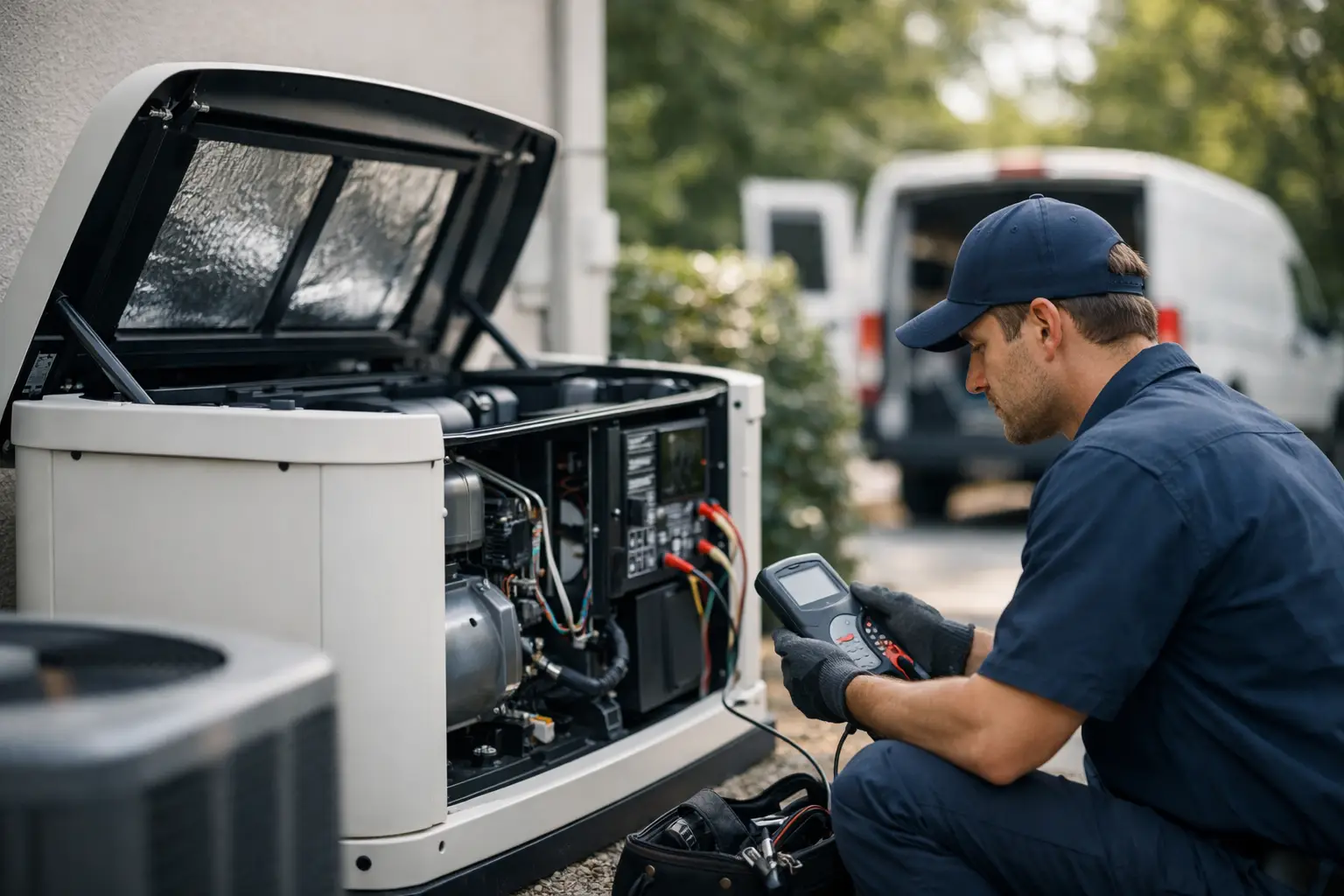
A standby generator is supposed to do its work quietly in the background, then start automatically when the utility power fails. If it will not start, runs poorly, shows a warning light, or fails a scheduled exercise cycle, a prompt generator repair service can be the difference between dependable backup power and an expensive surprise during the next Houston-area outage.
For homeowners, a generator problem can put air conditioning, refrigeration, security systems, internet access, and medical equipment at risk. For businesses and property managers, the stakes may include operations, inventory, communications, tenant comfort, and life-safety systems. The right response is not guessing at the cause or repeatedly trying to restart the unit. It is a safe inspection by a qualified technician who can identify the fault, make the needed repair, and confirm the system will carry the intended load.
Signs You Need Generator Repair Service
Some generator failures are obvious. Others appear as small changes during weekly exercise cycles or routine inspections. Paying attention early gives you more options than discovering a problem after a storm has already taken down the grid.
A generator that will not start automatically is the clearest reason to schedule service. The issue may involve a weak battery, corroded battery connections, a charger failure, a controller setting, a transfer switch concern, or a fuel supply problem. These components work as one system. Replacing a battery without checking charging voltage, for example, may only delay the next no-start condition.
Warning lights, controller alarms, unusual messages, or repeated fault codes also need professional attention. A code does not always identify one failed part. It tells the technician where to begin testing. Low oil pressure, overspeed, underspeed, high temperature, and misfire-related alerts can have different underlying causes, and resetting an alarm without correcting the cause can leave the generator unprotected.
Listen for changes, too. Hard starting, rough running, surging, smoke, fuel odors, leaking fluids, new vibration, or exhaust noise should never be treated as normal. Shut the unit down if it is operating unsafely, keep people clear of the equipment, and arrange an inspection. Do not open electrical enclosures or attempt fuel-system repairs unless you are qualified to do so.
A generator that starts but does not transfer power to the building requires just as much attention. The generator itself may be running properly while the automatic transfer switch, wiring, breaker configuration, control circuit, or protected-load setup is preventing power from reaching the home or facility. This is why complete troubleshooting matters. The goal is not simply to hear the engine run. The goal is verified backup power where it is needed.
What Professional Generator Repair Service Should Include
A proper repair visit starts with more than a visual check. A technician should review the unit’s operating history and active or stored alarms, inspect the enclosure and connections, evaluate the battery and charger, verify fluid levels and condition, and examine the fuel supply. On natural gas and propane systems, fuel pressure and supply capacity can be as critical as the generator itself.
From there, the technician tests the specific concern rather than replacing parts by assumption. That may involve checking ignition and starting components, charging circuits, sensors, controller settings, electrical output, transfer switch communication, breakers, and load behavior. Commercial systems may also require closer evaluation of distribution equipment and the loads assigned to emergency power.
The repair should end with confirmation, not a handoff based on appearances. After corrective work is complete, the system needs to be exercised and tested so the owner knows it starts, produces stable power, transfers correctly when applicable, and returns to utility power properly. A repair is only complete when the system is ready for the next outage.
At Texas Direct Generators, that system-level approach reflects the same accountability used from permits to power-on. Generator equipment, fuel connections, electrical controls, and automatic transfer equipment all need to operate together. Local, licensed, and insured service helps ensure the repair addresses the actual failure instead of one visible symptom.
Fuel Problems Can Look Like Generator Problems
Houston-area standby generators are commonly fueled by natural gas or propane. Both are dependable options when designed and installed correctly, but each has service considerations. A generator can crank normally yet fail to start or lose power because of insufficient fuel pressure, a closed valve, regulator trouble, a line-sizing issue, or a depleted propane tank.
Fuel work should be coordinated with qualified professionals. It is particularly important after a new appliance is added, a gas line is modified, propane capacity changes, or the generator has struggled under load. A system that operates during a brief exercise may still have a fuel-delivery issue when it runs longer and supplies a larger electrical demand.
Batteries Are Small Components With a Big Job
The starting battery is one of the most common sources of standby-generator trouble. Heat, age, corrosion, loose terminals, and a failing charger can reduce battery performance well before the generator displays a major problem. Because many standby units exercise without a full outage event, a weak battery may remain unnoticed until the generator needs to start in real conditions.
Battery replacement can be straightforward, but the surrounding system still deserves inspection. A new battery will not solve a charger issue, damaged cable, parasitic draw, or controller problem. Testing the complete starting circuit protects against repeat service calls and avoids false confidence.
Repair, Maintenance, or Replacement?
Not every service call calls for the same decision. If a generator has a single failed sensor, worn battery, ignition component, or maintenance-related issue, repair is often the practical choice. Scheduled maintenance may be all that is needed when the unit is operating correctly but has overdue oil, filters, spark plugs, inspection items, or exercise testing.
Replacement becomes a more serious consideration when repair costs continue to rise, parts are difficult to obtain, the unit is undersized for current needs, or the equipment has suffered significant engine, alternator, control, or enclosure damage. The age of the generator matters, but condition and service history matter more. A professionally maintained unit may have years of useful life left, while a neglected unit can develop multiple failures earlier than expected.
For a growing home or business, an upgrade may also make more sense than repeatedly repairing a system that no longer supports essential loads. Changes such as additional air conditioning, well pumps, electric appliances, server equipment, refrigeration, tenant improvements, or expanded security systems can change the generator capacity required. A qualified assessment should look at the actual critical loads, not just the nameplate size of the existing generator.
Why Waiting Can Turn a Small Issue Into a Failed Outage Test
Standby generators do not get a convenient warning before an outage. Severe weather, utility disruptions, and equipment failures can happen at any hour. Waiting until storm season or until the power is already off limits repair options, parts availability, and scheduling flexibility.
Regular service also helps protect the investment in your generator. Oil degradation, clogged filters, weak batteries, rodent activity, moisture, corrosion, fuel concerns, and controller faults are easier to address during planned maintenance than during an emergency call. For commercial properties, documented inspections and testing can also support operational planning and reduce uncertainty for facility teams.
If your generator has an active alarm, missed an exercise cycle, failed to transfer, or has not been professionally inspected on schedule, arrange service before the next outage puts it to the test. Dependable backup power is built through careful maintenance, accurate diagnosis, and repairs that verify the full system is ready when your home or business needs it most.