
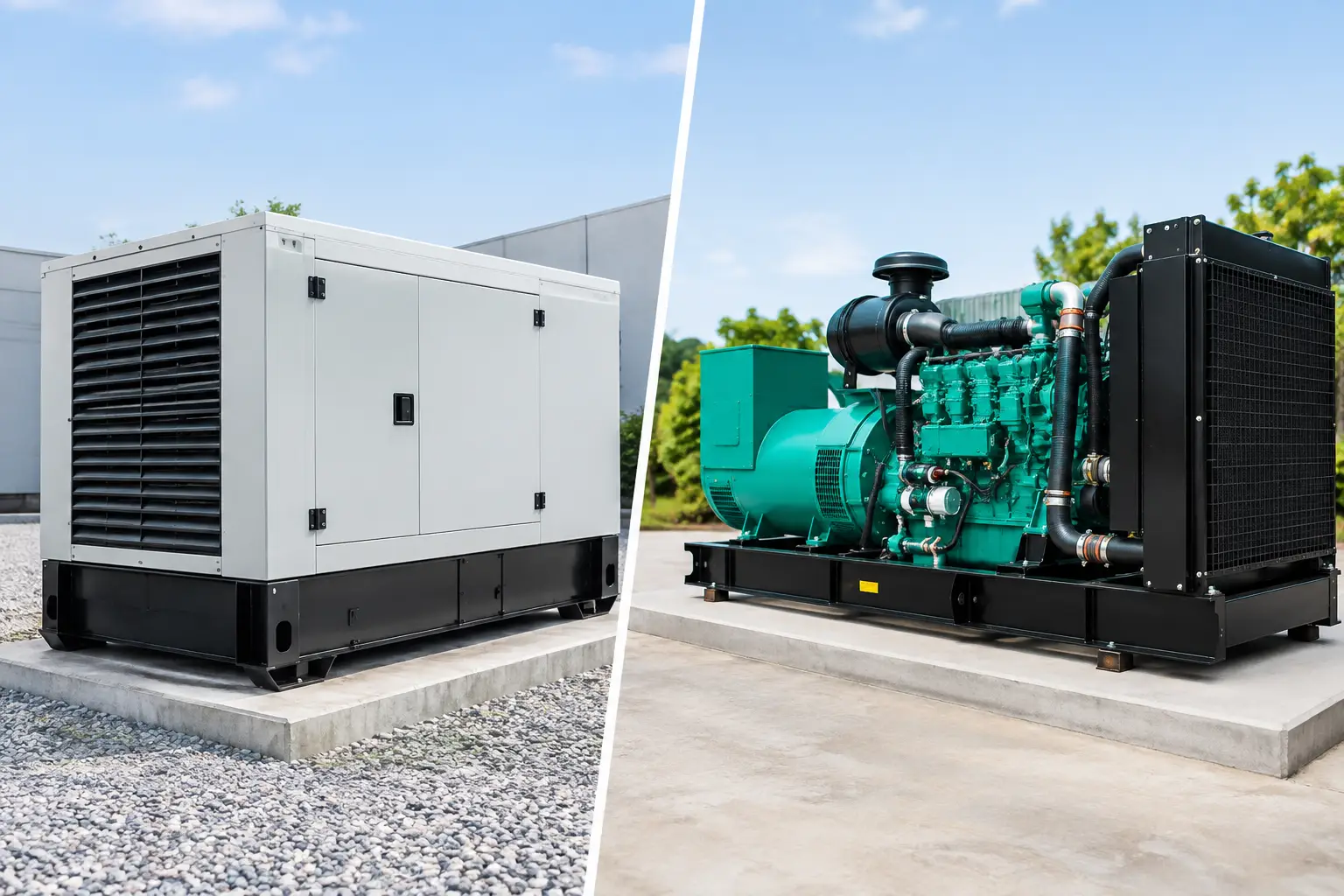
A generator is only useful if it can carry the loads that matter when the grid is down. That is why the air cooled versus liquid cooled generators decision should begin with your electrical demand, fuel supply, and outage priorities – not with a single equipment feature. For a Houston home, an air-cooled standby unit may be the practical answer. For a larger residence, medical facility, retail operation, or multi-tenant property, a liquid-cooled system may provide the capacity and duty cycle the application requires.
Both generator types can start automatically through an automatic transfer switch, run on approved fuel sources, and restore selected or whole-building power during an outage. The right choice comes down to how much power you need, how long you expect to run it, and what it takes to install and maintain the system correctly.
The Core Difference Between Air-Cooled and Liquid-Cooled Generators
An air-cooled generator uses airflow across the engine to carry away heat. Like many small engines, it relies on a fan, shrouding, and cooling fins to manage operating temperature. These units are commonly used for residential standby power because they are compact, effective for typical home loads, and generally less expensive to purchase and install than larger liquid-cooled equipment.
A liquid-cooled generator circulates coolant through the engine and radiator, much like a vehicle. The cooling system gives the engine greater heat-management capability under higher electrical loads and longer operating periods. Liquid-cooled models are typically found in large homes, commercial buildings, and facilities with substantial or essential power requirements.
Cooling method matters, but it does not decide the project by itself. A properly sized air-cooled generator can be a dependable fit for many homes. A liquid-cooled generator is not automatically better simply because it is larger. Oversizing equipment can increase the upfront cost, fuel requirements, site demands, and service expenses without improving the protection you actually need.
Air Cooled Versus Liquid Cooled Generators for Homes
For many Houston-area homeowners, an air-cooled standby generator is the appropriate starting point. It can support essential circuits or, when correctly sized, a broader set of household loads such as refrigeration, lighting, internet equipment, security systems, garage doors, medical devices, and selected air-conditioning equipment.
The biggest advantage is practical value. Air-cooled systems usually have a smaller footprint and lower equipment cost. Their installation can be more straightforward when the home’s electrical service, natural gas supply, and selected load plan fit within the generator’s capability. They are a common choice for homeowners who want automatic backup power without moving into commercial-scale equipment.
There are limits. Large homes with multiple central air-conditioning systems, electric heat, pool equipment, well pumps, workshops, or significant electric appliance loads can exceed what an air-cooled system should be asked to handle. Load management can sometimes allow a smaller generator to prioritize critical equipment, but it cannot create capacity that is not there. A careful load calculation is the responsible way to determine whether an air-cooled unit fits the home.
Houston heat also deserves a realistic conversation. High outdoor temperatures, prolonged outages, and heavy air-conditioning demand place real stress on every standby system. Proper equipment selection, manufacturer-required clearances, adequate fuel pressure, professional commissioning, and scheduled maintenance matter as much as the cooling category printed on the specification sheet.
When a Liquid-Cooled Generator Makes Sense
Liquid-cooled generators are often the better fit when a property needs more power than a typical residential standby unit can provide. That may include a large custom home, an estate with several HVAC systems, a business with refrigeration or inventory protection needs, a medical or care-related facility, an office with critical technology, or a commercial property with life-safety and operational loads.
These systems are designed for higher-output applications and can be better suited to sustained, demanding operation. The liquid cooling system controls engine temperature more consistently under heavy load, while the larger engine platform supports greater electrical capacity. For a business, that additional capacity may protect point-of-sale systems, communications, lighting, selected HVAC, security equipment, and equipment that cannot be left idle during an extended outage.
The trade-off is a more involved project. Liquid-cooled units are larger and heavier, and they typically require a more substantial pad, more site planning, and a larger fuel supply. Depending on the model and application, fuel may be natural gas, propane, or diesel. Electrical integration, transfer-switch design, local code requirements, and permit needs can also be more complex.
For commercial owners and property managers, the question is often not whether the generator can keep every load running. It is which loads must remain energized for the building to operate safely, protect assets, and serve customers. Defining those priorities early avoids paying for unnecessary capacity while making sure critical circuits are protected.
Capacity, Fuel, and Runtime Matter More Than Labels
Generator capacity is measured in kilowatts, but the right kilowatt rating is determined by the property. Air conditioners have startup demands. Motors, pumps, compressors, ovens, dryers, and other large appliances can create substantial load requirements. A generator assessment should account for what runs continuously, what starts intermittently, and what can be managed or left off during an outage.
Fuel is equally important. Natural gas offers a convenient continuous supply where service is available and adequately sized. Propane can be an excellent standby fuel option, especially where natural gas is unavailable, but tank size and refill planning affect how long the system can run. Larger systems consume more fuel, particularly under heavier loads, so fuel planning must match the generator and the expected outage scenario.
Do not assume an existing gas line can supply a new generator. Pipe size, run length, gas pressure, total connected appliances, and generator demand must be evaluated. An undersized fuel connection can prevent a generator from delivering its rated performance when the property needs it most.
Installation Is Where Reliability Is Protected
A standby generator is not a plug-in appliance. Its long-term performance depends on a complete installation that addresses the electrical system, fuel source, pad, clearances, permitting, and final testing.
The process should begin with a site evaluation and load review. From there, the installer can recommend equipment, identify the proper location, determine transfer-switch requirements, review fuel capacity, and plan the concrete pad and electrical connections. Local permitting and code compliance are part of the work, not an afterthought.
After installation, the generator and automatic transfer switch should be tested under appropriate conditions. The system must recognize an outage, transfer the selected loads, run correctly, and return the property to utility power safely. That final power-on is where planning becomes real protection.
Texas Direct Generators manages standby projects from permits to power-on, including equipment selection, pad preparation, transfer-switch installation, gas-line coordination, testing, and ongoing service. One accountable team helps prevent the gaps that can occur when homeowners or facility managers are left to coordinate multiple trades on their own.
Maintenance Differences to Plan For
Both air-cooled and liquid-cooled generators need professional maintenance. Oil and filter changes, battery checks, exercise verification, electrical inspections, and fuel-system review are essential for either type. Standby equipment can sit quietly for long periods, so maintenance is how you find a weak battery, low fluid level, damaged connection, or fault code before an outage exposes it.
Liquid-cooled systems add cooling-system components that need attention, including coolant condition, hoses, belts, radiator condition, and related engine checks. That does not make them a poor choice. It simply means their maintenance plan should match the complexity and importance of the system.
Air-cooled units usually have fewer cooling-system service items, but they still require clear airflow around the enclosure and regular inspection. Landscaping, debris, nesting activity, and improper storage near the unit can interfere with ventilation and service access.
Choose for the Loads You Cannot Afford to Lose
If your goal is to protect a typical home and selected essential loads, an air-cooled standby generator may deliver the right balance of capability and cost. If your building has larger electrical demand, extended runtime expectations, or critical commercial operations, liquid-cooled equipment may be the more responsible investment.
Start with the life, comfort, safety, and business functions you need to protect when utility power fails. A professional site assessment can turn that list into a properly sized system, a realistic fuel plan, and an installation designed to be ready before the next storm tests it.