
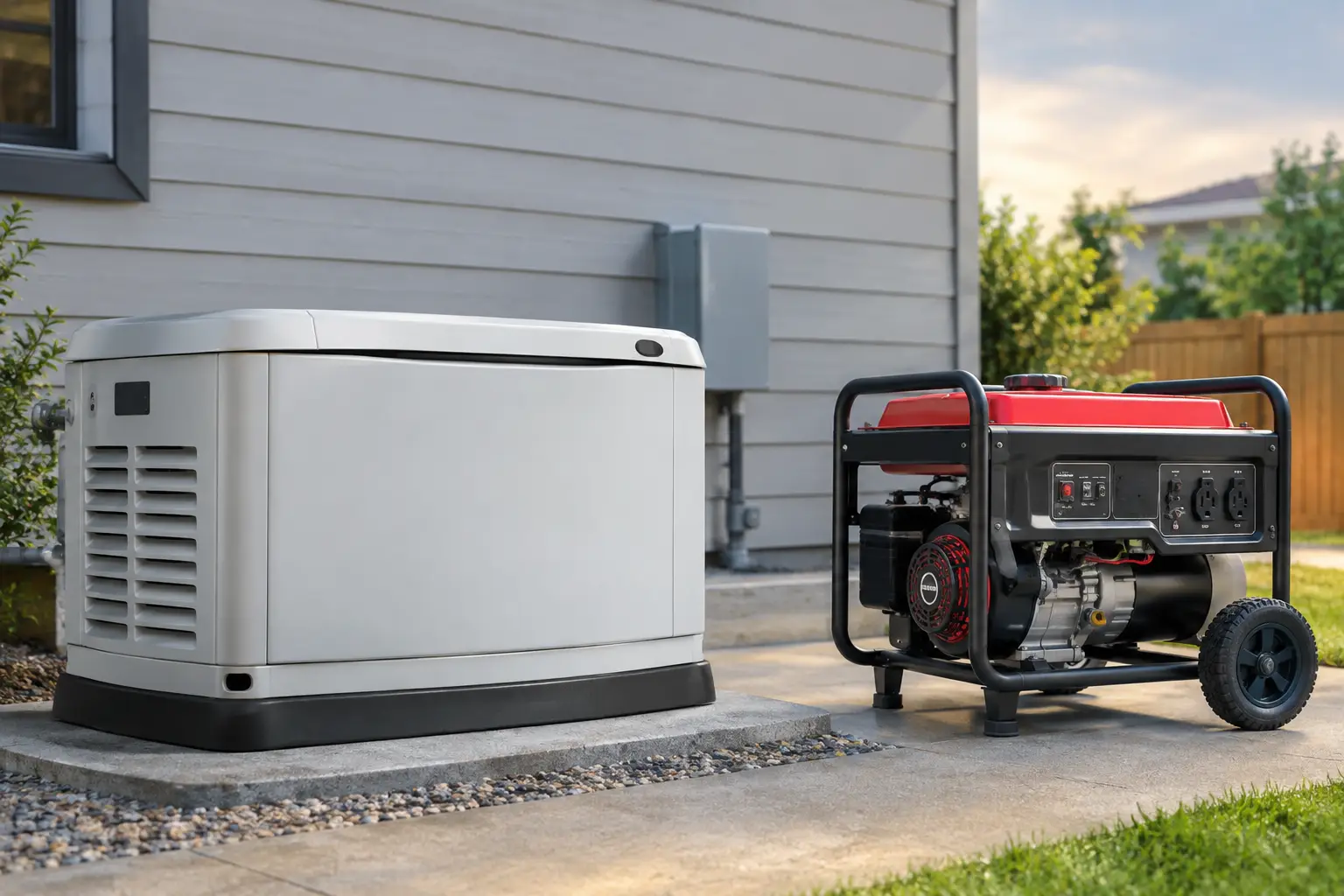
When a Houston-area outage stretches from hours into days, the pressure to get power back can lead to dangerous shortcuts. Standby versus portable generator safety is not simply a question of which machine produces electricity. It comes down to where the generator operates, how it receives fuel, how power enters the building, and whether the system is ready before severe weather arrives.
A portable generator can be a practical short-term tool for selected loads. A permanently installed standby generator is designed to protect a home or facility through an automatic, code-compliant system. Both can provide valuable backup power when used correctly. The safety margin, however, is very different.
Standby Versus Portable Generator Safety: The Core Difference
The biggest difference is that a standby generator is installed as part of the property’s electrical and fuel systems. It sits outdoors on a prepared pad, connects to natural gas or propane, and operates through an automatic transfer switch. When utility power fails, the transfer switch separates the property from the grid before generator power is supplied. When utility service returns, the system transfers back safely.
A portable generator requires hands-on setup during every outage. The owner must move it to a safe outdoor location, protect it from rain without enclosing it, add and store fuel safely, connect approved cords or a properly installed inlet, manage electrical loads, and shut it down before refueling. Each step is manageable, but each introduces an opportunity for error when conditions are dark, wet, stressful, or rushed.
That does not make portable generators inherently unsafe. It means safe operation depends heavily on consistent decisions by the user. A properly designed standby system reduces the number of emergency tasks required from the homeowner, employee, or property manager.
Carbon Monoxide Is the Most Urgent Portable Generator Hazard
Portable generators must operate outdoors, far from doors, windows, vents, crawlspace openings, and attached garages. Generator exhaust contains carbon monoxide, an odorless gas that can become deadly before occupants recognize there is a problem. Running a portable unit in a garage with the door open, beneath a covered patio, or near an open window is not a safe workaround.
Distance matters, but so does wind direction and the layout of the property. Exhaust can collect near openings or travel into a building through ventilation systems. Every home and commercial facility with combustion equipment should have working carbon monoxide alarms in appropriate locations, with batteries or backup power checked regularly.
Standby generators also produce exhaust and require careful placement. The difference is that placement is determined before installation, using manufacturer requirements, local codes, property conditions, utility locations, and clearances from structures and openings. This is one reason generator location should never be treated as an afterthought.
Electrical Backfeeding Can Put Lives at Risk
The most serious electrical mistake with a portable generator is backfeeding: attempting to power a building by plugging the generator into a wall outlet or other household receptacle. This can energize wiring beyond the intended circuit and may send electricity onto utility lines. That can injure utility workers, damage equipment, start a fire, and destroy the generator when utility power returns.
Never connect a portable generator directly to a home or business electrical system without an approved transfer method installed by a qualified electrician. Extension cords can be used for individual appliances when they are correctly rated, in good condition, and protected from water and foot traffic. For selected circuits or broader building coverage, a properly installed generator inlet and transfer switch are the safer solution.
A standby generator is built around this separation. Its automatic transfer switch prevents generator power and utility power from feeding the building at the same time. That protection is central to a safe installation, not an optional add-on.
Fuel Safety Is Different for Gasoline, Natural Gas, and Propane
Most portable generators run on gasoline, though some models use propane or dual-fuel configurations. Gasoline is highly flammable, degrades over time, and must be stored in approved containers away from living areas, ignition sources, and direct heat. During an extended outage, fuel availability can become a safety and planning concern, especially when roads are flooded or local stations are without power.
Portable generators must be turned off and allowed to cool before refueling. Adding gasoline to a hot generator can ignite vapors. Fuel should never be stored indoors or in a garage where fumes can accumulate.
Home standby generators typically use natural gas or a dedicated propane supply. Natural gas can provide continuous fuel when utility gas service remains available. Propane offers an independent on-site fuel source, but the tank must be sized for the generator load and expected runtime. In either case, fuel connections need professional planning and installation. Improper gas-line work can create fire, explosion, equipment-performance, and code-compliance risks.
For businesses, fuel planning deserves special attention. A generator that can run the building for only a few hours may not protect inventory, communications, security systems, or customer operations through a multi-day event. The safe choice is also the one that matches real operational needs.
Weather Protection Should Not Create an Enclosure Hazard
Houston weather adds another layer of concern. Heavy rain, hurricane conditions, standing water, and high winds create real challenges for portable generator users. A generator must remain dry enough to operate safely, but it cannot be placed in an enclosed area to keep out rain. Improvised tents, garages, sheds, and covered spaces can trap exhaust or create fire hazards.
Keep cords out of puddles and away from areas where people walk. Use equipment rated for outdoor use and inspect cords, plugs, and generator connections before each use. If floodwater threatens the operating area, do not stand in water while handling electrical equipment.
Standby systems are installed outdoors on engineered or properly prepared pads, with equipment placement considered before the storm. Professional installation also accounts for electrical connections, fuel piping, drainage conditions, clearances, and the specific generator model. The goal is not merely to make the unit run. It is to ensure it can operate safely when weather conditions are at their worst.
Maintenance Is a Safety Requirement, Not Just a Performance Task
A generator that has not been tested may fail when it is needed or operate unpredictably. For portable units, routine maintenance includes checking engine oil, fuel condition, air filters, battery status, and cords. Owners should run the generator according to the manufacturer’s recommendations and practice connecting essential loads before an outage occurs.
Standby generators should exercise automatically on a regular schedule, but exercise alone is not a full maintenance plan. Scheduled service checks the engine, battery, oil, filters, error codes, transfer switch operation, fuel supply, and overall condition of the system. A trained technician can identify a weak battery, leak, connection issue, or fault before it becomes an outage-day problem.
For property managers and business owners, documented maintenance is especially valuable. It supports continuity planning and helps ensure the backup-power system is ready for the loads it is expected to carry.
Choosing the Safer Fit for Your Property
A portable generator may be appropriate for a homeowner who needs temporary power for a refrigerator, a few lights, device charging, or a window air conditioner and is prepared to operate it carefully. It requires an outage plan, safe outdoor placement, suitable cords or a transfer switch, fuel storage, and a responsible operator who is present.
A standby generator is often the safer fit for households that need continuous air conditioning, refrigeration, medical equipment support, security systems, internet access, or automatic protection while they are away. It is also a strong option for businesses and facilities where losing power affects customers, employees, inventory, communications, or safety systems.
The right system depends on the loads that matter, the available fuel source, site conditions, budget, and how much manual work is realistic during an emergency. Texas Direct Generators manages standby projects from system selection and permits through pad preparation, transfer switch installation, fuel coordination, testing, and final power-on, so critical safety details are handled as one accountable project.
Before the next storm season, identify the loads you cannot afford to lose and decide whether your current backup plan can supply them without asking someone to make high-stakes decisions in the dark, rain, and heat.