
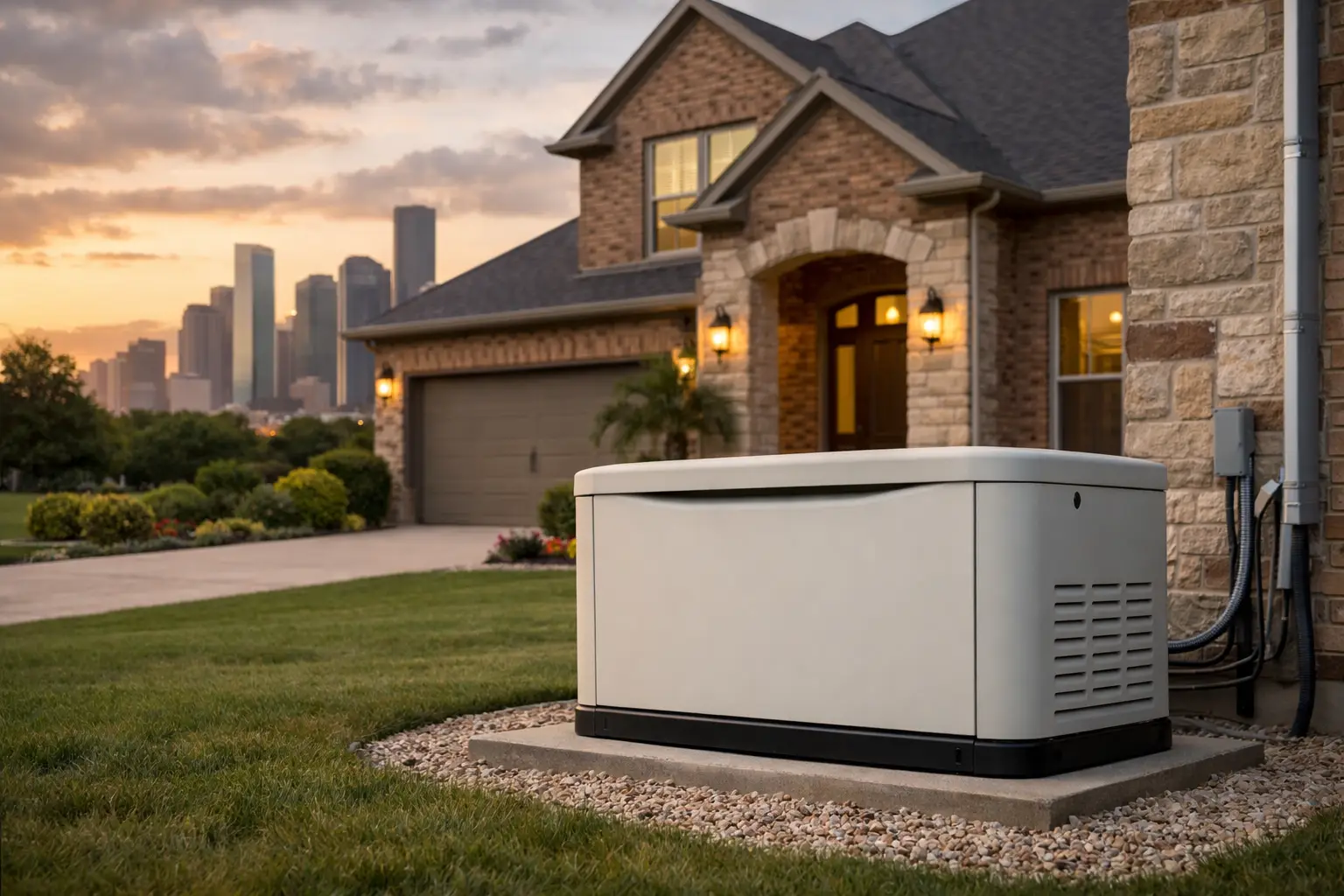
A prolonged Houston-area outage is not just an inconvenience when the temperature is climbing, refrigerated food is at risk, and your home depends on power for security, internet, medical devices, or a well pump. Whole house generator cost is best understood as the price of a complete standby-power system – not simply the generator sitting outside.
For most homeowners, a professionally installed home standby generator represents a significant investment, commonly ranging from roughly $10,000 to $30,000 or more. The right number depends on the power capacity your home needs, the condition and location of utility connections, fuel availability, permitting requirements, and the work required to install the system safely. A smaller project serving selected essentials can cost less, while a larger home with multiple air conditioners, electric appliances, or high electrical demand can exceed that range.
The useful question is not, “What does the unit cost?” It is, “What will it take to deliver reliable, code-compliant power to this property when the grid goes down?”
What Whole House Generator Cost Actually Includes
A standby generator is part of an integrated system. When utility power fails, the automatic transfer switch detects the outage, separates the home from the utility line, starts the generator, and transfers power to the selected circuits. When utility power returns, the system transitions back and the generator shuts down safely.
That process requires more than equipment. A turnkey quote should account for generator selection, the automatic transfer switch, electrical labor, gas or propane fuel connection, a properly prepared pad, permit coordination, startup testing, and final commissioning. Depending on the property, it may also include electrical upgrades, trenching, load management equipment, propane tank setup, or longer fuel-line runs.
A lower initial quote can be misleading if it excludes work that will be necessary before the system can be powered on. Homeowners should compare project scope carefully, not just generator model numbers. Clear responsibility from permits to power-on helps prevent surprise costs and coordination gaps.
Typical Whole House Generator Cost Ranges
Every site needs an assessment, but these broad installed ranges can help Houston and Fort Bend County homeowners establish a realistic budget.
A smaller standby system designed to support essential circuits may fall around $10,000 to $15,000. This approach can protect refrigeration, lighting, select outlets, internet equipment, a garage door, security systems, and possibly one smaller air-conditioning load, depending on the design.
A mid-range system, often selected for a typical family home that needs broader coverage and air-conditioning support, may run roughly $15,000 to $22,000. Many homeowners in this range prioritize enough capacity to maintain normal daily function rather than deciding which appliances can stay on during every outage.
Larger whole-home systems commonly range from $22,000 to $30,000 or more. These projects may support larger homes, multiple HVAC systems, pools, extensive appliance loads, and higher-demand electrical features. They can also involve more substantial fuel work or electrical modifications.
These are planning ranges, not a substitute for a site-specific proposal. Generator capacity, layout, electrical service, and fuel supply can change the final cost materially. A properly sized system is usually a better investment than buying excess capacity without a clear need or undersizing a unit that cannot support the loads that matter most.
The Factors That Change Your Final Price
Generator size and load calculation
Generator size is typically measured in kilowatts. The larger the system, the more the equipment costs, but capacity should be based on a professional load calculation rather than square footage alone. Two homes with the same footprint can have very different electrical needs.
Air conditioners, electric ranges, electric dryers, pool equipment, water heaters, EV chargers, and large pumps can quickly increase demand. A load assessment identifies what must run during an outage, what can be managed, and whether load-shedding controls can reduce the generator size needed. That conversation protects both your budget and your expectations.
Fuel source and gas-line work
Most residential standby generators run on natural gas or propane. Natural gas can be an excellent fit where service is available and the meter and piping can supply the generator’s required fuel volume. However, a gas line that is too small or too long may need to be upgraded.
Propane offers dependable on-site fuel where natural gas is unavailable or where homeowners prefer an independent stored-fuel option. Propane projects may require tank selection, placement planning, delivery coordination, and line installation. Those details affect the upfront project cost, but they are essential to dependable operation.
Electrical equipment and installation conditions
The automatic transfer switch is a critical part of the installation, and the right configuration depends on the home’s service equipment and desired coverage. Some properties require panel work, service upgrades, subpanels, or load-management components before a generator can be connected properly.
Distance matters as well. Longer runs between the generator, electrical panel, gas meter, or propane tank require more materials and labor. Tight access, drainage concerns, fencing, landscaping, and placement requirements can also affect pad preparation and installation logistics.
Permits, codes, and placement requirements
Generator installation is regulated for good reason. Equipment must be located with appropriate clearance from openings, vents, property lines, and other site features. Electrical and fuel connections must meet applicable code requirements, and local permitting and inspections may be required.
Skipping these steps can create safety issues, delay a sale of the property, jeopardize insurance questions, or leave the system unable to pass inspection. A professional contractor should identify these requirements before installation rather than treating them as an afterthought.
Why Equipment-Only Pricing Falls Short
Online generator pricing often reflects the unit alone. It does not necessarily include the transfer switch, delivery, pad, fuel connection, permits, labor, electrical materials, startup, or testing. It also cannot account for the conditions at your property.
A standby generator is expected to work during the conditions when service access may be difficult: severe storms, heat, flooding concerns, and widespread grid disruption. That is why workmanship, proper sizing, and commissioning matter as much as the nameplate on the equipment.
Texas Direct Generators approaches the project as one accountable scope, from evaluating your electrical needs and selecting a Generac system through permitting, installation, fuel coordination, testing, and final power-on. That reduces the burden of coordinating separate trades while giving homeowners a clear point of contact for future maintenance and repairs.
Budgeting for Ownership After Installation
The purchase price is only one part of generator ownership. A standby unit needs scheduled maintenance to remain ready. Service generally includes oil and filter changes, inspections, battery checks, exercise-cycle verification, and a review of operating conditions. The exact maintenance schedule varies by model, runtime, and manufacturer requirements.
Fuel costs also vary. Natural-gas use depends on generator size and electrical load, while propane owners should maintain adequate fuel reserves before storm season. A generator should be exercised regularly, but routine exercise does not replace professional preventive maintenance.
Financing can make a properly designed standby system more accessible by spreading the investment over time. When comparing options, weigh the monthly payment against the coverage you need, the expected duration of local outages, and the value of protecting comfort, food, communications, and critical equipment.
Questions to Ask Before You Approve a Quote
Ask whether the proposal includes permits, the transfer switch, pad preparation, gas or propane work, electrical upgrades, startup testing, and final inspection support. Confirm which loads the quoted generator is designed to carry, particularly your air-conditioning equipment. If a contractor says a system will power the “whole house,” ask for the load calculation and any assumptions behind that statement.
Also ask who will service the generator after installation and how warranty support is handled. A standby system is a long-term piece of equipment, so local maintenance capability matters. The best installation is one you can depend on years later, not merely one that reaches completion quickly.
A site assessment gives you a practical path from outage concern to a clear, itemized scope. Before the next major storm puts your household in the dark, have a qualified local professional assess your loads, fuel options, and installation conditions so you can choose protection with confidence.