
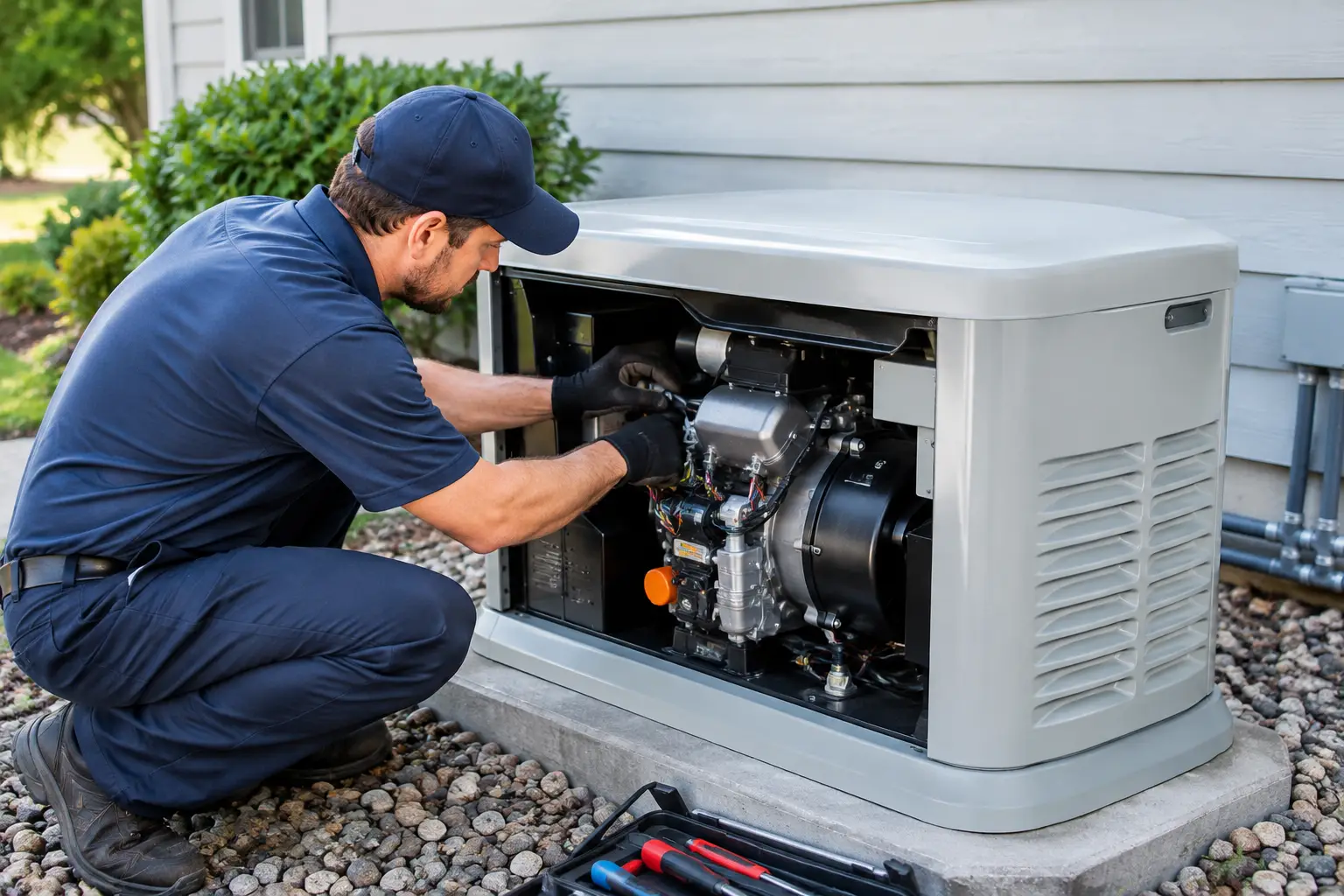
A standby generator may sit quietly for months, then become the most valuable equipment on your property when a hurricane, storm, or grid issue cuts power. That is why the question of when should generators be serviced deserves a schedule, not a guess. Regular service helps ensure your system starts automatically, carries its intended electrical load, and has the fuel, battery, fluids, and safety systems needed to operate when your home or business depends on it.
For most Houston-area standby generators, professional maintenance is recommended at least once a year. Units that run frequently, support commercial operations, or have experienced extended outage use may need service more often. The right interval depends on the generator’s age, run hours, fuel type, environment, and manufacturer requirements.
When Should Generators Be Serviced?
A practical baseline is annual preventive maintenance performed by a qualified generator technician. This visit should happen even if the generator has not carried your property through an outage. Exercise cycles are useful, but a brief weekly self-test does not replace a full inspection, fluid service, load evaluation, and review of the electrical and fuel systems.
For homes with a Generac standby generator, annual service is commonly the minimum standard. If the unit has operated for a prolonged period during storm season, it should be inspected shortly afterward rather than waiting for the next annual appointment. Oil, filters, battery condition, and operational performance can all be affected by extended run time.
Commercial generators often require a more structured schedule. A business protecting refrigeration, security systems, communications, inventory, life-safety equipment, or critical operations may need quarterly inspections, regular load-bank testing, and service based on engine hours. The consequences of a failed start are higher, so maintenance should reflect that risk.
Service by Calendar, Run Hours, and Conditions
The calendar matters, but it is only one part of the decision. Engine run hours are equally meaningful. A generator that exercised weekly and ran several days during a major outage has experienced far more wear than one that only completed short test cycles. Your owner’s manual establishes maintenance intervals for oil, filters, spark plugs, valves, and other components, and those intervals should be followed.
Houston’s climate adds another reason to be proactive. Heat, humidity, heavy rain, wind-driven debris, and long storm outages place demands on outdoor equipment. High temperatures can shorten battery life and expose weak cooling or ventilation conditions. Moisture can contribute to corrosion at terminals, connections, enclosures, and transfer-switch components. Rodents, insects, leaves, and landscaping can also obstruct airflow around the unit.
A good service plan accounts for these local realities. Scheduling a visit before the most active severe-weather periods gives a technician time to identify concerns before your generator is called into service. Waiting until a storm watch is issued is risky. Service schedules fill quickly, and a repair may require a part that cannot be installed the same day.
What Professional Generator Maintenance Should Include
A proper visit is more than starting the generator and listening for unusual noise. The technician should inspect the system as a complete standby-power installation, from the generator enclosure to the automatic transfer switch and fuel supply.
At a minimum, annual maintenance typically includes an oil and oil-filter change when required, air-filter inspection or replacement, spark-plug inspection, battery testing, and a check of coolant or other engine fluids where applicable. The technician should inspect belts, hoses, electrical connections, wiring, controller alerts, and the condition of the weatherproof enclosure.
The fuel system also needs attention. Natural-gas and propane connections must remain secure and properly sized for the generator’s demand. A generator can appear mechanically sound but still fail under load if it is not receiving adequate fuel pressure. For propane systems, tank level, regulator condition, and fuel planning should be reviewed well before storm season.
The automatic transfer switch deserves the same level of care. This device detects utility loss, starts the generator, and transfers selected circuits or the entire property to backup power. A technician should verify that the system is exercising correctly, review fault history, and confirm that the generator and transfer switch communicate as designed. For many customers, the transfer switch is the difference between a generator that runs and a system that actually restores usable power.
Signs Your Generator Needs Service Now
Do not wait for the annual date if your generator shows a warning sign. A red or yellow status light, an error message on the controller, an alarm notification, fuel odor, fluid leak, corrosion, damaged enclosure, or unusual sound during exercise should be addressed promptly.
A weak battery is one of the most common reasons a standby generator does not start. If the unit cranks slowly, reports a battery issue, or has not had its battery tested recently, schedule service. Batteries can fail without obvious warning, particularly after several hot Houston summers.
You should also arrange an inspection after any extended outage event. Even if the generator performed well, long run periods consume oil, add engine hours, and may reveal fuel-delivery or load-management concerns that were not apparent during a short exercise cycle. This is the time to correct minor issues before the next outage.
Other reasons to call for service include changes to your property. Adding air conditioning equipment, a pool, a workshop, medical equipment, or major appliances can change the electrical demand placed on the system. A technician can review whether your generator capacity, transfer-switch configuration, and load priorities still match what you expect the system to power.
Homeowners Can Help Between Service Visits
Owners should not perform repairs beyond their comfort level or bypass safety protections, but a few routine checks help preserve the system between professional visits. Keep the area around the generator clear of grass clippings, stored materials, branches, and landscaping that restricts ventilation. Never block the required clearance around the enclosure.
Check the exterior status indicator periodically and pay attention to app or controller notifications. If your generator has an exercise schedule, confirm it is running as expected. During a brief exercise cycle, listen for rattling, repeated starting attempts, or sounds that differ from normal operation. Report what you notice rather than assuming the unit will correct itself.
It is also wise to know what your generator is designed to power. Standby systems may cover the whole home or selected essential loads, depending on the installation and generator size. Understanding that design prevents disappointment during an outage and helps you recognize when a load-management issue needs professional attention.
Why Scheduled Service Protects Your Investment
A standby generator is not a purchase you want to test for the first time during a storm. It is a coordinated system involving electrical work, fuel delivery, controls, and mechanical equipment. Skipping maintenance can turn a manageable issue, such as an aging battery or dirty filter, into a no-start condition when utility power is unavailable.
Scheduled service can also help preserve warranty coverage and document the care of your equipment. For commercial property managers, maintenance records support planning, budgeting, and accountability. For homeowners, they provide confidence that the system protecting air conditioning, refrigeration, communications, security, and medical needs has been professionally reviewed.
Texas Direct Generators provides maintenance and repair support for local standby-power customers, with technicians who understand the full system from permits to power-on. That local familiarity matters when a technician is evaluating how fuel supply, transfer equipment, generator sizing, and site conditions work together.
The best time to schedule generator service is before you need the generator. Put an annual appointment on the calendar, call sooner after a long outage or warning alert, and give your backup-power system the same disciplined care you expect from it when the lights go out.