
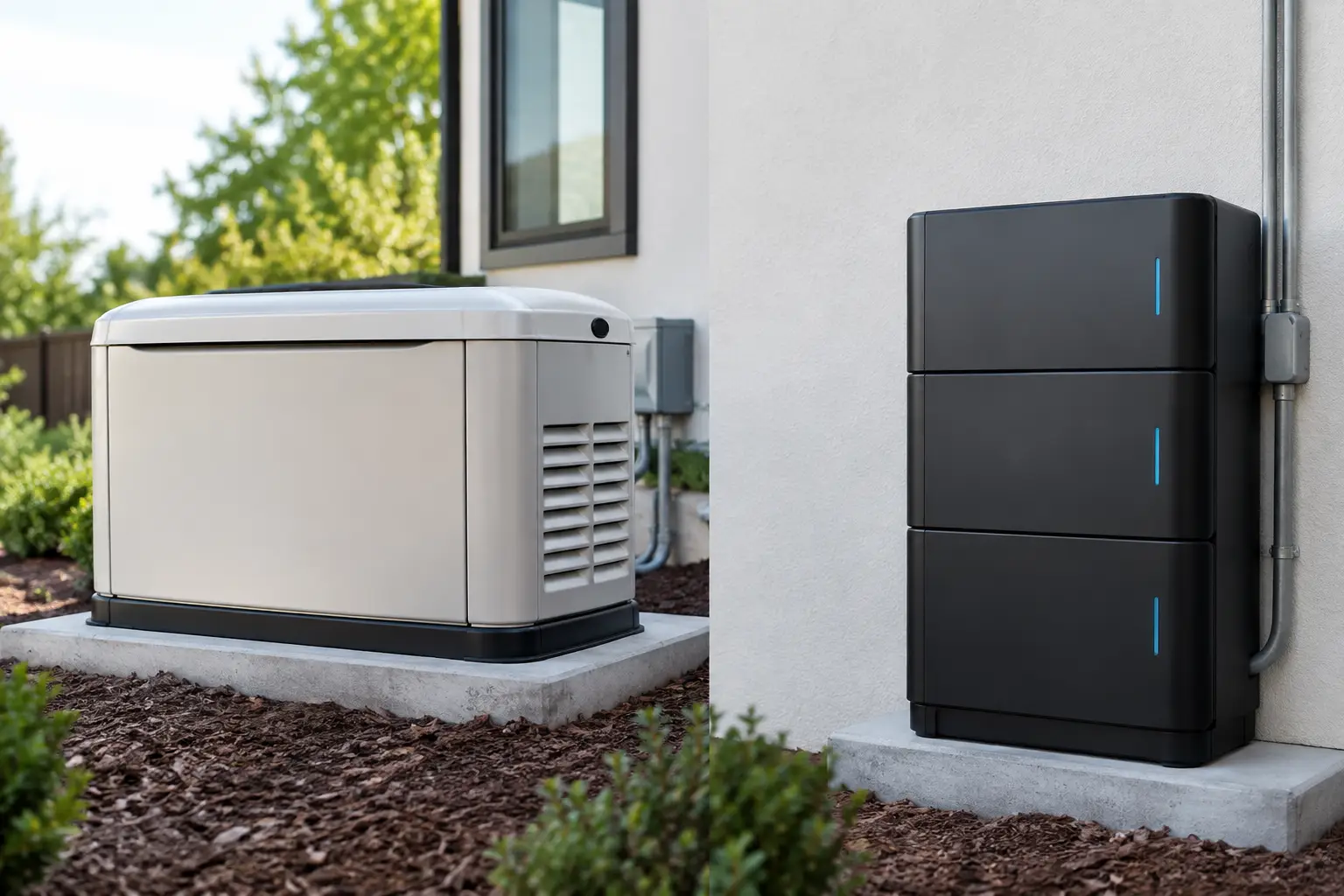
When a Gulf Coast storm cuts power in the middle of a Houston summer, the question is not simply whether you have backup power. It is whether that power can keep your air conditioning, refrigeration, communications, security, and essential equipment running for as long as the outage lasts. In a standby generator versus battery backup decision, the right answer depends on the loads you need to protect, how long you expect to be without utility power, and how much independence your property requires.
A battery can be an excellent solution for limited, short-duration needs. A permanently installed standby generator is built for a different assignment: carrying a home or business through an extended outage with automatic operation and a dependable fuel source. Understanding that distinction helps avoid an expensive system that does not perform when conditions are at their worst.
Standby Generator Versus Battery Backup: Core Differences
A home standby generator is permanently installed outside the property, much like a central air-conditioning unit. It connects to an automatic transfer switch and a fuel supply, usually natural gas or propane. When utility power fails, the transfer switch detects the outage, signals the generator to start, and transfers selected electrical loads to generator power within seconds. When utility power returns, the system transfers back and the generator shuts down.
A battery backup system stores electricity for later use. During an outage, it supplies power through an inverter to designated circuits or, in some configurations, much of the home. Batteries are quiet, produce no exhaust at the property, and can be paired with solar panels. Their available runtime, however, is limited by stored capacity, the size of the electrical load, and how quickly they can recharge.
The practical difference is straightforward. A generator can continue operating as long as it has fuel and receives proper maintenance. A battery starts with a fixed amount of stored energy. It may cover internet equipment, lights, refrigerators, and a few outlets for many hours, but high-demand equipment can reduce runtime quickly.
Runtime Matters More Than the Product Label
Many property owners first compare the purchase price of a generator and a battery. The more useful comparison is what each system will support after six hours, 24 hours, or several days without power.
A battery backup can be well suited to short outages or a carefully managed essential-load panel. If the goal is to keep phones charged, maintain lighting, operate a refrigerator, and run a modem and medical device, a properly sized battery may be enough. It is particularly attractive where quiet operation is the top priority and electrical demand is modest.
Extended outages change the calculation. Central air conditioning, electric water heating, electric cooking, well pumps, pool equipment, commercial refrigeration, and multiple HVAC systems consume substantial power. In Greater Houston, losing air conditioning during heat and humidity is more than an inconvenience for many households. It can also create a serious concern for older adults, young children, pets, and people with health conditions.
A standby generator is generally the stronger fit when the expectation is to maintain normal operations through multi-day outages. Natural gas offers a continuous fuel source at many properties, while propane provides an effective option where natural gas is unavailable. Propane tank size and expected load determine how long the system can operate before refueling is needed.
Power Capacity and What You Want to Keep Running
Battery systems are measured in stored kilowatt-hours, while generators are commonly sized by kilowatts. Those measurements are related but answer different questions. A battery’s stored energy reflects how long it can provide power. A generator’s output rating reflects how much equipment it can operate at one time.
That distinction becomes critical when air conditioning starts. HVAC equipment has significant startup and running demand. One battery may handle a few essential circuits well but may not support central air conditioning for an extended period, especially while also carrying refrigeration and household loads. Adding battery capacity can improve performance, but it also increases the project cost.
Standby generators are available in a range of sizes, from systems designed for selected essential circuits to units capable of supporting most or all of a residence. Commercial systems can be engineered around critical equipment, life-safety needs, communications, inventory protection, and operational continuity. Proper sizing requires more than looking at a utility bill. It requires a load assessment that accounts for equipment ratings, startup demands, priorities, and how the property is actually used.
For a homeowner, the conversation often comes down to whether you want to ration power or live relatively normally during an outage. For a business, it comes down to which interruption is more costly: the investment in properly sized backup power or the revenue, inventory, safety, and customer-service losses caused by downtime.
Installation Is Not Just About Setting Equipment Outside
Both options require professional electrical planning. A battery system needs correctly designed circuits, inverter equipment, code-compliant wiring, and a clear understanding of what will and will not be powered. Solar panels can help replenish batteries, but solar output varies with weather, time of day, system design, and whether the solar equipment is configured to operate during an outage.
A standby generator project has additional site and fuel requirements. The unit needs a properly prepared location, a concrete pad, electrical connections, an automatic transfer switch, and a natural gas or propane connection. Local permits, setback requirements, fuel capacity, and final testing all matter. A generator that is incorrectly sized, improperly placed, or poorly connected can create reliability and safety problems when it is needed most.
This is why a turnkey contractor matters. Texas Direct Generators manages standby projects from system selection and permitting through pad preparation, transfer-switch installation, fuel coordination, testing, and final power-on. One accountable team helps prevent the homeowner or facility manager from having to coordinate electricians, fuel providers, inspectors, and equipment suppliers during an already complex project.
Noise, Maintenance, and Day-to-Day Ownership
Battery backup has a clear advantage in noise. It operates quietly and requires comparatively little routine mechanical maintenance. For homeowners who only need modest emergency power, that simplicity can be appealing.
Standby generators make more sound when running, although modern residential units are designed for neighborhood installation and operate from a fixed outdoor location. The trade-off is greater capability during a prolonged outage. Generators also need scheduled maintenance, periodic exercise, oil and filter service, and inspection of the fuel and electrical systems. That maintenance is not optional if dependable operation is the goal.
A battery is not maintenance-free in the long term. Batteries have a finite service life, and performance can be affected by temperature, age, charging cycles, and system settings. Both technologies reward owners who plan for ongoing service rather than treating backup power as a one-time purchase.
Which Backup Power System Fits Your Property?
A battery backup may be the right choice if outages are usually brief, you only need a limited set of circuits, and quiet operation is the primary concern. It can also complement solar where the system is designed to provide outage power.
A standby generator is often the better choice if any of the following describe your needs:
- You need central air conditioning or multiple major appliances during an outage.
- You want automatic power restoration without managing circuits and usage.
- You expect outages that may last a day or longer after storms or grid events.
- You operate a business or manage a facility where downtime threatens safety, inventory, communications, or revenue.
There are also hybrid situations. Some properties use batteries for instant, quiet support of sensitive electronics and a generator for long-duration power. The best design is driven by priorities, available fuel, budget, electrical demand, and the consequences of losing power.
Start With the Loads That Cannot Go Down
Do not choose backup power based solely on a headline capacity number or a neighbor’s installation. Start by identifying the systems that must continue operating: HVAC, refrigeration, medical equipment, security, sump pumps, communications, servers, gates, lighting, or critical business equipment. Then determine how long they must run and whether natural gas or propane is available.
A clear load assessment turns an outage concern into a practical power plan. The right system should be sized, permitted, installed, and maintained to protect the way your home or business actually operates when the grid is unavailable.