
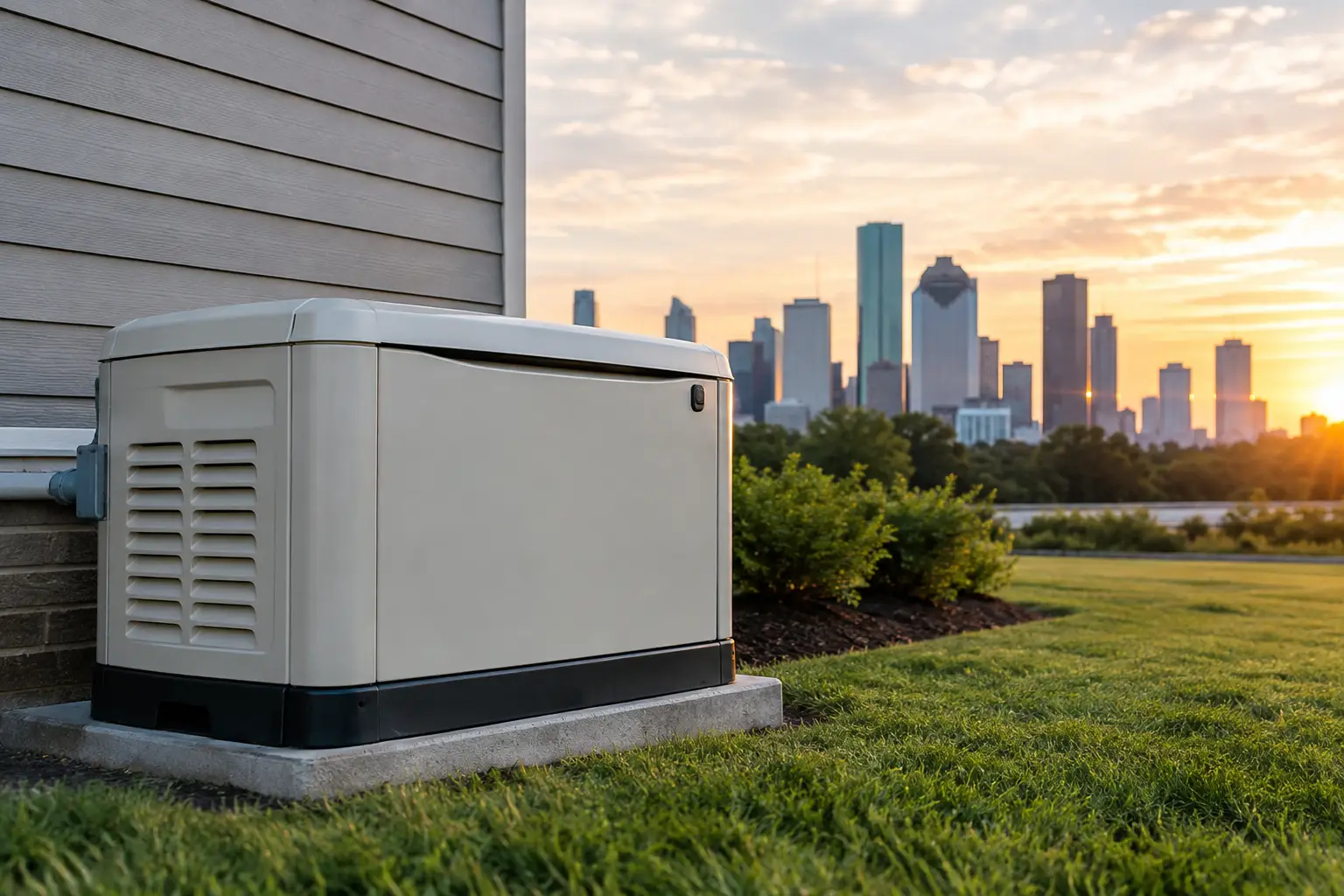
A Houston outage is rarely just an inconvenience. In summer, a loss of power can mean no air conditioning, spoiled food, interrupted work, and real concern for family members who rely on medical equipment. For a business, it can mean lost sales, damaged inventory, closed doors, and safety systems that cannot operate as intended. Houston generator demand trends reflect that reality: more property owners are treating backup power as a practical part of protecting their homes and operations.
The strongest demand does not come from a single event. It builds after storms, heat waves, flooding, and long restoration times remind people how dependent daily life is on electricity. The owners who plan before the next outage have more time to select the right system, prepare the site, and complete the project correctly.
What Is Driving Houston Generator Demand Trends?
Greater Houston has always faced weather exposure, but the decision to install standby power is becoming more deliberate. Homeowners are weighing the cost of outages against the cost of a permanently installed generator. Businesses and property managers are looking at continuity, tenant expectations, customer service, and the protection of critical loads.
Severe weather remains a primary driver. Hurricanes and tropical storms can interrupt power across large areas, while thunderstorms, high winds, and flooding can damage local infrastructure at any time of year. A standby generator is not dependent on finding fuel after a storm or running extension cords through a house. When utility power fails, an automatic transfer switch detects the outage, starts the generator, and transfers selected electrical loads to backup power.
Heat has also changed the conversation. In Houston, air conditioning is not simply a comfort feature during a prolonged summer outage. It can be a health and safety issue for children, older adults, pets, and anyone with a medical condition. Demand often rises after a heat-related outage because homeowners recognize that a portable unit may not support central air conditioning, refrigerators, lighting, internet service, and other necessities at the same time.
Grid uncertainty contributes as well. No homeowner or business owner can control when an outage occurs or how long restoration will take. What they can control is their level of preparation. That is why many customers are moving from a temporary response plan to a fixed, automatic backup-power system designed around their actual electrical needs.
Demand Is Growing Beyond Whole-Home Protection
Some Houston homeowners want whole-home coverage, including air conditioning, kitchen appliances, lighting, security, pool equipment, and electronics. Others prefer to protect essential circuits such as one HVAC system, refrigeration, medical devices, internet equipment, a garage door, and key outlets. Neither approach is automatically right. The correct choice depends on the home’s electrical load, available fuel supply, budget, and the level of comfort the family expects during an outage.
This distinction matters because generator demand is not only about larger equipment. It is also about better system design. A properly sized standby generator must account for starting loads, especially air conditioning equipment, as well as the appliances and circuits expected to run simultaneously. Choosing a unit based only on square footage can lead to disappointment or unnecessary expense.
Commercial demand follows a similar pattern. A retail business may need refrigeration, point-of-sale systems, lighting, and limited HVAC. A medical office may prioritize critical equipment, communications, and climate control. Multifamily properties may need common-area lighting, access control, fire-related systems, elevators where applicable, or selected tenant support. The goal is not always to power every circuit. It is to identify what must stay operational and build a reliable plan around it.
Why Waiting Until Storm Season Creates Pressure
Generator interest often spikes immediately after a major outage. That is understandable, but it is not always the easiest time to begin a project. Equipment availability, installation schedules, permitting activity, and fuel coordination can all become more compressed when thousands of property owners are making the same decision.
A standby generator installation is more involved than placing equipment beside a building. The project may require load calculations, equipment selection, a concrete pad, electrical work, an automatic transfer switch, natural-gas or propane fuel connection, permits, inspections, testing, and final commissioning. Site conditions can affect the plan, including clearance requirements, drainage, fencing, setbacks, meter location, and the condition of the existing electrical service.
Planning outside the immediate rush gives owners time to consider their priorities instead of making a hurried purchase. It also creates room to address upgrades that may be needed, such as electrical panel work, gas-piping modifications, or propane tank setup. A lower-priced quote that ignores those details can become expensive when work stops for corrections or inspections.
Natural Gas, Propane, and the Fuel Question
Fuel is one of the most important decisions in a standby generator project. Many Houston-area homes use natural gas, which can be a convenient long-term fuel source when the gas supply and piping capacity are adequate. However, the generator’s fuel demand must be calculated alongside existing appliances. An undersized gas line can prevent a generator from performing as expected under load.
Propane is a strong option for properties without natural gas or for owners who prefer an onsite fuel supply. It requires planning for tank size, placement, delivery access, and local requirements. The right tank capacity depends on the generator size, expected runtime, and how much of the home or facility will be backed up.
Fuel selection is not a sales add-on. It is part of whether the system will deliver dependable power when it is needed. A contractor should evaluate it early, not after the generator has already been selected.
What Smart Buyers Are Asking Before They Purchase
The market is becoming more informed. Customers are asking how much of their property a generator can support, whether it will run the air conditioner, how the system starts, and what maintenance it needs. Those are the right questions.
They should also ask who manages permits, electrical installation, fuel coordination, inspections, and startup testing. Standby power is a system, not just a piece of equipment. The generator, transfer switch, electrical connections, fuel supply, controls, and site preparation must work together.
For commercial customers, the conversation should include outage procedures. Which loads transfer first? Which systems must remain live? Are there sensitive electronics, refrigeration requirements, or life-safety considerations? A generator system should support an operational plan, not create confusion when utility power drops.
Maintenance Is Part of the Demand Story
More installed generators also mean greater demand for service and maintenance. A standby generator may exercise automatically, but it still needs professional attention. Oil, filters, batteries, electrical connections, error codes, and fuel-system performance all affect readiness. A unit that has not been maintained can fail at the exact moment it is supposed to protect the property.
Routine maintenance is especially valuable in Houston’s heat, humidity, and storm environment. It gives technicians an opportunity to find battery weakness, fluid issues, corrosion, rodent damage, or developing faults before an outage exposes them. For businesses, scheduled service also helps document that the backup-power system is being managed responsibly.
Texas Direct Generators approaches standby power as a permits-to-power-on project, followed by the service needed to keep that protection ready. That accountability matters when a property owner needs one team to handle equipment selection, installation details, commissioning, repairs, and long-term maintenance.
How to Respond to the Trend Without Overbuying
Growing demand does not mean every property needs the largest available generator. It means every property needs an honest assessment of risk and priorities. Start by identifying the electrical loads that matter most during an outage, how long you need to operate, and what fuel source is available. Then evaluate the site and electrical infrastructure before settling on equipment.
Financing can make a permanent system more accessible, but monthly payment should not be the only decision point. Compare the scope of work, the equipment rating, the contractor’s licensing and insurance, the permit process, fuel work, and the maintenance plan. The best value is a code-compliant installation that starts automatically, carries the intended load, and can be serviced locally for years.
The next outage will not arrive on a convenient schedule. A well-planned standby generator gives your family, employees, customers, or tenants a clearer path through it – with power that is designed to be there when the lights go out.