
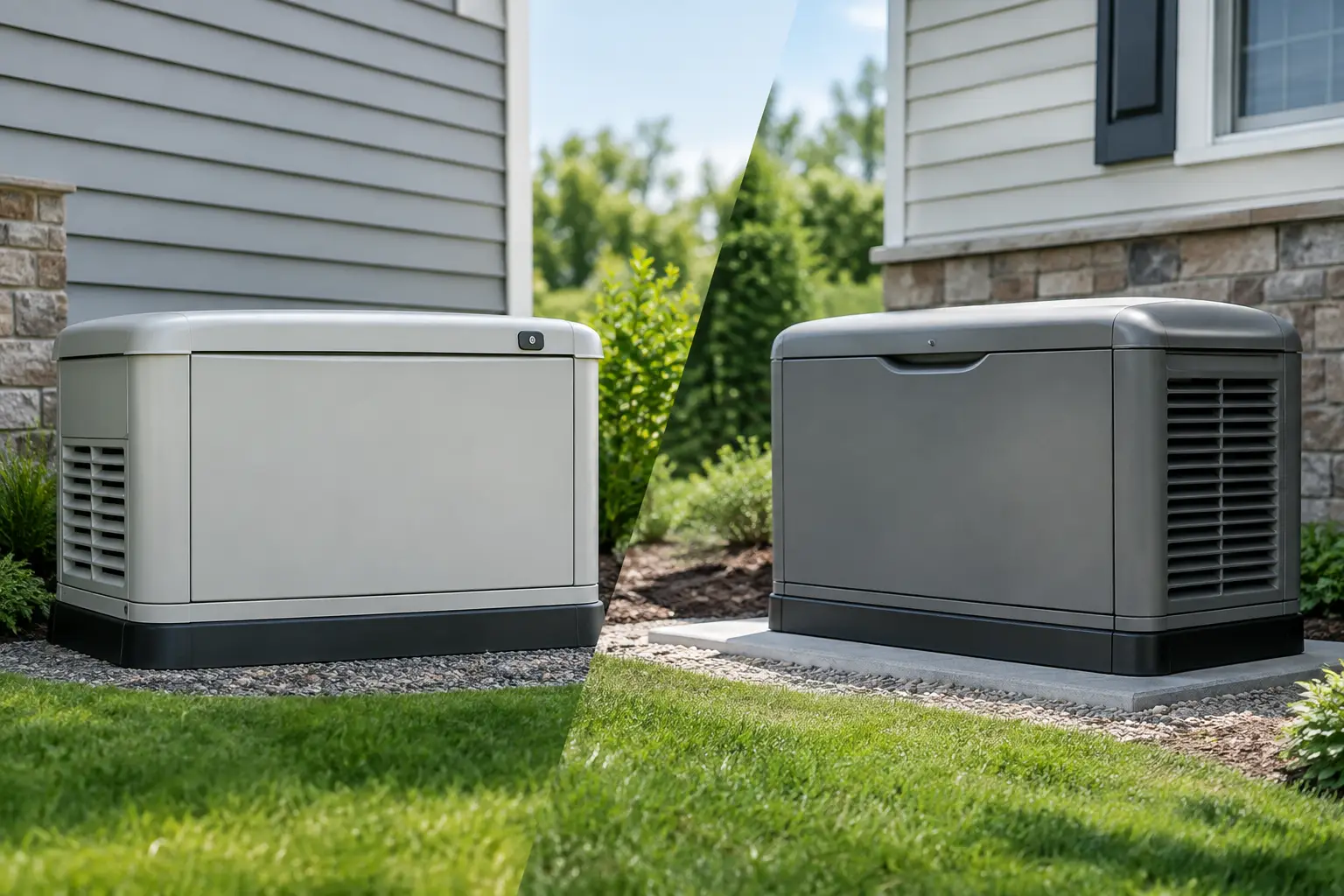
A standby generator is not a purchase you want to second-guess while your air conditioning is off, the refrigerator is warming up, and the neighborhood is dark after a Gulf Coast storm. When comparing Generac versus Kohler generators, the right answer is rarely about a logo alone. It comes down to the loads you need to protect, the fuel available at your property, the installation requirements, and who will support the system after power is restored.
Both brands build respected standby generator equipment for homes and commercial facilities. Either can be part of a dependable backup-power plan when it is sized correctly, installed to code, and maintained on schedule. The better choice for your property depends on practical details that should be settled before equipment reaches the site.
Generac Versus Kohler Generators: Start With the Job
A homeowner may want whole-home coverage for central air conditioning, refrigeration, internet, security, lighting, and medical equipment. Another may only need selected circuits to keep essential systems operating. A restaurant, office, medical practice, or multifamily property may have a much more complicated priority list involving refrigeration, point-of-sale systems, elevators, life-safety equipment, servers, or tenant needs.
That is why generator comparison should begin with an electrical load assessment, not a horsepower number or a unit price. Your contractor should identify what must stay on during an outage, account for starting loads from motors and air conditioners, and determine whether the system is intended to power the whole property or only essential circuits.
Generac and Kohler both offer residential and commercial options across a range of capacities. Model availability, enclosure type, voltage, phase, fuel configuration, and control options vary by product line. A specific Generac model may be a better fit than one Kohler model, while a different Kohler configuration may fit another facility more cleanly. Comparing brand names without comparing exact models can lead to an expensive mismatch.
What Homeowners Usually Notice First
For most homeowners, the deciding factors are capacity, automatic operation, noise, footprint, and long-term service access.
A permanently installed standby generator from either brand can work with an automatic transfer switch. When utility power fails, the transfer switch separates the home from the grid and signals the generator to start. After the generator reaches stable output, the system transfers selected or whole-home loads to backup power. When utility service returns, the generator transfers the home back and completes a cool-down cycle.
The experience should feel simple for the homeowner. The work behind it is not. Proper operation relies on accurate load calculations, transfer-switch selection, electrical wiring, fuel delivery, placement clearances, permits, inspections, and commissioning. A generator that is excellent on paper can still underperform if the gas line is undersized or the installation was rushed.
Capacity and load management
Generac is widely recognized in the home standby market, with options commonly selected for essential-load and whole-home applications. Kohler also offers residential standby equipment with configurations designed for automatic outage response. In either case, capacity should be matched to the home rather than guessed from square footage alone.
Homes with multiple central air conditioners, electric water heaters, pool equipment, large well pumps, or high-demand appliances may need load management. This allows certain nonessential loads to be managed automatically so the generator can support higher-priority equipment without being overloaded. It can be a cost-effective alternative to installing a much larger unit, but it must be planned deliberately.
Fuel matters as much as the generator
Most Houston-area standby systems use natural gas or propane. Natural gas can provide continuous fuel delivery during an outage, but the existing gas meter, piping size, and total appliance demand must support the generator’s requirements. Propane is a strong solution where natural gas is unavailable or insufficient, provided the tank is correctly sized and kept supplied.
Do not assume an existing gas line will work because a nearby appliance is connected to it. Generators consume substantial fuel under load. Fuel planning is one of the most common places where a turnkey installation protects the customer from a system that starts but cannot reliably carry the intended load.
How Commercial Decisions Differ
Commercial backup power requires a more detailed conversation. The generator may need to support three-phase power, specific voltage requirements, larger transfer equipment, remote monitoring, longer run times, or a sequence of priorities during an extended outage.
For a business, a generator is often about protecting more than comfort. It can preserve perishable inventory, keep communications open, support safety systems, protect data, and allow employees to continue serving customers. The financial impact of downtime may justify additional capacity, redundancy planning, or fuel-storage considerations that would not make sense at a residence.
Generac and Kohler both have commercial generator offerings, but the selection process should focus on the facility’s electrical design and operating requirements. A facility manager should ask how the system will handle motor starting, whether critical loads require clean and stable power, how often it will exercise, and what service response is available locally. For larger projects, engineering requirements and local code can drive the decision as much as equipment preference.
Service Support Is Part of the Comparison
A standby generator is a mechanical engine, an electrical power source, a fuel-fired appliance, and an automated control system. It needs periodic attention even when it has not been called on to run during an outage.
Routine maintenance generally includes exercising the unit, checking oil and filters, inspecting the battery and charger, evaluating error codes, testing transfer-switch operation, and looking for fuel or electrical issues. Service intervals and procedures vary by model, fuel type, and operating hours. A maintenance plan also establishes a record that can help catch small problems before storm season exposes them.
This is where local support should carry real weight in a Generac versus Kohler generator decision. Ask who will diagnose a fault, source parts, perform warranty-related work when applicable, and inspect the system after it has carried a long outage. The lowest installation quote is not always the lowest cost of ownership if the installer is difficult to reach once the project is complete.
Texas Direct Generators provides Generac equipment and handles the work from permits to power-on, including system selection, pad preparation, transfer-switch installation, fuel coordination, testing, repairs, and scheduled maintenance. For property owners who prefer one accountable local team, that full-project responsibility can be a meaningful advantage.
Installation Quality Is Not a Brand Feature
Neither Generac nor Kohler can compensate for poor siting, improper electrical work, inadequate fuel supply, or skipped permitting. A dependable standby project starts with a site review that considers equipment clearances, local requirements, flood exposure, access for service, exhaust direction, and the location of electrical and gas connections.
The generator should sit on a properly prepared pad and be installed according to manufacturer requirements and applicable codes. The transfer switch must be correctly sized and wired. The fuel connection must be designed for the generator’s demand at the required distance and pressure. After installation, the system should be tested under appropriate conditions so the owner understands what it powers and how it responds.
For homes and businesses in Greater Houston and Fort Bend County, weather also deserves attention. Heavy rain, heat, wind-driven debris, and localized flooding can affect placement and access. A local contractor should account for the property itself, not treat every installation as a standard package.
Which Brand Is the Better Choice?
Choose based on the exact equipment fit, qualified local installation, and dependable service plan. If you are considering Generac, work with a provider that has the product knowledge and authorization to select, install, commission, and maintain the system properly. If you are considering Kohler, apply the same standard: confirm that the proposed model meets your load requirements and that trained local support is available for the life of the equipment.
For many homeowners, the practical decision comes down to finding the correctly sized system with a proven local service path, rather than pursuing a broad claim that one brand is always better. For commercial facilities, the decision should be driven by the electrical scope, runtime needs, critical-load priorities, and the contractor’s ability to manage a code-compliant installation.
The best next step is a site-specific consultation before the next outage makes the decision for you. A clear load review, fuel assessment, and installation plan will give you far more confidence than a brand comparison alone.