
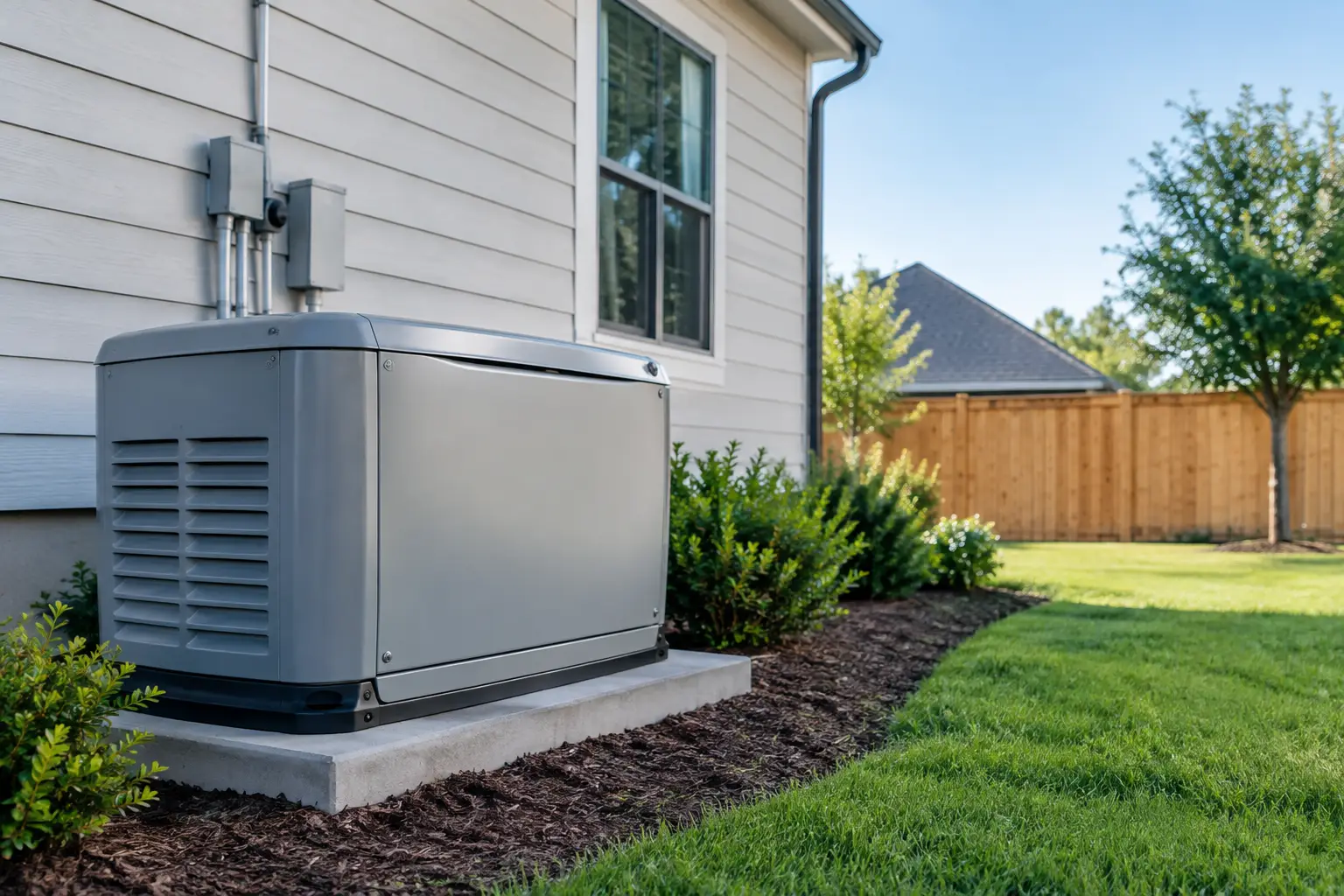
When a storm takes out power, a standby generator can keep the air conditioning running, protect refrigerated food and medication, maintain security systems, and keep your business operating. But before choosing a unit, homeowners and facility managers often ask: do generators need building permits? For a permanently installed standby generator, the answer in most Greater Houston-area jurisdictions is yes, or at least permits for parts of the work.
A professional installation is more than setting equipment on a pad. It involves electrical connections, an automatic transfer switch, fuel supply, placement clearances, and final testing. Permits and inspections verify that those systems work together safely before your generator is called on during an outage.
Do Generators Need Building Permits for Standby Systems?
A portable generator generally does not require a building permit because it is not permanently connected to the home or building. That does not remove the need for safe operation, proper outdoor placement, and an approved way to connect critical equipment. Backfeeding a portable generator through an outlet is dangerous and can put utility crews and your property at risk.
A home standby generator is different. It is a fixed piece of equipment connected to your electrical system through an automatic transfer switch and supplied by natural gas or propane. Local authorities commonly require permits because the project can include electrical, plumbing or gas, mechanical, and site-related work.
The exact permit requirement depends on where the property is located. Houston, Sugar Land, Missouri City, Pearland, Katy, Richmond, Rosenberg, Stafford, and unincorporated areas of Fort Bend County may follow different local procedures. A homeowners association may also have requirements for appearance, location, screening, or approval before installation. Never assume that rules in a neighboring city apply to your address.
Why Permits Matter When the Power Is Out
Permits are not paperwork for paperwork’s sake. They create a documented process for protecting people, property, and utility personnel.
The electrical permit and inspection focus on how the generator connects to the building. A properly installed automatic transfer switch isolates the property from the utility grid before generator power is delivered. This prevents backfeed, helps protect line workers, and ensures the generator is sized and configured for the loads it is intended to support.
Fuel work deserves the same attention. Natural gas piping must have the capacity to serve the generator while meeting the needs of existing appliances. An undersized gas line may allow the generator to start but fail under load, especially when the furnace, water heater, or other gas appliances are operating. Propane systems require proper tank placement, supply sizing, and coordination with the fuel provider.
Placement also affects safety and long-term performance. Standby generators need clearances from doors, windows, vents, combustible materials, property lines, and other equipment. The unit must sit on a stable pad that manages drainage and gives technicians room to service it. Local code requirements and manufacturer instructions both influence the final location.
For commercial facilities, permitting can be even more consequential. The generator may support life-safety equipment, refrigeration, servers, access controls, communications, or critical production loads. Load calculations, disconnects, fuel capacity, and compliance requirements may be more detailed than a typical residential project.
Which Permits Might a Generator Installation Require?
The permit package varies by jurisdiction and project scope, but a complete standby generator installation often involves more than one approval. Electrical permits are common because of the transfer switch, feeder wiring, breakers, grounding, and generator connection. Gas permits may be required for a new natural gas line, a line extension, or modifications to an existing system.
Some locations may also require a building, mechanical, zoning, or site permit. This can depend on the generator’s location, the construction of its pad, screening walls, setbacks, floodplain considerations, or whether the work is part of a larger remodel or commercial improvement.
An experienced contractor reviews the property before submitting paperwork. That includes locating the electrical service, identifying the gas meter or propane source, evaluating practical equipment placement, and confirming the expected electrical loads. The goal is to avoid a permit application that looks acceptable on paper but creates a problem during installation or inspection.
The Permit Process From Site Visit to Power-On
A turnkey provider should take ownership of the process from permits to power-on. After an on-site assessment, the contractor recommends a generator size based on the loads you want to protect, not just the square footage of the property. A whole-home system, a select-circuit solution, and a commercial backup system each require different planning.
Next comes equipment placement and project design. The contractor determines where the generator pad, transfer switch, electrical connections, and fuel line will go while accounting for code clearances and service access. If the project needs a gas-line upgrade or propane tank setup, those details should be addressed before equipment arrives.
Permit applications are then submitted to the authority having jurisdiction. The timeline can vary based on the city, county, project complexity, and inspection availability. A reputable installer should set realistic expectations rather than promising a date before approvals are in place.
Once permits are issued, installation can move forward. The work typically includes pad preparation, generator placement, transfer switch installation, electrical wiring, fuel connection, startup, and testing. Inspections may occur at one or more stages, depending on local requirements. After the installation passes and the system is commissioned, the homeowner or facility representative should understand how the generator operates, what it powers, and how to maintain it.
Common Mistakes That Create Delays or Safety Issues
The fastest-looking approach is often the most expensive one to correct. Installing a generator without permits can lead to failed inspections, stop-work orders, rework, resale complications, insurance questions, or unsafe conditions that do not become obvious until an outage.
Another frequent mistake is selecting equipment before evaluating the fuel supply. A generator’s output may look right for the electrical load, but the project can still fall short if the natural gas line cannot deliver enough fuel. The same applies to propane capacity and tank location.
Property owners also sometimes focus only on the generator itself and overlook the transfer switch. The transfer switch is the controlled gateway between utility power and backup power. It is central to safe operation, and it should be selected and installed for the specific electrical service and load plan.
Finally, do not leave permits to a contractor who cannot clearly explain what they are handling. Ask whether the scope includes permit applications, inspections, electrical work, fuel connections, startup, and final testing. If several subcontractors are involved, confirm who is accountable when a question arises or an inspector requests a correction.
Homeowner and Business Owner Responsibilities
Even when a contractor manages permitting, the property owner still has a role. You may need to provide access to the property, sign permit documents, pay local permit fees if they are not included in the proposal, or secure HOA approval. Commercial property managers may need to coordinate access, after-hours work, tenant communication, or fire and safety contacts.
It also helps to be clear about your priorities before the site visit. For a home, that may mean protecting central air conditioning, refrigeration, lights, internet, well equipment, medical devices, and selected outlets. For a business, it may mean keeping point-of-sale systems, refrigeration, security, communications, servers, or essential production equipment online. Clear priorities lead to better generator sizing and fewer surprises during the permitting and installation process.
Texas Direct Generators manages standby power projects with that full picture in mind: equipment selection, local permitting, pad preparation, electrical and fuel coordination, commissioning, and continued service. Licensed, insured work and documented inspections help ensure your system is ready for the moment it matters.
A generator should be a source of confidence, not another project to manage during storm season. Start with a site assessment that confirms what your property needs, what local rules apply, and what it will take to reach a safe, inspected power-on.