
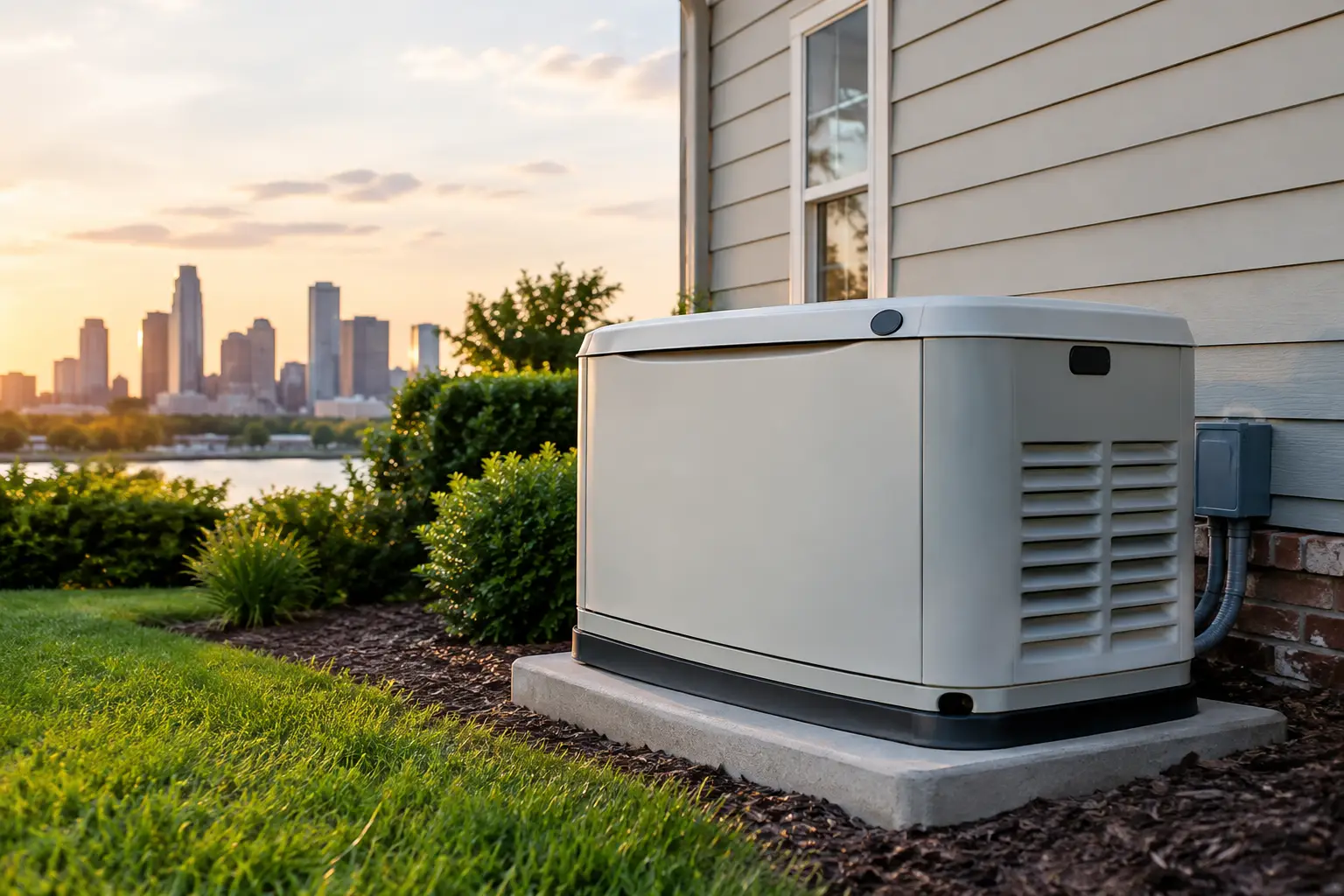
A standby generator may sit quietly for months, then carry your home or business through a storm outage when the grid fails. That is why the question, how long do generators last, is about more than the age printed on the equipment label. It is about whether the system will start, transfer power safely, and handle the loads that matter when you need it.
For most Houston-area property owners, a properly selected, professionally installed, and regularly maintained home standby generator can provide 20 to 30 years of service. Actual lifespan varies with engine run hours, fuel type, installation quality, maintenance, weather exposure, and whether the generator is sized correctly for the property. Commercial systems may be built for substantially higher operating hours, but they also need a service plan that matches the demands placed on them.
How Long Do Generators Last on Average?
A residential standby generator typically lasts about 10,000 to 20,000 operating hours when it receives proper service. For a home generator that runs primarily during outages and performs scheduled exercise cycles, those hours can translate to two or three decades of useful life.
That does not mean every generator will reach the high end of that range. A generator that runs for extended periods during frequent outages, carries too much load, or goes years without oil changes will wear sooner. On the other hand, a standby unit that is exercised regularly, protected from flooding, supplied with clean fuel, and serviced on schedule has a much better chance of delivering reliable long-term performance.
Portable generators are a different category. Many portable models are designed for occasional use and may last from 1,000 to 3,000 hours, depending on build quality and maintenance. They can be useful in a short emergency, but they do not offer the automatic operation, permanent fuel connection, code-compliant transfer equipment, or long-term convenience of a home standby system.
Standby generator age versus run hours
Calendar age matters, but engine hours often tell a clearer story. A 15-year-old standby generator that has been maintained and used only during periodic testing and a few outages may have relatively low engine hours. A newer unit that has carried a facility through repeated long-duration outages may have more wear despite being younger.
During a professional service visit, a technician can evaluate both factors along with oil condition, battery health, electrical connections, transfer switch operation, fault history, coolant or air intake condition where applicable, and signs of corrosion or water intrusion. That gives owners a more useful answer than age alone.
What Affects How Long a Generator Lasts?
The equipment itself matters, but the complete installation has a major effect on lifespan. A generator is part of a power system that includes the concrete pad, fuel supply, electrical connections, automatic transfer switch, load management, grounding, and controls. Problems in any of these areas can create unnecessary strain.
Proper sizing prevents unnecessary wear
An undersized generator may be forced to operate near its limit whenever the power goes out. Repeated heavy loading can increase engine stress, make voltage performance less consistent, and leave little room for essential equipment such as air conditioning, refrigeration, medical devices, well pumps, or business systems.
Oversizing is not automatically the right answer either. The goal is to match the generator and transfer equipment to the electrical loads you genuinely need to protect. A qualified assessment considers the property, major appliances or equipment, startup loads, fuel availability, and whether load management is appropriate. Proper sizing supports performance today and helps protect the equipment over time.
Maintenance is the difference-maker
A standby generator needs attention even when it has not been called on during an outage. Oil and filters age, batteries weaken, connections can loosen, and small control issues can become major problems if no one identifies them early.
A scheduled maintenance plan commonly includes an inspection of the unit and enclosure, oil and filter service as needed, battery testing, air filter inspection, spark plug review when applicable, exercise verification, fault-code checks, and a run test. The exact service interval depends on the generator model, age, run hours, and manufacturer requirements.
For Houston and Fort Bend County properties, maintenance is especially valuable before hurricane season and after prolonged outage events. A generator that ran for several days deserves a prompt inspection and service assessment before the next severe-weather threat arrives.
Fuel supply and fuel quality matter
Natural gas and propane standby generators avoid many of the fuel-storage concerns associated with gasoline, but fuel delivery still has to be designed correctly. A gas line that cannot support the generator’s required flow under load can cause poor performance or shutdowns. Propane systems need adequate tank capacity, properly installed piping, and a refill plan that reflects expected outage duration.
Fuel-related planning is not just an installation detail. It affects how reliably the generator can run during an extended outage and helps prevent operating conditions that can shorten equipment life.
Houston weather can accelerate wear
Heat, humidity, heavy rain, wind-driven debris, and flooding risk create real demands on outdoor equipment. Generator enclosures are built for exterior use, but they are not immune to corrosion, blocked airflow, insect nesting, standing water, or storm damage.
Correct placement and pad preparation matter from day one. The generator should be installed according to clearance requirements, positioned to reduce flooding exposure, and kept accessible for service. Homeowners and facility managers should also keep vegetation, stored materials, and loose debris away from the unit so it can ventilate properly.
Signs Your Generator May Need Repair or Replacement
Not every service issue means the generator has reached the end of its life. Batteries, sensors, starters, controllers, and fuel components can often be repaired or replaced. However, certain patterns deserve a professional evaluation before the next outage.
Watch for repeated failure-to-start alerts, frequent low-battery warnings, visible corrosion, fluid leaks, unusual vibration, persistent fault codes, inconsistent transfer operation, or a generator that struggles under expected loads. If parts are becoming difficult to obtain or repair costs are rising repeatedly, replacement may offer better value and greater confidence.
For an older unit, the key question is not simply, “Can it be repaired?” It is whether the repair restores dependable backup power for the property. A homeowner protecting medical equipment and air conditioning during summer outages may make a different decision than a business protecting inventory, communications, safety systems, and customer operations.
How to Help Your Generator Last Longer
Good ownership does not require constant attention, but it does require a few disciplined habits. Review the generator’s exercise status, keep the area around it clear, and respond promptly to alarms or warning lights. After a long outage, do not assume the unit is ready for the next event without checking it.
Most importantly, use qualified professionals for installation, fuel connections, electrical work, and service. A standby generator involves high-voltage electricity, combustible fuel, exhaust clearances, and local permit requirements. Shortcuts can create safety hazards and expensive reliability problems that do not show up until the system is needed most.
A turnkey provider can coordinate the details from system selection and permitting through pad preparation, transfer switch installation, gas or propane connection, testing, and final power-on. That single point of accountability also makes future maintenance and repairs more straightforward because the service team understands how the system was designed.
When to Schedule a Generator Evaluation
If your generator is more than 10 years old, has recently supported a long outage, has missed annual maintenance, or is showing alerts, schedule an evaluation before severe weather returns. The same applies if your home or business has changed – perhaps you added air conditioning, expanded operations, installed new equipment, or now need to protect additional critical loads.
Texas Direct Generators can assess the condition of an existing standby system, identify service needs, and help determine whether repair, an upgrade, or a replacement is the practical path forward. Dependable backup power is built through disciplined planning and ongoing care, so the best time to address a concern is while the grid is still on.