
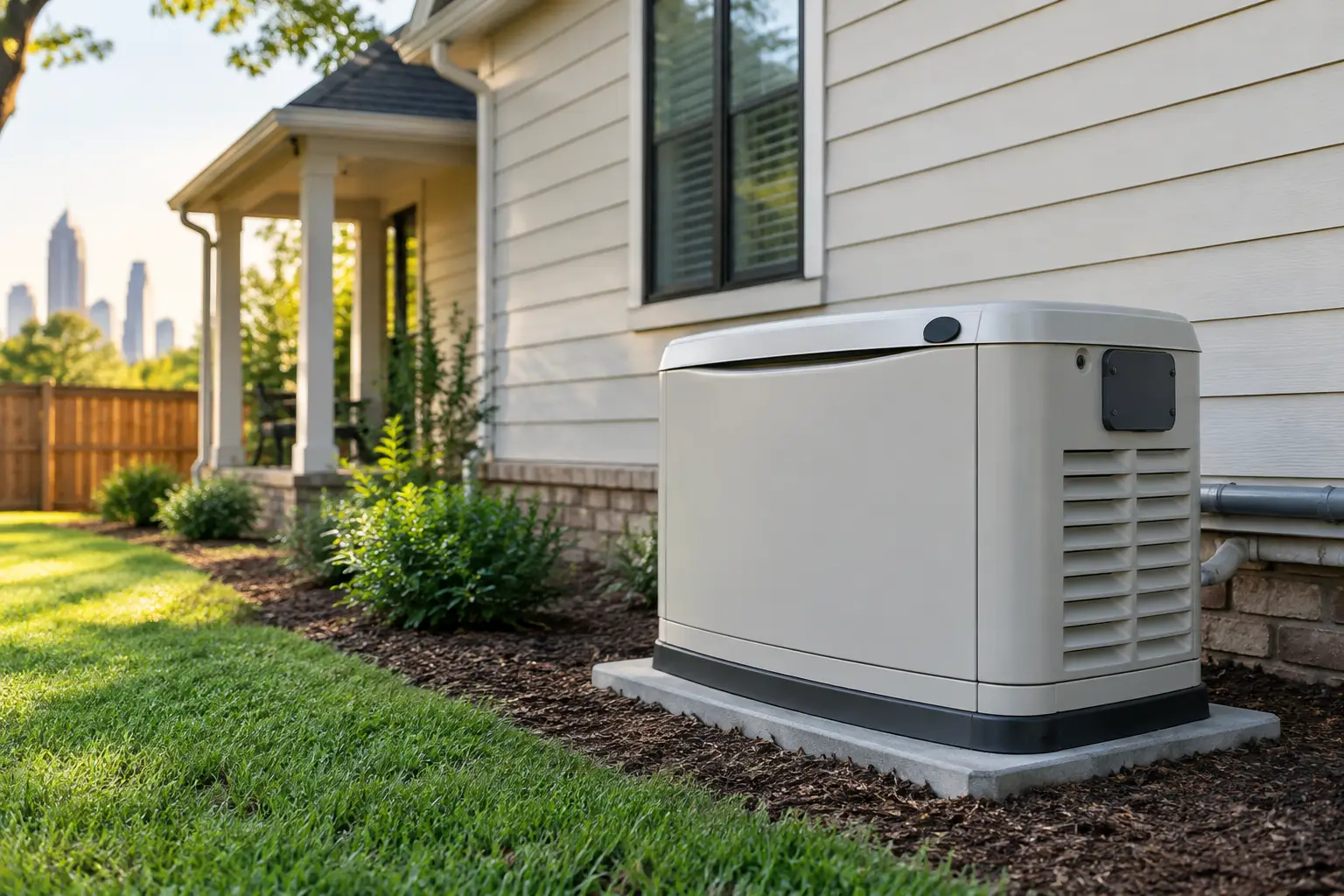
When the power goes out during a Houston-area storm, the cost is rarely limited to a dark room. Lost air conditioning, spoiled food, interrupted work, disabled security systems, and concerns about medical equipment can turn a short outage into a serious disruption. Generator financing options can make a professionally installed standby system more manageable by spreading a major home or business investment into predictable payments.
A standby generator is not simply a piece of equipment delivered to a driveway. It is a power system that must be sized correctly, permitted where required, connected to an automatic transfer switch, supplied with natural gas or propane, tested, and commissioned. Financing should be evaluated with that full project scope in mind – not just the price printed on the generator itself.
What Generator Financing Can Cover
The right financing arrangement can help account for the complete cost of a turnkey standby-power project. For a residential installation, that may include the Generac generator, automatic transfer switch, electrical labor, concrete pad preparation, gas-line work, permits, inspections, and startup testing. A commercial project may also involve larger equipment, load management, more extensive electrical infrastructure, and site-specific fuel requirements.
Every property is different. A home that needs to support air conditioning, refrigeration, lighting, internet, and selected appliances will have different electrical needs than a facility protecting inventory, servers, pumps, access controls, or critical operations. The financing amount should reflect the system designed for your actual priorities, not a generic package that leaves essential loads unprotected.
For many buyers, monthly payments provide a practical way to move forward sooner rather than waiting to save the full project cost. That can be particularly valuable before hurricane season, after repeated grid interruptions, or when an aging generator has become unreliable. Still, financing is a financial commitment, so the goal is not simply to find the lowest monthly number. It is to choose terms that fit the budget while covering a system that will perform when needed.
Common Generator Financing Options
Most standby-generator customers consider one of several paths. Availability, approval, rates, and repayment terms depend on the lender, the applicant, the project size, and current lending programs.
Contractor-arranged financing
Many homeowners prefer financing offered through an authorized generator dealer or contractor. The application process is often designed around the installation purchase, which can make it easier to align the approved amount with the complete scope of work. Depending on available programs, borrowers may see fixed monthly payment options and promotional terms.
The advantage is coordination. Rather than arranging equipment financing separately from installation labor, electrical work, and fuel connections, the customer can evaluate a full project price. Before signing, confirm exactly what is included in the financed amount and whether there are costs that must be paid separately, such as upgrades requested after the original proposal.
Bank or credit-union loans
A personal loan from a bank or credit union may be appropriate for buyers who want to compare lending offers independently. Some borrowers value working with an institution where they already have a relationship, especially if they can secure favorable terms.
Personal loans may offer a clear repayment schedule, but rates and fees can vary widely. Ask whether there is an origination fee, a prepayment penalty, or a difference between the advertised annual percentage rate and the rate you are likely to receive. A lower payment over a longer term can be easier on monthly cash flow, but it can also increase the total amount paid over time.
Home equity financing
Homeowners with substantial equity sometimes use a home equity loan or line of credit for major improvements, including standby power. These options may offer competitive rates in some circumstances because the loan is secured by the home.
That potential benefit comes with added responsibility. Your home is collateral, and the approval process can take longer than unsecured financing. A homeowner should also consider whether borrowing against equity makes sense for their larger financial plan, particularly if they expect to sell, refinance, or take on other major projects soon.
Business financing for commercial systems
For a business, generator financing may be structured through a business loan, line of credit, equipment-financing program, or another commercial lending arrangement. The best approach depends on cash flow, accounting preferences, credit profile, and how essential uninterrupted power is to operations.
A commercial standby generator can protect more than convenience. It may help preserve refrigerated inventory, maintain communications, support life-safety systems, avoid operational downtime, and keep customer-facing functions available. Business owners should involve their financial and tax advisors when evaluating how a generator investment fits their capital plan.
Compare the Total Cost, Not Just the Monthly Payment
A financing proposal should be easy to understand. Before accepting any offer, review the financed amount, annual percentage rate, repayment term, monthly payment, total payments over the life of the loan, and any applicable fees. If a promotional rate is offered, ask what happens when that period ends and whether deferred interest could apply.
It is also wise to separate essential work from optional upgrades. A properly installed standby generator requires more than a generator enclosure and a pad. The transfer switch must be sized and installed correctly. The gas supply must be evaluated for adequate capacity. Local permitting and inspection requirements must be addressed. The system must be tested under appropriate operating conditions before it is relied upon during an outage.
A quote that appears cheaper may exclude work another contractor includes. That can create unpleasant surprises after installation begins. Request a clear written scope identifying equipment, electrical work, gas or propane coordination, permits, concrete preparation, commissioning, and warranty-related details. A complete proposal makes it much easier to compare generator financing options fairly.
Match the System to the Loads That Matter Most
Financing a larger generator than necessary can strain the budget. Choosing a smaller system without a load plan can create a different problem: critical equipment may not be supported when the power fails. The right answer depends on what must stay on.
For a household, priorities often include central air conditioning, refrigeration, lighting, internet, garage access, security, medical devices, and selected outlets. For a business, the list may include refrigeration, point-of-sale equipment, network hardware, gates, production equipment, pumps, or tenant safety systems. A professional load assessment helps determine whether whole-home coverage, managed loads, or a selected-circuit approach best fits the property and budget.
Fuel availability also affects system selection and project cost. Natural gas is common in many Houston-area neighborhoods, but the existing meter and piping may require evaluation. Propane can be an excellent solution where natural gas is unavailable or insufficient, though tank sizing, placement, delivery access, and ongoing fuel planning need to be addressed.
Questions to Ask Before You Apply
Start with the project, then evaluate the financing. Ask whether the proposal covers the full installation from permits to power-on. Confirm the estimated timeline and what could change it, such as permit review, utility coordination, site access, or gas upgrades.
Ask the lender or financing provider for the annual percentage rate, term length, payment due date, late-payment policy, and total repayment amount. Find out whether there is a down payment requirement and whether early payoff is permitted without a penalty. Read the financing agreement before signing, including disclosures related to promotional terms.
Finally, ask who will be accountable after installation. Standby generators require periodic maintenance, and repairs should be handled by qualified professionals using appropriate parts and procedures. A financing decision should support a long-term power plan, not end at the day the unit is installed.
Plan for Ownership Beyond Installation
The monthly payment is only one part of generator ownership. Plan for routine maintenance, fuel costs, occasional repairs, and periodic battery replacement. These items help ensure the generator starts automatically and carries the intended loads when the grid fails.
Texas Direct Generators approaches standby power as a complete local service, from system selection and permitting through installation, testing, maintenance, and repair. That level of project ownership matters because a generator is only as dependable as the system around it.
A clear proposal, realistic financing terms, and a properly designed installation can turn outage anxiety into a practical plan. Start by identifying the loads you cannot afford to lose, then choose the payment structure that lets you protect them responsibly.