
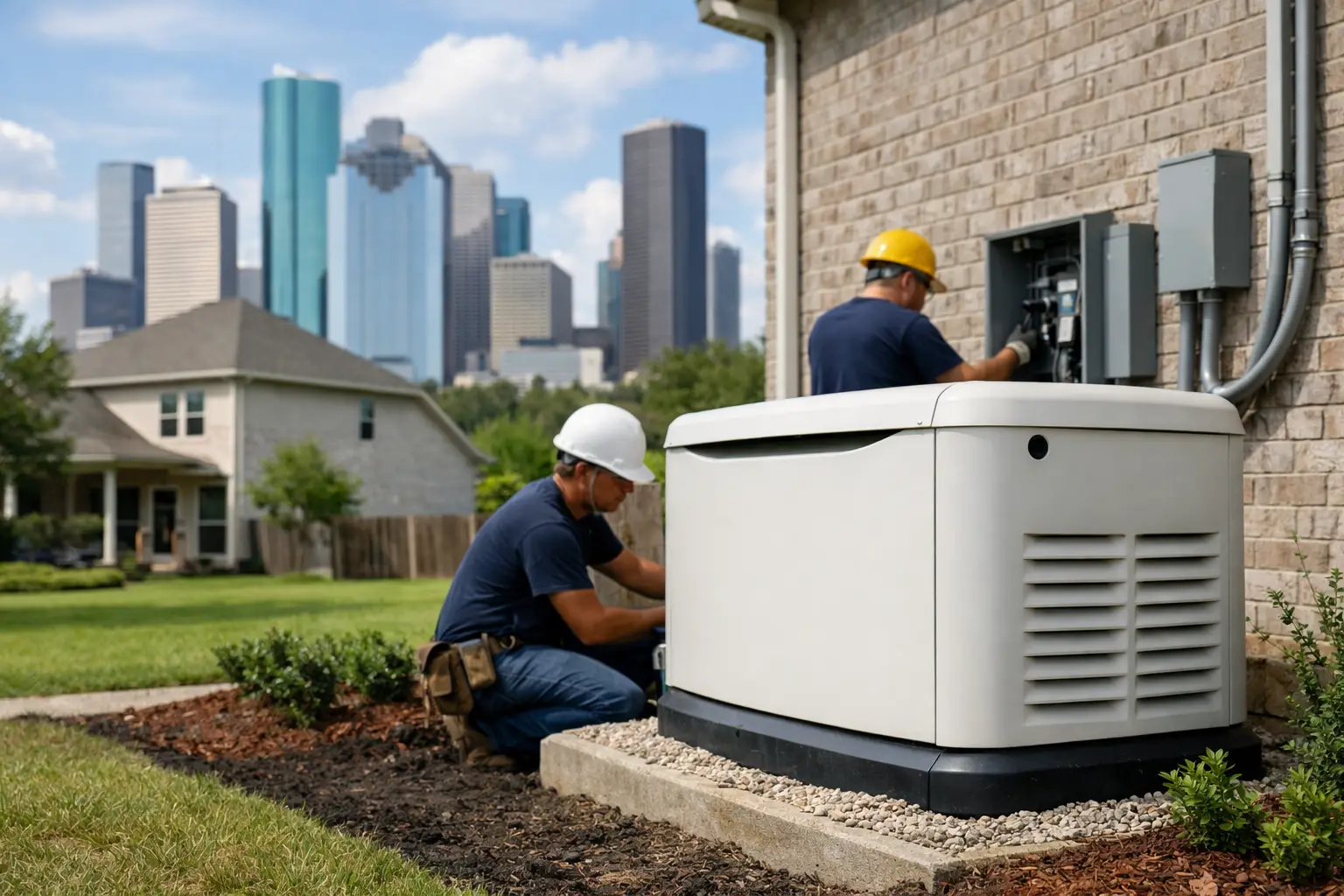
A long outage in Greater Houston is not a minor inconvenience when the heat is high, food is thawing, internet service is down, and essential equipment needs power. Home standby generator installation gives your property a permanent backup-power system that starts automatically when utility power fails, then returns your home to normal operation when power is restored.
Unlike a portable generator, a standby unit is installed outside the home on a prepared pad and connected to an automatic transfer switch and a reliable fuel source. The result is protection that does not depend on finding extension cords, refueling in bad weather, or being home when an outage begins. A properly planned system can support the electrical loads that matter most, from air conditioning and refrigerators to security systems, medical equipment, well pumps, and home offices.
What a Standby Generator Actually Does
A standby generator continuously monitors incoming utility power. When it detects an outage, the automatic transfer switch safely separates the home from the utility line and signals the generator to start. Within seconds, the generator begins supplying electricity to the selected circuits or the entire home, depending on the system design.
That transfer switch is a critical part of the installation. It prevents backfeeding, which can damage equipment and create a serious hazard for utility crews. It also determines whether your generator is designed to power a defined group of priority loads or manage power across the home through load-shedding controls.
For many Houston-area homeowners, air conditioning is a major consideration. Running one or more HVAC systems requires significantly more capacity than powering lighting, refrigeration, and electronics alone. The right answer depends on your home’s electrical demand, equipment startup loads, fuel availability, and the level of comfort you want during an extended outage.
Home Standby Generator Installation Starts With Sizing
Choosing a generator by square footage alone can lead to disappointment. Two homes of the same size may have very different electrical needs based on HVAC equipment, electric appliances, pool equipment, multiple refrigerators, workshops, EV charging, and other large loads.
A professional assessment should look at the electrical service, major appliances, air-conditioning tonnage, desired circuits, and future plans for the property. From there, the installer can recommend a generator capacity and transfer-switch configuration that fits the actual demand rather than relying on a guess.
Whole-home power vs. essential-load protection
A whole-home system is designed to keep most or all household systems operating, often with intelligent load management for high-demand equipment. It can be the right choice for larger homes, households with medical needs, or owners who want normal routines to continue through a prolonged outage.
An essential-load system focuses on selected circuits, such as refrigeration, lighting, internet, security, garage doors, a few outlets, and a designated HVAC unit. This approach can lower the initial project cost, but it requires clear decisions about what will and will not operate during an outage.
Neither option is automatically better. The best system is the one that provides dependable protection for your priorities without undersizing the fuel supply or overbuilding the project beyond your needs.
The Work Behind a Turnkey Installation
A standby generator is not simply delivered and plugged in. It is a permanent electrical and fuel-burning appliance that must be installed correctly, permitted where required, and tested under real operating conditions. A turnkey contractor takes ownership of the sequence from permits to power-on.
The project typically begins with a site evaluation. The installer identifies a location that meets required clearances from doors, windows, vents, property lines, and combustible materials. Access for service, drainage conditions, noise considerations, and the route for electrical and fuel connections all matter before the pad is placed.
Next comes pad preparation. The generator needs a level, stable base designed for the equipment and local site conditions. A properly prepared concrete pad helps keep the unit secure and accessible while supporting long-term performance.
Electrical work includes installing the automatic transfer switch, routing conductors, making connections at the electrical panel, and configuring the system for the selected loads. This work should be performed by qualified professionals who understand both generator equipment and local electrical requirements.
Fuel connection is equally important. Most residential standby generators operate on natural gas or propane. Natural gas can be convenient where dependable service and sufficient gas capacity are available. Propane provides an independent on-site fuel supply, but tank size, placement, fuel level management, and refill access must be planned carefully. A generator is only as dependable as the fuel source that supports it.
Permits and inspections are not paperwork to treat as an afterthought. They help confirm that electrical, mechanical, fuel-gas, and placement requirements have been addressed. Requirements can vary by municipality, neighborhood, and project conditions, which is one reason local project management matters.
Why Local Conditions Matter in Greater Houston
The Houston and Fort Bend County area brings installation considerations that a generic online estimate cannot account for. Heat and humidity affect how homeowners prioritize air conditioning. Heavy rain and flooding concerns can influence generator placement and pad elevation. Dense neighborhoods may require closer attention to clearances, access, and noise.
Local permitting procedures also differ between jurisdictions. A project in Sugar Land may not follow the exact same process as one in Katy, Missouri City, Pearland, Richmond, or an unincorporated area of Fort Bend County. A contractor that manages these details helps prevent delays and reduces the risk of costly corrections after work has begun.
For commercial properties, the planning process becomes even more specific. A business may need to prioritize refrigeration, communications, security, point-of-sale systems, server equipment, emergency lighting, gates, or selected HVAC. The goal is not always to power every circuit. It is to preserve the operations, inventory, and safety systems that keep the organization functioning during a utility interruption.
Commissioning Is Where Confidence Is Earned
The final power-on should be more than a quick engine start. Commissioning confirms that the generator starts, the transfer switch operates correctly, the selected loads are supported, and the system returns to utility power as designed.
Your installer should also explain the controller, exercise schedule, warning notifications, and basic owner responsibilities. Automatic systems run periodic self-tests, but a self-test is not a substitute for service. Oil, filters, battery condition, software updates, fuel-system performance, and electrical connections all need professional attention over time.
Texas Direct Generators provides the full process for Generac standby systems, including system selection, permits, installation, fuel coordination, commissioning, repairs, maintenance, upgrades, and propane support. Working with one accountable provider helps ensure the equipment, electrical work, gas connection, and long-term service plan are aligned from the beginning.
Questions to Settle Before You Buy
Before approving a project, ask what loads the generator will carry and how that was calculated. Confirm whether the quoted system is whole-home or essential-load protection, what fuel source will be used, and whether gas capacity or propane storage has been evaluated.
You should also understand who is responsible for permits, pad preparation, electrical work, fuel connection, inspection coordination, startup, and warranty support. A low equipment price can become expensive if these items are excluded, poorly coordinated, or assigned to multiple parties without clear responsibility.
Ask about ongoing maintenance as well. Standby power is a long-term investment, not a one-time installation. Scheduled service gives you a better chance of finding a weak battery, fuel issue, or controller alert before the next storm puts the system to work.
Make the Decision Before the Next Outage
The best time to plan backup power is when you can compare options calmly, schedule site work properly, and choose the coverage level that fits your household or facility. Waiting until a major weather event is approaching can limit equipment availability and leave little room for careful planning.
Start with a site evaluation and an honest conversation about what must stay on when the grid goes down. When the next outage arrives, dependable power should be an installed, tested part of your property – not another urgent problem to solve.