
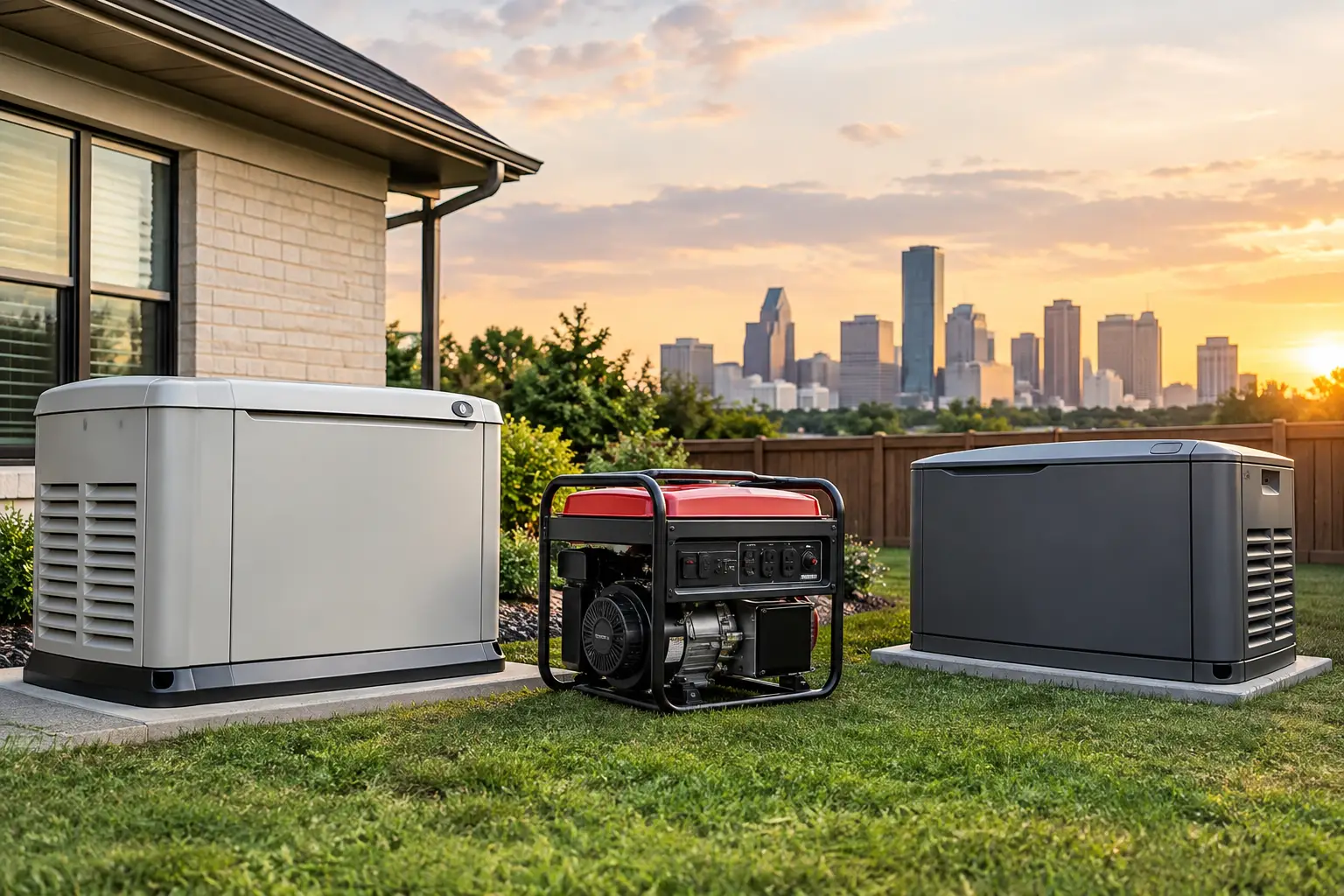
When a Houston-area outage shuts down air conditioning, refrigeration, Wi-Fi, security systems, or essential business equipment, the name on the generator matters less than whether the full system starts and carries the loads you need. A useful generator brands comparison looks beyond horsepower claims and online price tags. It weighs equipment quality, local parts and service access, fuel compatibility, transfer-switch integration, and the contractor responsible for getting the system from permits to power-on.
For homeowners and facilities teams across Greater Houston and Fort Bend County, standby power is a long-term infrastructure decision. The right choice depends on your property, electrical demand, fuel supply, budget, and expectation for service after installation.
What a Generator Brands Comparison Should Actually Measure
Brand comparisons often focus on generator size or a single product review. Those details matter, but they do not tell the whole story. A standby generator is part of an installed power system that includes a properly sized generator, automatic transfer switch, electrical connections, fuel line or propane supply, concrete pad, permitting, startup testing, and maintenance plan.
Start by asking how a brand performs in the conditions your property faces. Houston heat, humidity, heavy rain, and storm-related outages place real demands on equipment. You also need to know whether qualified local technicians can obtain parts, diagnose faults, and maintain the unit over its service life. A less expensive generator can become costly if service support is limited when an outage exposes a problem.
For commercial properties, the evaluation should go further. Load priorities, voltage requirements, three-phase power, runtime expectations, code requirements, and business continuity needs all affect the correct equipment selection. A retail space protecting inventory has different needs than a medical office, restaurant, multifamily property, or office building.
Comparing Leading Standby Generator Brands
Several established manufacturers serve the residential and commercial backup-power market. Each has strengths, and the best fit is not always the largest unit or the lowest initial quote.
Generac
Generac is one of the most recognized names in residential standby power and has a broad lineup for homes, small businesses, and larger commercial applications. Its residential systems are widely used because they pair automatic operation with a range of capacities suitable for partial-home or whole-home coverage. When utility power fails, the automatic transfer switch signals the generator to start and moves selected loads to backup power without requiring someone to connect a portable unit.
A key practical advantage is the depth of the authorized dealer and service network. For a homeowner or business owner, that can mean better access to trained technicians, replacement parts, scheduled maintenance, and support throughout the ownership cycle. Generac systems are available for natural gas and propane applications, which suits many Houston-area properties with existing gas service or planned propane storage.
Generac is not automatically the answer for every project. Proper sizing still matters. A home with multiple air conditioners, a pool, electric appliances, and a large square footage may need load management or a higher-capacity system. The equipment has to be matched to real demand, not simply selected by square footage.
Kohler
Kohler has a long-standing presence in residential and commercial power generation. The brand is often considered by buyers looking for established engineering and a range of standby options. Kohler equipment can be a strong candidate where a qualified local dealer and experienced installer are available to support the project.
The deciding factor is often local service depth rather than a spec-sheet difference. Before choosing any brand, ask who will handle warranty coordination, annual maintenance, diagnostics, and emergency repair. An excellent generator still needs a local provider with the training, equipment, and accountability to keep it ready.
Cummins
Cummins is especially well known in commercial and industrial power applications, though it also offers residential standby options. For facilities with larger electrical loads, demanding runtime requirements, or complex electrical infrastructure, Cummins may enter the conversation because of its broad commercial power experience.
That said, commercial-grade equipment requires commercial-grade planning. The project may involve engineered load calculations, larger fuel systems, advanced transfer equipment, sound considerations, and additional permitting requirements. The brand is one part of the decision; the system design and installation team determine whether the project performs as intended.
Briggs & Stratton, Champion, and Other Options
Other manufacturers may offer standby or portable generator products at different price points. They can make sense for specific applications, particularly when the scope is limited or a property needs temporary portable power rather than an automatic standby system.
However, buyers should be careful not to compare a portable generator directly with a permanently installed standby generator. A portable unit may require manual setup, safe outdoor placement, extension cords or an approved inlet connection, fueling during an outage, and supervision. A standby system is designed to detect a utility failure, start automatically, transfer power through approved equipment, and operate on a connected natural gas or propane fuel source. They solve different problems.
The Brand Is Only as Good as the Installation
A standby generator purchase can look straightforward until the installation details begin. The generator must be placed according to manufacturer requirements and local codes, usually on a prepared concrete pad. The electrical system needs a correctly selected automatic transfer switch, properly routed wiring, and a load plan that reflects what the property can support.
Fuel planning is equally important. Natural gas availability, gas-meter capacity, line sizing, appliance demand, and propane tank capacity can all affect performance. A generator that is improperly supplied with fuel may struggle under load or fail to deliver its rated output when it is needed most.
Permits and inspections are not paperwork to be treated as an afterthought. They help verify that electrical, fuel, placement, and safety requirements have been addressed. For Houston-area homeowners and property managers, working with a licensed and insured contractor that manages these steps reduces the burden of coordinating electricians, gas professionals, inspectors, and equipment suppliers.
Texas Direct Generators approaches standby power as a turnkey project, not a box delivered to a driveway. Equipment selection, permitting, pad preparation, automatic transfer switch installation, gas connection, testing, and final power-on all need one accountable plan.
Questions to Ask Before Selecting a Brand
A productive consultation should answer more than, “What size generator do I need?” Ask whether the proposed system will power the entire property or only priority circuits. Confirm which large loads are included, such as central air conditioning, well pumps, electric ranges, pool equipment, elevators, or commercial refrigeration.
Ask about the fuel source and how long the system can operate during an extended outage. Natural gas can provide ongoing supply when utility service remains available, while propane requires appropriate tank sizing and refill planning. Neither option is universally better. The right choice depends on your site, existing utilities, local constraints, and expected use.
You should also ask who performs scheduled maintenance and repairs after installation. Standby generators exercise regularly, but they still require inspections, oil and filter service, battery checks, software and controller reviews, and load testing when appropriate. Maintenance protects the investment and gives technicians a chance to identify issues before storm season.
Finally, compare complete project scopes rather than equipment-only pricing. A quote that excludes permits, transfer equipment, fuel work, pad construction, startup, or necessary electrical upgrades may appear lower until those essential items are added. Clear scope and clear responsibility are worth more than an attractive initial number with unanswered installation questions.
Choose Backup Power for the Way You Live or Operate
For a home, the right generator brand and system should protect the essentials that make an outage disruptive: cooling, food preservation, lighting, communications, security, and medically necessary equipment. For a business, the focus may be safe shutdown, customer service, inventory protection, operations continuity, or keeping critical systems online.
The best decision is rarely made from a brand logo alone. It comes from a site-specific load evaluation, dependable equipment with service support, code-compliant installation, and a maintenance relationship that does not disappear after commissioning. A careful on-site assessment can turn outage anxiety into a practical plan for dependable power when your property needs it.