
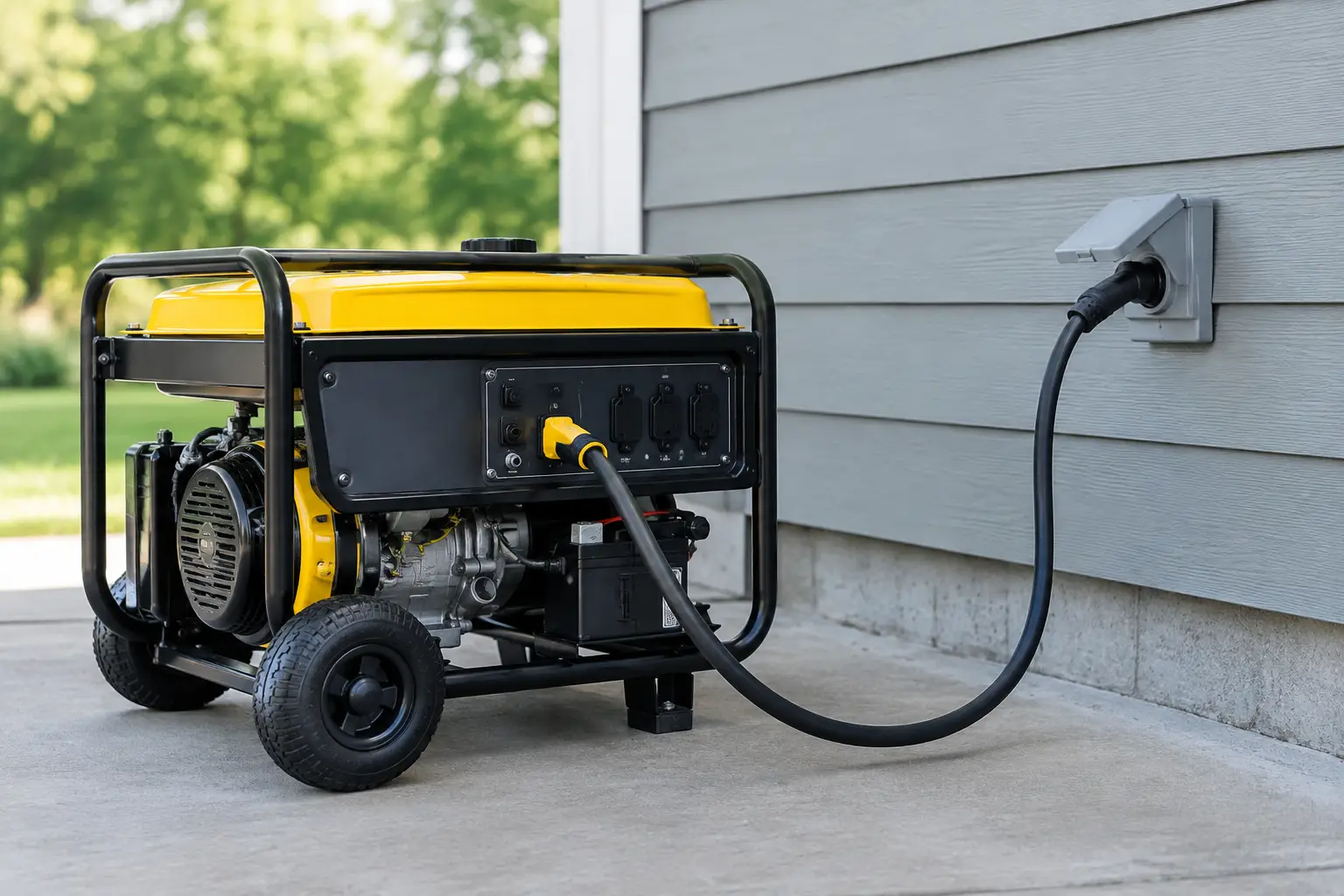
A generator sitting outside your home or business is not backup power until the generator hookups are designed, installed, and tested correctly. During a Houston-area outage, the difference matters. A properly connected standby generator can restore selected or whole-building power automatically. An improvised connection can create a serious shock, fire, equipment-damage, or utility-worker hazard.
For homeowners and facility managers, the goal is not simply to make electricity. It is to have a dependable system that protects people, follows local requirements, and starts when the grid goes down. That requires more than choosing the right generator size. It requires coordinated electrical, fuel, permitting, and commissioning work from permits to power-on.
What “Generator Hookups” Actually Include
People often use the term generator hookups to describe the electrical connection between a generator and a building. In a permanent standby system, that connection is one part of a larger installation. The generator must communicate with an automatic transfer switch, receive a properly sized fuel supply, sit on a stable pad with required clearances, and be connected through code-compliant electrical equipment.
The automatic transfer switch is central to the system. It monitors utility power and, when an outage occurs, signals the generator to start. Once the generator reaches proper operating conditions, the switch transfers the building or selected circuits from utility power to generator power. When utility service returns and stabilizes, it transfers power back and allows the generator to cool down before shutting off.
This sequence prevents the generator from sending electricity back onto utility lines. Backfeeding is dangerous for line crews and can damage equipment. It is one reason a standby generator should never be connected by plugging it into a household receptacle or using an unauthorized double-ended cord. Those are not shortcuts. They are unsafe practices that can put lives and property at risk.
Standby Generator Hookups vs. Portable Generator Connections
Portable generators and home standby generators serve different purposes, so their hookups are different as well. A portable unit may use a professionally installed inlet box and manual transfer switch or interlock arrangement to power designated circuits. The homeowner must position the unit outdoors, start it, manage fuel, and manually transfer the load during an outage.
A standby generator is permanently installed outside the structure and connected to natural gas or propane. It works with an automatic transfer switch and can operate whether anyone is home or not. For households that need air conditioning, refrigeration, medical equipment, security systems, well pumps, internet service, or other critical loads available without delay, automatic operation is often the deciding factor.
Neither approach is right for every property. Portable equipment can be a reasonable option for short-term, limited-load needs. A permanently installed system is typically the better fit when outages are frequent, occupants cannot safely manage a portable unit, or a home or business needs a more complete continuity plan.
The Electrical Work Behind a Safe Connection
A professional installation begins with an electrical load assessment. This determines what the generator must support and whether the system will provide whole-home power, whole-building power, or backup for selected circuits. Air conditioning, electric cooking, pool equipment, pumps, servers, refrigeration, medical devices, and large motors can all affect the required generator capacity and transfer-switch design.
The electrician then determines the correct connection point, wiring method, overcurrent protection, grounding and bonding approach, and transfer equipment. These details are not interchangeable from one property to another. A newer home with a 200-amp service may have a different setup than an older home with electrical upgrades, a detached garage, or multiple panels. Commercial properties can add another layer of complexity through three-phase equipment, fire and life-safety loads, tenant panels, and operational priorities.
A quality installation also accounts for voltage drop, conductor sizing, equipment ratings, and access for future service. The generator may be expected to run for days during a severe weather event. Electrical components should be installed for safe, repeatable performance, not merely enough to pass a quick start test.
Fuel Connections Deserve the Same Attention
A standby generator cannot perform if its fuel supply is undersized. Natural gas and propane generator hookups must be evaluated based on the generator’s fuel demand, the length and route of the fuel line, other appliances using the same supply, and local requirements.
With natural gas, a line that appears adequate for a furnace or water heater may not have enough capacity for a generator operating under full load. With propane, tank size, tank placement, fuel-line routing, and vaporization capacity can affect performance, especially during long outages or periods of higher fuel demand.
Fuel work should be coordinated with the electrical design rather than treated as a separate afterthought. The generator, transfer switch, gas connection, and site layout all need to work together. This is particularly important for customers who want to support central air conditioning or essential commercial equipment, where generator demand can be substantial.
Site Preparation, Clearances, and Permits
Where a generator is placed affects safety, serviceability, noise, and compliance. A permanent unit needs a level, durable pad and manufacturer-required clearance from structures, openings, utility equipment, and other obstructions. Exhaust must be kept away from windows, doors, vents, and areas where it could affect occupants.
Local permitting and inspections are also part of a proper standby installation. Requirements can vary by jurisdiction, neighborhood, property type, electrical service arrangement, and fuel source. Skipping permits may seem faster, but it can create problems with inspections, insurance, resale, and safety. It can also leave the owner responsible for correcting work that should have been planned correctly from the start.
A turnkey contractor manages the details that customers should not have to coordinate alone: system selection, site review, pad preparation, electrical installation, gas or propane connection, permits, inspections, and final commissioning. That single point of accountability is valuable because backup power projects cross several technical trades.
Testing Is Where the Installation Becomes a System
A generator that starts is not necessarily a generator that is ready for an outage. Final power-on should confirm that the transfer switch recognizes loss of utility power, starts the generator, transfers the intended loads, and returns the building to utility power correctly. The installer should also verify voltage, frequency, fault conditions, battery charging, and control settings.
Load testing matters because the system must handle real operating conditions, not just idle without a demand. For a residence, that could mean evaluating how the generator responds when air conditioning, refrigeration, lighting, and other priority loads operate. For a business, it may include communications, point-of-sale equipment, computers, refrigeration, security, or other operational systems.
Owners should also understand what their system is designed to power. A generator is not an unlimited source of electricity. Even a whole-home system has practical operating limits, and load management may be used to prioritize major appliances. Clear expectations prevent surprises when an outage occurs.
Ongoing Service Keeps Generator Hookups Ready
Backup power equipment spends most of its life waiting. That makes maintenance essential. Batteries weaken, fuel connections and electrical terminals need inspection, software settings may require updates, and exercise cycles should be reviewed. A unit can appear fine during a weekly self-test yet have a condition that only becomes apparent under a real load.
Scheduled maintenance gives a technician the opportunity to inspect the generator, transfer switch, battery, enclosure, controls, fluid levels, and fuel-related components. It also provides a record of care that can support long-term reliability. For commercial properties, maintenance planning should consider operating hours, critical loads, staff procedures, and the cost of downtime.
If your generator is older, has changed ownership, or was installed by another contractor, an inspection can identify whether the existing connection, fuel supply, and transfer equipment are appropriate for current needs. Expansions, remodeled spaces, added air conditioning, new equipment, or changed business operations can all alter the original load calculation.
Make the Connection Before the Next Outage
The best time to address backup power is when the grid is stable and there is time to make sound decisions. Texas Direct Generators helps homeowners and businesses evaluate the equipment, generator hookups, fuel options, permits, and installation scope needed for dependable standby protection. A professional consultation can turn outage concerns into a clear plan built around the loads you cannot afford to lose.