
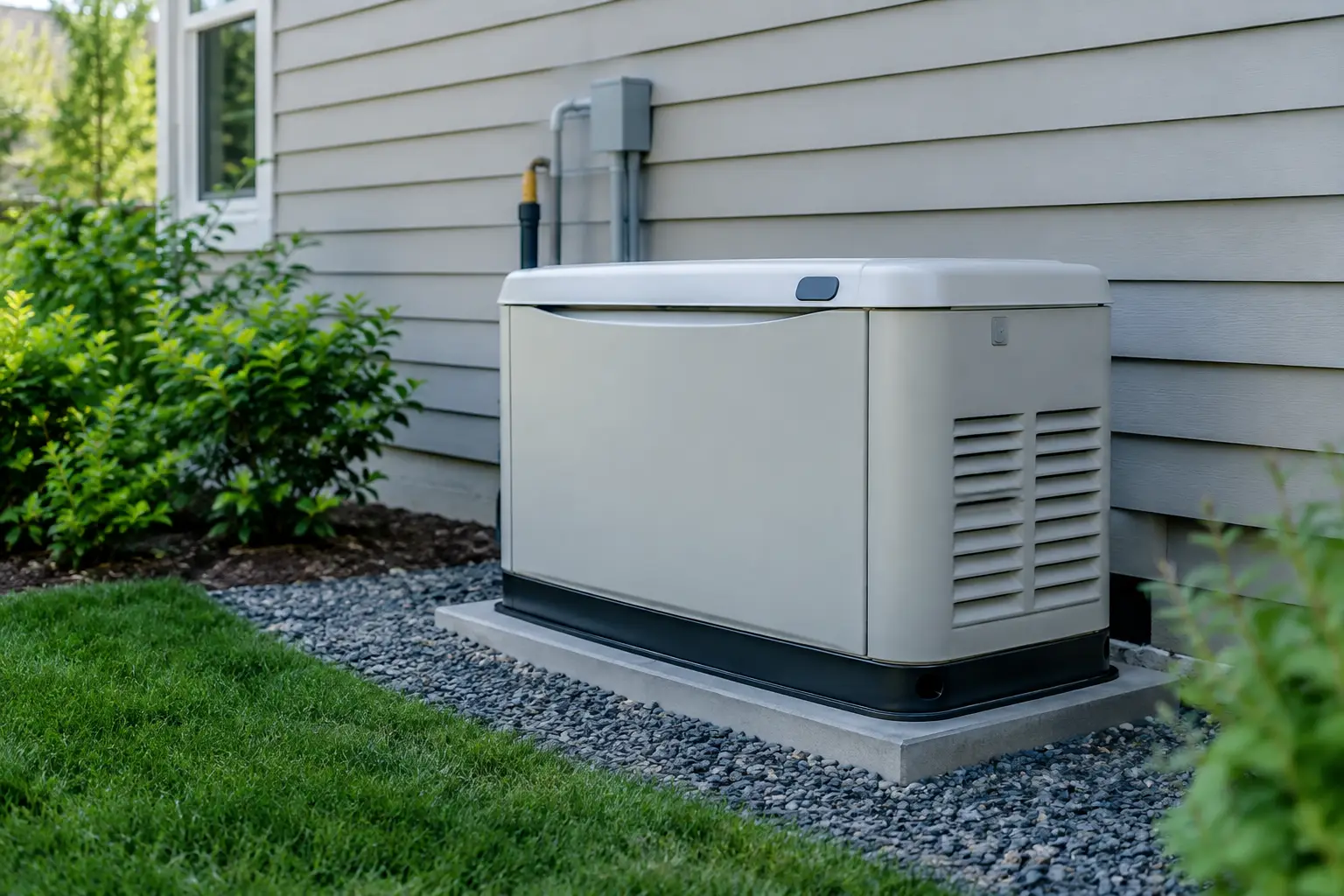
A standby generator cannot protect your home or business if its location creates a safety issue, fails inspection, or leaves technicians without room to service it. This generator placement safety clearance guide explains what homeowners and facility managers across Greater Houston should consider before choosing a location for a permanent backup power system.
The right spot is rarely just the closest open space beside the building. A safe installation has to balance exhaust, required clearances, fuel supply, electrical routing, drainage, local code requirements, and practical access for maintenance. Those details matter in Houston-area properties, where high winds, heavy rain, tight lot lines, pools, patios, fences, and landscaped yards can all affect the final plan.
Why Generator Placement Is a Safety Decision
A home standby generator operates outdoors and produces heat, exhaust, vibration, and electrical power. It must have adequate airflow around the enclosure, discharge exhaust safely, and remain accessible for inspections, testing, repairs, and routine maintenance. Placing the unit too close to a structure, opening, fence, or combustible material can create hazards and may prevent the installation from meeting manufacturer instructions or local requirements.
Clearance planning also affects reliability. A generator tucked into a narrow side yard may look out of the way, but it can collect leaves, restrict cooling airflow, complicate gas and electrical work, and make future service more difficult. A location that works on paper can become a problem after a storm if roof runoff floods the pad or wind-driven debris piles against the enclosure.
For commercial properties, placement can also influence traffic flow, customer safety, loading areas, emergency access, and the ability to protect critical operations during an outage. The best location supports the system for its full service life, not simply the day it is installed.
Generator Placement Safety Clearance Guide: What to Check
Manufacturer instructions and the applicable local code establish the actual required clearances for a specific generator model and property. Those requirements can vary based on generator size, fuel type, building construction, nearby openings, and the authority having jurisdiction. A professional site evaluation is the right way to confirm measurements before a pad is poured or equipment is ordered.
That said, several placement factors should be reviewed on every project.
Keep Exhaust Away From Openings
Generator exhaust must be directed away from doors, operable windows, vents, soffit openings, crawlspace vents, and other building openings where fumes could enter. Carbon monoxide is colorless and odorless, which makes exhaust planning a non-negotiable part of a safe design.
Do not assume a window that is usually closed does not count. An operable window, door, or vent may affect the approved placement even if it is seldom used. The same caution applies to nearby structures such as detached garages, pool houses, workshops, and neighboring buildings on close lots.
A qualified installer will evaluate the generator’s exhaust discharge direction along with the required setbacks. If a preferred location puts the exhaust near an opening, another side of the home or a different orientation may provide a safer solution.
Leave Room for Airflow and Service
Standby generators need open space around the enclosure for cooling and safe operation. The manufacturer specifies minimum clearances from walls, vegetation, fencing, and other obstructions. Technicians also need enough room to open access panels, inspect components, change oil and filters, test the unit, and complete repairs safely.
This is where landscaping plans often need adjustment. Shrubs may be small when a generator is installed, then grow into the required clearance zone a year or two later. Decorative screens and fencing can create the same problem. If privacy screening is desired, it should be designed around the approved clearance area, not installed tightly around the generator.
Avoid treating the generator like an outdoor storage shelf. Lawn equipment, patio furniture, mulch bags, trash bins, and holiday decorations should never be stored against or on top of the enclosure.
Consider Combustible Materials and Overhead Obstructions
A generator should not be placed beneath decks, enclosed porches, low roof overhangs, or any area where exhaust, heat, and airflow are restricted. Nearby combustible construction, including wood fencing, siding, and stored materials, must be evaluated against the manufacturer’s installation requirements.
Overhead conditions deserve attention as well. Trees can drop branches and leaves, while roof valleys can concentrate water directly onto a generator pad. In Houston’s severe weather, a location clear of overhanging limbs and major runoff paths can reduce avoidable damage and cleanup.
Start With a Stable, Elevated Pad
A permanent standby generator needs a level, durable foundation. Most residential installations use an approved composite or concrete pad prepared for the equipment and site conditions. The pad should support the generator properly while helping keep the unit above surrounding grade and away from standing water.
Drainage is especially relevant in Fort Bend County and Greater Houston. A low point beside the home may be convenient for utility connections but can be a poor long-term choice if it floods during heavy rain. Grading, downspout discharge, irrigation patterns, and nearby swales should all be reviewed before finalizing placement.
Plan the Fuel Connection Safely
Natural gas and propane systems require proper sizing, routing, shutoff access, and code-compliant installation. The generator location affects how the fuel line reaches the unit and whether the route can be protected and serviced appropriately.
A longer run is not automatically a problem, but it may affect fuel-pipe sizing and project cost. For propane-powered systems, tank placement and supply capacity must also support the generator’s expected load and run time. The goal is dependable fuel delivery when the grid is down, not merely a connection that reaches the equipment.
Account for Electrical Equipment and Transfer Switch Access
The generator does not work alone. It connects through an automatic transfer switch and electrical equipment that must be selected, installed, and labeled correctly. The preferred generator location should support a practical electrical route without creating unnecessary exposure, excessive trenching, or difficult future access.
In some homes, moving the generator a short distance can simplify electrical work and make the overall installation cleaner. In other cases, proximity to the gas meter, propane tank, or main electrical service becomes the deciding factor. Each property requires a coordinated plan rather than a one-size-fits-all placement rule.
Common Placement Mistakes to Avoid
The most frequent mistake is choosing a location based only on appearance. Homeowners often want the generator hidden from the street or patio, which is understandable. But a cramped spot behind a fence, beside a bedroom window, or under a deck can create compliance, safety, and service concerns.
Another mistake is overlooking future changes. A clear side yard can become crowded after a fence replacement, landscaping project, shed installation, or patio expansion. Protect the required clearance area as part of the property’s long-term plan.
Commercial sites face additional challenges. A generator placed near a dumpster enclosure, delivery route, parking area, or customer entrance may be exposed to impact damage or blocked when it is needed most. Protective bollards, equipment screening designed with required clearances, and clearly managed access areas may be appropriate depending on the site.
Permits, Inspections, and Local Requirements
Standby generator projects typically involve electrical, fuel-gas, and sometimes building or zoning requirements. Permit rules can vary by city, county, utility provider, and property type. Homeowners associations may also have architectural requirements that need attention before installation begins.
Permits and inspections are not paperwork to work around. They help verify that the generator, transfer switch, fuel connection, grounding, clearances, and safety components are installed correctly. For businesses and multifamily properties, the approval process may also include additional fire, accessibility, or site-management considerations.
A turnkey contractor should manage these details from site assessment through final power-on. Texas Direct Generators coordinates the technical steps involved in standby generator projects, including equipment selection, pad preparation, permitting, electrical installation, fuel coordination, testing, and commissioning.
A Better Way to Choose the Location
Before committing to a generator location, walk the property with the full project in mind. Identify doors, windows, vents, meters, electrical panels, fences, gates, trees, drainage paths, and planned outdoor improvements. Then evaluate the preferred location against the specific generator model’s installation manual and the requirements enforced by the local authority.
This process may reveal a trade-off. The shortest gas-line route may not offer the best airflow. The most concealed location may be harder to service. A location farther from the house may require more site work but provide better clearance, drainage, and technician access. The right answer is the one that safely supports dependable operation and meets the requirements for your particular property.
When outage protection is the goal, placement deserves the same care as generator sizing. A professional site assessment can turn a questionable corner of the yard into a clear, code-conscious installation plan that is ready for permits to power-on.