
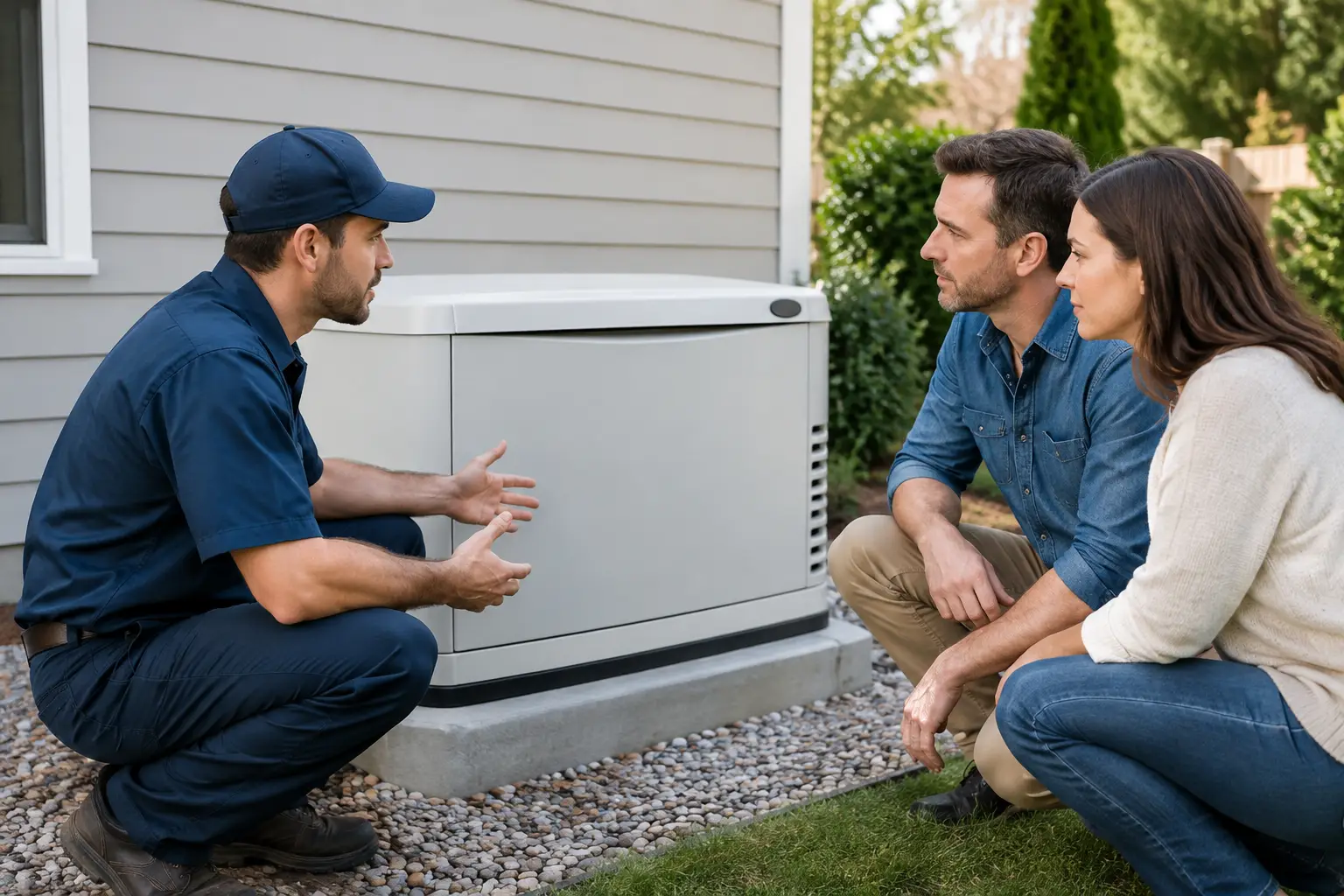
A standby generator is not a plug-in appliance. It is a permanent power system tied to your electrical service, fuel supply, and local code requirements. The right generator installation questions help you understand what will happen on your property, what your system will power, and who is accountable from permits to power-on.
For homeowners and businesses across Greater Houston and Fort Bend County, that clarity matters. A generator should start automatically when utility power fails, carry the loads you selected, and operate safely through the outage. Getting there requires more than choosing a generator model.
Generator Installation Questions About System Size
The first question is usually, “What size generator do I need?” The most useful answer is not based on square footage alone. It depends on the electrical loads you want to operate at the same time, how those loads start, and whether your priorities are essential circuits or whole-property coverage.
A home that needs refrigeration, lighting, internet, security, a few outlets, and one air-conditioning system may need a very different solution than a home with multiple central AC units, pool equipment, electric cooking, well pumps, and medical equipment. Large motor-driven equipment can require substantially more power at startup than while running. That is why a professional load calculation is more reliable than selecting a generator from a generic online chart.
For a business, the discussion should begin with operational priorities. Do you need to keep point-of-sale systems, refrigeration, communications, emergency lighting, elevators, servers, HVAC, or production equipment running? Some facilities need full building coverage. Others are better served by protecting critical loads and controlling costs.
Ask your installer how the recommended generator size was determined and which loads are included. A clear proposal should identify whether load management is part of the design. Load-management equipment can temporarily prioritize certain high-demand appliances so the generator is not overloaded when power returns or multiple systems call at once.
Will the Generator Turn On Automatically?
A permanently installed standby generator works with an automatic transfer switch, often called an ATS. When the utility fails, the transfer switch detects the outage, disconnects the property from utility power, and signals the generator to start. Once the generator is stable, the switch transfers selected electrical loads to backup power.
When utility power returns, the system transfers the loads back and allows the generator to complete its cooldown cycle before shutting down. This prevents the unsafe practice of feeding generator power backward into utility lines.
Ask where the transfer switch will be installed and whether your existing electrical panels affect the design. Older homes, additions, detached structures, subpanels, and commercial electrical equipment can change the scope of work. A qualified contractor should inspect the actual site before finalizing the plan, not make assumptions from a phone conversation.
What Fuel Will It Use During an Outage?
Most residential standby generators in this area run on natural gas or liquid propane. Fuel is not an afterthought. It is a core part of whether the generator can deliver its rated output when you need it.
If your property has natural gas, the gas line may need to be evaluated and upgraded. The existing line must be capable of supplying the generator while supporting other gas appliances, such as water heaters, furnaces, ranges, fireplaces, or pool heaters. A line that is too small can create performance problems even when the generator itself is correctly sized.
If propane is the better option, ask about tank sizing, tank placement, delivery access, local requirements, and who coordinates the propane setup. Propane can be an excellent choice for properties without dependable natural gas service, but the tank and supply plan should match the expected runtime and the generator’s fuel consumption.
Ask one direct question: Who is responsible for the gas connection and final fuel verification? A turnkey provider should manage that coordination rather than leaving you to assemble separate electrical, gas, and equipment vendors.
Where Can the Generator Be Installed?
Generator placement is governed by manufacturer requirements, electrical and fuel codes, local regulations, and the physical realities of your property. The unit needs adequate clearance from structures, openings, combustible materials, and obstructions. It also needs a location that allows safe exhaust discharge, service access, airflow, and protection from drainage issues.
A quiet corner of the yard may not be an approved location. Likewise, placing a generator close to a bedroom window, beneath an overhang, or where water collects may create a problem. In Houston-area neighborhoods, lot lines, gates, landscaping, pool equipment, and HOA rules can all affect the final placement.
Ask whether a concrete pad is included, how the site will be prepared, and whether the proposed location can be serviced without removing fencing or landscaping later. The best location balances code compliance, practical access, noise considerations, and the shortest reasonable path for electrical and fuel connections.
Are Permits and Inspections Included?
Permits are one of the most common generator installation questions because requirements can vary by municipality and project type. Electrical work, gas work, generator placement, and transfer-switch installation may require permits and inspections. Properties within an HOA may also require architectural approval before work begins.
Do not assume permits are optional because a neighbor installed a generator years ago. Current requirements may be different, and an unpermitted installation can create safety, insurance, resale, and inspection complications.
Ask your contractor to explain which permits apply, who submits them, what inspections are expected, and whether permit fees are included in the proposal. Texas Direct Generators manages the technical and regulatory details so customers are not left coordinating paperwork between multiple trades.
How Long Will Installation Take?
The on-site installation portion may take only a few days, but the full project timeline depends on equipment availability, permits, utility or fuel coordination, weather, site preparation, and inspection scheduling. A straightforward installation can move quickly. A project requiring a gas-line upgrade, electrical-panel changes, HOA approval, or propane tank installation may take longer.
Ask for the expected sequence rather than relying on one completion date. A professional plan should explain when the pad is prepared, when the generator is set, when electrical and fuel work occur, when inspections happen, and when commissioning is scheduled.
There may be a brief planned power interruption while the transfer switch and electrical connections are installed. Your contractor should tell you in advance what to expect so you can protect computers, refrigerated inventory, medical devices, security systems, and business operations.
What Happens During Testing and Power-On?
Installation is not complete when the generator is sitting on its pad. The final step is commissioning: confirming correct electrical operation, fuel delivery, automatic startup, transfer-switch performance, and safe return to utility power.
Ask whether your installer will simulate an outage and verify that the selected loads transfer as expected. You should also receive a walkthrough of normal operation, exercise schedules, alarm indicators, and what to do if the generator reports a fault. This is the time to ask how to use the monitoring features available with your system.
A generator should exercise regularly even when the weather is calm. Routine exercise helps identify problems before the next storm, but it does not replace scheduled maintenance.
What Maintenance Will the Generator Need?
Like any engine-driven equipment, a standby generator needs ongoing service. Oil, filters, spark plugs, batteries, controller updates, fuel-system checks, and load testing all deserve attention at intervals based on the model, operating hours, and manufacturer recommendations.
Ask whether maintenance is available after installation and what is included in a service visit. You also want to know who will handle repairs, warranty coordination, battery replacement, and upgrades as your property or power needs change. The lowest installation price can become expensive if there is no dependable local support after the sale.
For commercial sites, discuss a maintenance plan that fits the facility’s risk level. A medical office, restaurant, retail store with refrigerated inventory, or communications-dependent operation may need more structured testing and documentation than a residence.
What Will the Project Actually Cost?
The generator is only one part of the investment. A complete price should account for equipment, the automatic transfer switch, electrical labor, gas or propane work, concrete pad preparation, permits, delivery, commissioning, and any panel upgrades or site-specific requirements.
Ask for a written scope that distinguishes included work from possible add-ons. This protects you from vague allowances and helps you compare proposals fairly. Financing may also make a properly sized, professionally installed standby system more manageable than postponing protection until after the next major outage.
The best time to resolve generator installation questions is while you can make thoughtful decisions, not while a storm is approaching. Schedule a site assessment, identify the loads that matter most, and choose a provider that will stand behind the system long after the first power-on.