
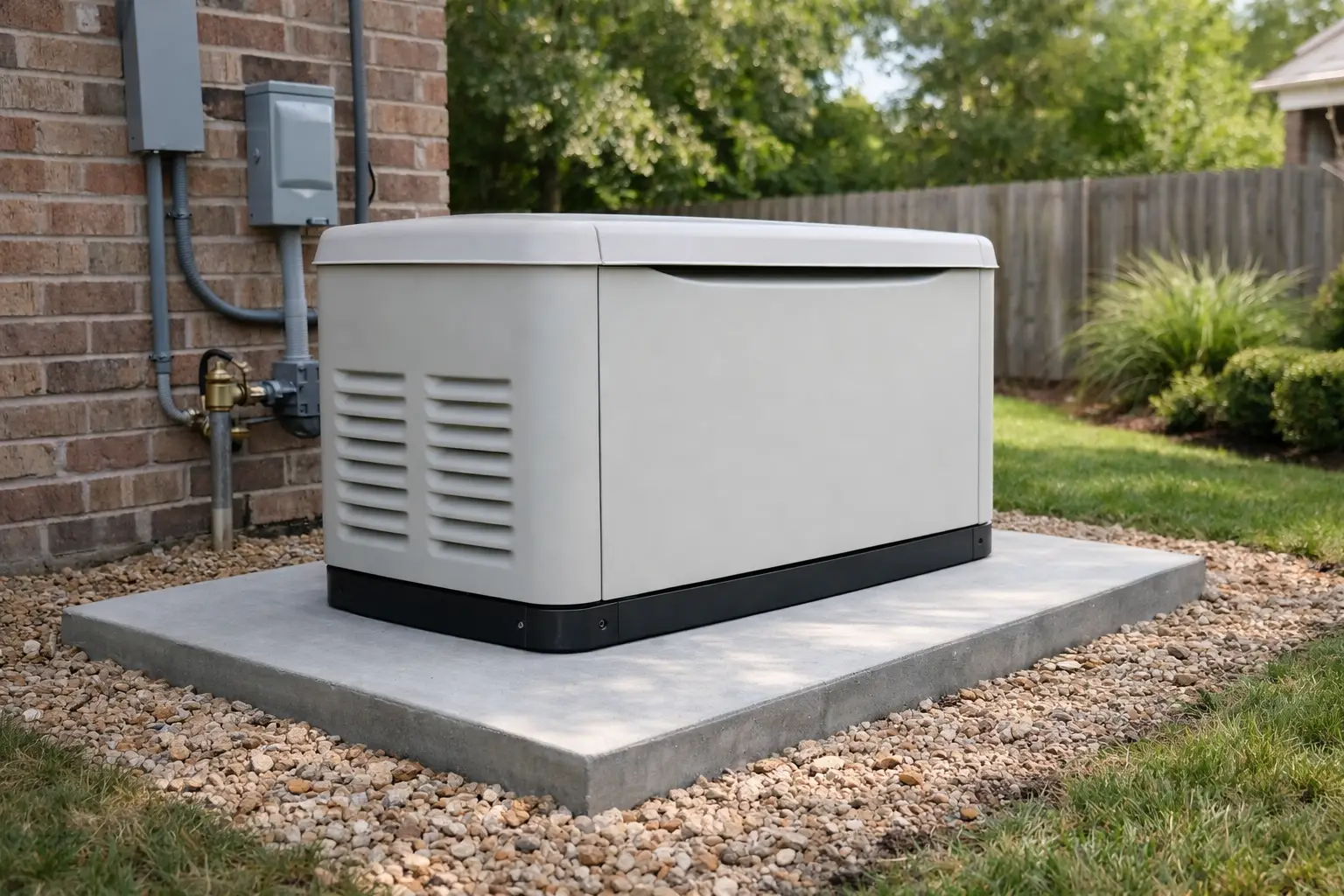
A standby generator is only as dependable as the surface beneath it. Generator concrete pad requirements are not a cosmetic detail or an optional add-on. The pad supports expensive equipment, helps keep the enclosure level and dry, and gives the installation team a stable foundation for electrical, fuel, and commissioning work. In Houston and Fort Bend County, where clay soil, heavy rain, and drainage conditions can change from one property to the next, getting this step right protects the entire investment.
For most homeowners, the goal is straightforward: a properly located, level pad that supports the generator for years without settling, standing water, or clearance problems. For commercial properties, the details can become more involved because equipment size, fuel supply, site access, engineered plans, and local permitting requirements may all affect the design.
Generator Concrete Pad Requirements Start With the Equipment
There is no one pad size or thickness that fits every standby generator. The generator model, enclosure dimensions, weight, local site conditions, and manufacturer installation instructions all matter. A residential air-cooled unit has very different support needs than a larger liquid-cooled or commercial generator system.
The concrete pad must be large enough to fully support the generator enclosure without overhang. It also needs to remain level under the unit’s operating weight. A generator that shifts or settles can create problems with enclosure doors, vibration isolation, fuel piping, electrical conduit, and drainage around the base.
Many residential standby units can be installed on a manufacturer-approved composite pad when conditions allow. That does not mean concrete is unnecessary in every case. A concrete pad may be the better choice when the soil needs additional stabilization, the equipment is larger, the site has elevation or drainage concerns, or local requirements call for it. Commercial equipment often requires a designed concrete foundation, with specifications based on the unit and engineered site plan.
A qualified installer should select the pad approach after confirming the generator model and inspecting the property. Choosing a pad before the equipment and location are finalized can lead to unnecessary rework.
Site Preparation Matters as Much as Concrete Thickness
Concrete placed directly over soft, uneven, or poorly drained soil is likely to move. The preparation below the slab is what helps a pad stay level through rain, heat, and seasonal ground changes.
The installation area is typically excavated and graded before a compacted base is installed. The right base material and depth depend on the soil and the generator’s load. In many residential applications, a properly prepared base with a reinforced concrete slab provides dependable support. Larger units may require deeper preparation, additional reinforcement, thicker concrete, or engineering specific to the property.
Houston-area soils deserve close attention. Expansive clay can swell when wet and shrink during dry conditions, which can contribute to settling or movement over time. A pad should not be treated as a simple backyard pour. Proper compaction, grading, and drainage give the slab a better chance of staying where it belongs.
The finished surface should be level enough for the generator manufacturer’s requirements, but the surrounding grade should direct water away from the generator. Water should never be allowed to pool around the enclosure, electrical connections, or fuel components. If the property sits in a low area or has known drainage issues, the generator location may need to change or the site may need added drainage work before installation.
Location and Clearance Rules Cannot Be Solved After the Pour
A perfect concrete pad in the wrong location still creates an installation problem. The generator must have the required separation from doors, windows, vents, combustible surfaces, utility equipment, property lines, and other site features. Exhaust flow, service access, noise considerations, and local code requirements all affect placement.
Manufacturer instructions and applicable fire and building codes establish the required clearances. These distances are not a place for guesswork. They can vary by generator model, building construction, the presence of openings, and the local authority having jurisdiction. The clearance needed on the service side of the generator is especially important because technicians need room to safely inspect, maintain, and repair the unit.
The pad also has to work with the electrical and fuel routes. A generator may need underground conduit to the transfer switch and properly planned natural gas or propane piping. Pouring a slab before those routes are planned can force awkward trenching, additional cost, or a location that does not meet code.
Before concrete is placed, the installer should confirm that gates, fences, landscaping, pool equipment, and roof drainage will not restrict access or violate clearance requirements. It is far easier to adjust a location on paper than to relocate a finished slab.
Keep Roof Water Off the Generator Site
Roof runoff is a common issue on residential installations. A pad located directly beneath a roof valley or downspout may be exposed to concentrated water during heavy storms. That water can erode soil around the slab, create standing water, and make service work unpleasant or unsafe.
A properly planned location avoids concentrated runoff whenever possible. When that is not possible, drainage improvements may be needed to move water away from the generator area. This is particularly relevant in Greater Houston, where a short storm can deliver more water than an improperly graded site can handle.
Reinforcement, Anchoring, and Equipment Weight
The amount of concrete and reinforcement should match the job. A small home standby generator does not always require the same slab design as a commercial generator serving a business, medical office, restaurant, or multifamily property. Equipment weight, vibration, wind exposure, soil conditions, and manufacturer instructions all influence the final plan.
Reinforcement can help control cracking and support long-term slab performance when specified for the installation. Anchoring may also be required, particularly for larger equipment or locations where wind and site conditions warrant it. The generator manufacturer’s requirements, local code, and any engineered drawings control these decisions.
It is normal for concrete to develop minor surface cracking over time, especially in Texas conditions. What should raise concern is significant settlement, tilting, widening cracks, or a slab that allows water to collect against the enclosure. Those conditions should be evaluated before a generator is installed or during service if the unit is already in place.
Permits, Inspections, and the Full Installation Plan
A concrete pad is one part of a standby generator project, not a separate project with separate consequences. The electrical connection, automatic transfer switch, gas or propane supply, placement clearances, and final inspection all need to work together.
Permit requirements vary by city, county, and project scope. A residential installation may involve electrical, fuel-gas, and building-related requirements. Commercial work may require plan review, engineering, site coordination, and more detailed inspections. The local authority has the final say on what is required at a specific address.
This is why a turnkey contractor should manage the work from permits to power-on. Texas Direct Generators evaluates the generator, location, pad needs, transfer switch, and fuel connection as one coordinated system. That approach helps prevent the frustrating situation where a slab is complete but the generator cannot be set, connected, or approved.
What to Expect During Concrete Pad Preparation
Once the generator location is confirmed, the installation team marks the work area and checks access for equipment and crews. The ground is prepared, the base is compacted, forms and reinforcement are installed as required, and concrete is placed and finished. The slab then needs appropriate curing time before the generator is set.
The schedule depends on weather, site conditions, concrete requirements, permits, and the generator installation plan. Rain can affect excavation and placement, while a rushed schedule can compromise the finished surface. Good planning keeps the project moving without sacrificing the foundation that the generator depends on.
Homeowners and facility managers can help by keeping the area accessible, identifying irrigation lines or known underground features, and discussing future landscaping or fence plans before the location is finalized. A generator needs ongoing service access, not just a clear path on installation day.
A well-built pad rarely gets attention after the generator is commissioned, and that is exactly the point. When the next outage arrives, the generator should be level, accessible, dry, and ready to carry the loads it was designed to protect.