
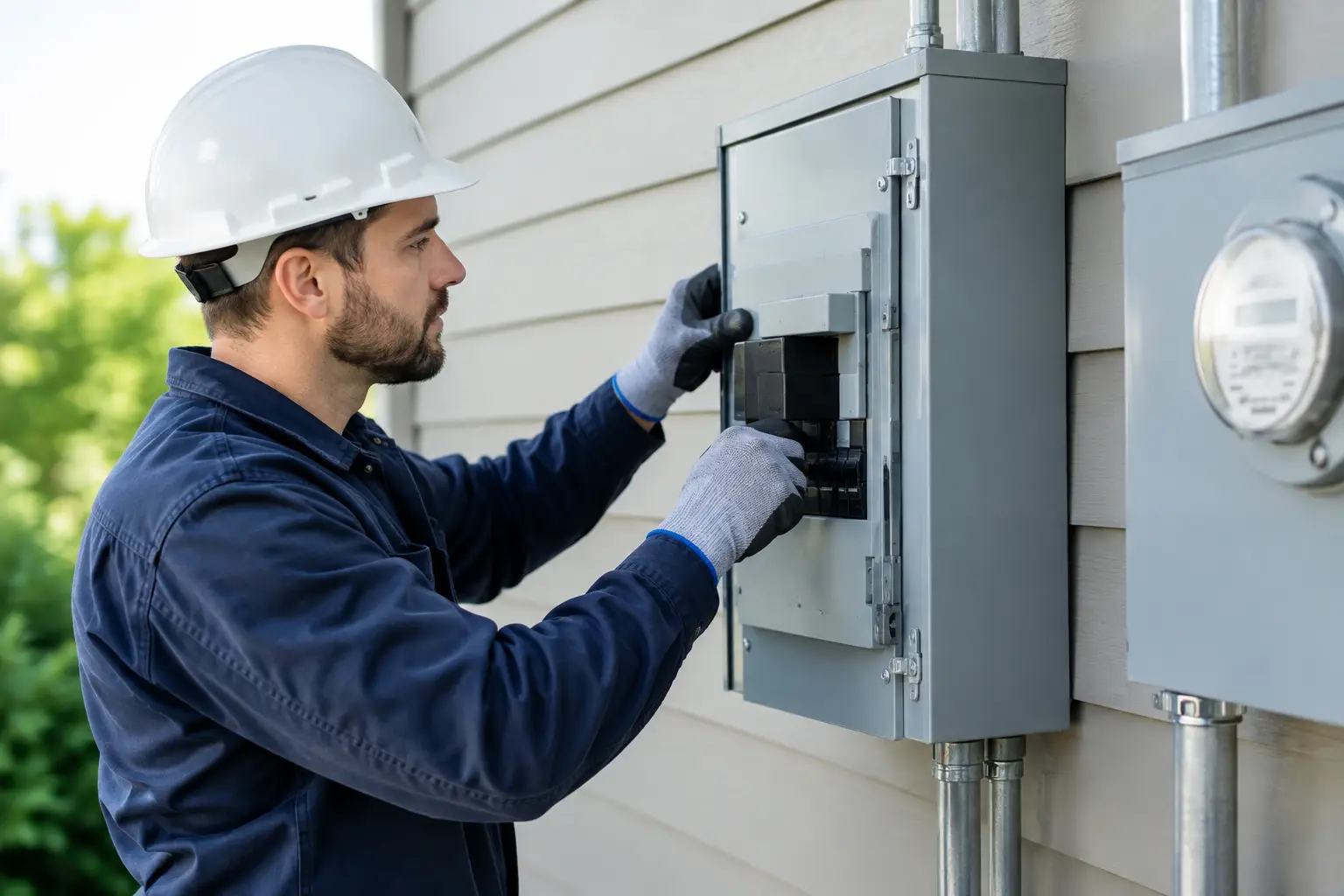
A generator cannot protect your property from an outage unless it can safely deliver power to the loads that matter. When you plan to install a transfer switch, you are putting the control point in place that separates utility power from generator power. That separation protects utility crews, your electrical equipment, and everyone inside the building.
For Houston-area homeowners, a transfer switch can keep air conditioning, refrigeration, lighting, internet, security, and essential medical equipment available during severe weather. For businesses and facilities, it can support communications, selected operations, safety systems, and inventory protection. The right solution depends on your electrical service, generator size, fuel supply, and the loads you need to carry.
What a Transfer Switch Does During an Outage
A transfer switch is installed between the utility service and the electrical panel or selected circuits. When utility power fails, it prevents generator power from feeding back onto the utility lines. This is called backfeeding, and it is dangerous, potentially fatal to utility personnel, and damaging to equipment.
With a properly sized automatic transfer switch, the process happens without a homeowner or employee going outside to connect cords or move breakers. The switch senses a sustained utility outage, signals the standby generator to start, and transfers the electrical load once the generator is ready. When utility power returns and stabilizes, the switch moves the load back to the grid and allows the generator to complete its cooldown cycle.
That automation matters during a nighttime outage, a storm evacuation, or a disruption that happens while a business is closed. It also avoids the uncertainty of trying to operate portable equipment in bad weather.
Before You Install a Transfer Switch, Start With Load Planning
The transfer switch is not a stand-alone purchase. It must match the generator, the property’s electrical system, and the power priorities of the people using the building.
A whole-home or whole-building transfer switch is often appropriate when a properly sized standby generator can support the full electrical service. Many larger homes and commercial properties instead use managed loads or a selective-load design. In those cases, the system may prioritize essential circuits or temporarily manage high-demand equipment such as multiple air conditioners, electric ranges, pool equipment, or large motors.
A professional site assessment should review the electrical service rating, panel configuration, major appliances, HVAC equipment, existing generator provisions, and the distance between the generator location and service equipment. The assessment should also account for what happens when several loads start at once. An air conditioner, well pump, or commercial motor can require substantially more power at startup than during normal operation.
For a residence, the practical question is not simply, “How large a generator do I want?” It is, “What needs to stay on when the grid is down?” For a commercial property, the question expands to include operational continuity, tenant needs, safety requirements, refrigerated inventory, technology systems, and the cost of downtime.
Automatic vs. Manual Transfer Switches
A manual transfer switch requires someone to start the generator, move the switch, and manage connected loads. It can be a workable option for a portable generator and a limited set of critical circuits, but it depends on someone being present and able to operate it safely.
An automatic transfer switch is designed for a permanently installed standby generator. It starts and transfers power automatically, which is why it is the preferred choice for homes that need protection while residents are away and for businesses that cannot wait for a person to respond.
The trade-off is cost and project complexity. Automatic systems require professional electrical installation, correct control wiring, generator commissioning, and coordination with the fuel source. In return, they provide a level of reliability that extension cords and manual changeover cannot match.
Permits, Placement, and Houston-Area Code Requirements
Installing a transfer switch involves more than mounting a cabinet beside an electrical panel. Local permits and inspections help confirm that the electrical work, generator placement, fuel connection, grounding, and clearances meet applicable requirements.
Rules can vary by municipality and property type. A project in Sugar Land, Katy, Richmond, or unincorporated Fort Bend County may have different local processes, while commercial properties can have additional requirements based on occupancy, equipment, and life-safety systems. Flood-prone conditions, drainage, access for service, and equipment elevation may also affect the final installation plan.
A qualified contractor should manage the technical details from permits to power-on. That means verifying where the generator can sit, preparing a stable pad, coordinating electrical and gas work, installing the transfer switch, completing required inspections, and testing the full system under controlled conditions.
Attempting to bypass this process can create expensive problems. An incorrectly installed transfer switch may fail to isolate utility power, overload a generator, void equipment coverage, or delay an insurance claim after an electrical incident. For commercial sites, unplanned downtime from a failed installation can cost far more than doing the job correctly from the start.
Fuel Coordination Is Part of Transfer Switch Reliability
The transfer switch can only do its job if the generator has dependable fuel. Most standby systems in Greater Houston operate on natural gas or propane. Both can be effective, but the right choice depends on utility availability, generator capacity, existing gas demand, and how long you need the system to operate during an outage.
Natural gas is convenient when the available service can supply the generator while other gas appliances are running. A load calculation helps determine whether the existing meter, piping, and regulator setup are sufficient. A generator that is starved for fuel may struggle to start, run unevenly, or shut down under load.
Propane is often a strong option where natural gas is unavailable or where property owners prefer an on-site fuel supply. However, propane tank sizing, location, permitting, delivery access, and cold-weather vaporization requirements should be considered before installation. The fuel plan should be built around the generator and transfer switch design, not treated as an afterthought.
What Professional Installation and Testing Should Include
A complete transfer switch project requires coordinated electrical, mechanical, and regulatory work. The sequence varies by property, but a dependable installation typically includes these core steps:
- A site evaluation and load calculation to select the generator and transfer switch capacity.
- Permit coordination, equipment placement planning, and pad preparation.
- Licensed electrical installation, including the transfer switch, breakers, wiring, grounding, and controls.
- Natural gas or propane connection work sized for the generator’s fuel demand.
- Startup, simulated outage testing, inspection support, and customer orientation.
The final test is where the system proves its value. The installer should verify that the generator starts correctly, the switch transfers safely, selected loads operate as expected, and utility power returns without interruption or equipment damage. Homeowners and facility staff should understand the generator’s exercise schedule, status indicators, and what to do if the system reports an alert.
Texas Direct Generators handles these details as a turnkey standby-power project, so customers do not have to coordinate separate electrical, fuel, concrete, permit, and startup contractors on their own.
Maintenance Keeps the System Ready
A transfer switch is designed to operate automatically, but it should not be forgotten once the installation is complete. The generator, battery, fuel system, control connections, and transfer equipment all need periodic attention. Scheduled maintenance helps identify battery weakness, oil or filter needs, fuel issues, warning codes, and wiring concerns before an outage exposes them.
For commercial properties, maintenance planning should also include periodic exercise under meaningful load conditions and a clear procedure for responding to alarms. For homes, a service plan provides reassurance that the system has been inspected by trained technicians rather than simply assumed ready.
If your property depends on air conditioning, refrigeration, connectivity, safety equipment, or continuous operations, the best time to plan the transfer switch is before storm season puts every contractor on emergency callouts. A properly designed system gives you a clear path from utility failure to dependable backup power, with the right people accountable for every step.