
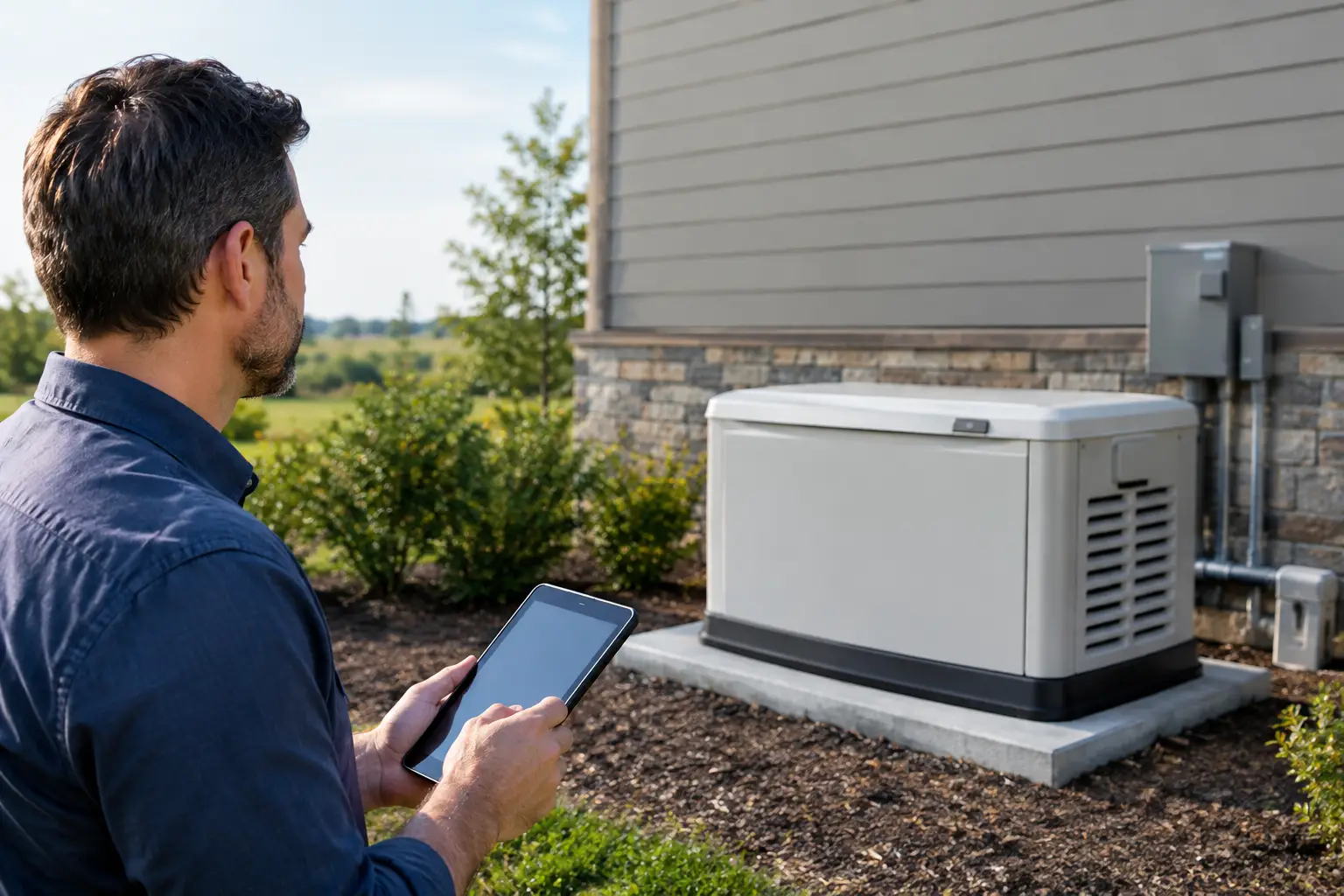
A generator payment should buy more than a piece of equipment sitting beside the house. When you finance a standby generator, you are investing in automatic protection for the loads that matter when Houston-area storms, grid disruptions, or equipment failures cut the power. That can mean air conditioning, refrigeration, home security, internet access, medical equipment, lighting, and the ability to keep daily life moving.
The right financing plan makes that protection more accessible without cutting corners on the work behind it. A properly installed standby system involves generator sizing, an automatic transfer switch, electrical work, fuel supply, permits, site preparation, testing, and ongoing service. Understanding what belongs in the project helps homeowners and business decision-makers compare options on the right basis.
Finance Standby Generator Protection, Not Just Equipment
A portable generator may cover a few temporary needs, but it requires manual setup, fuel handling, extension cords, and close attention during an outage. A home standby generator is permanently installed and connected to an automatic transfer switch. When utility power fails, the system detects the outage, starts the generator, and transfers selected electrical loads to backup power.
That difference affects the purchase decision. Financing can allow you to plan for a complete, code-compliant installation instead of choosing a smaller solution that does not meet your actual outage needs. For many property owners, the monthly payment is easier to manage than delaying protection until after the next major outage.
The goal is not to finance the largest generator available. It is to finance a system sized around the way your home or facility operates. A qualified contractor should discuss which circuits, appliances, HVAC equipment, safety systems, and business loads need to remain available. From there, the system can be designed around practical priorities and available fuel capacity.
What Should Be Included in the Financed Project?
A lower equipment price can look appealing until the missing parts of the installation begin appearing as separate costs. Standby power is a system, and the work needs to be treated that way from the start.
A complete proposal should clearly address the generator and automatic transfer switch, site evaluation, concrete pad preparation, electrical installation, gas-line or propane coordination, permit handling, startup testing, and final power-on. Depending on the property, it may also include electrical upgrades, load management equipment, trenching, propane tank setup, or additional fuel-line work.
Ask who is responsible for each phase. Homeowners should not have to coordinate an electrician, gas contractor, permitting office, equipment delivery, and startup technician on their own. For commercial properties, that accountability is even more valuable because installation scheduling, operational access, safety requirements, and critical-load planning can be more involved.
Texas Direct Generators manages standby power projects from permits to power-on, helping customers avoid the gaps that can happen when separate vendors handle disconnected pieces of the work.
Generator Size Changes the Payment and the Protection
Sizing is one of the largest factors in what a standby generator project costs. A smaller system may support selected essential circuits, while a larger system can provide broader coverage for a home or support more demanding commercial loads. Neither choice is automatically better.
For a residence, the decision often comes down to whether you want essentials only or whole-home protection. Essential-load coverage may prioritize refrigeration, lighting, internet, garage doors, security, and selected outlets. Whole-home coverage can include central air conditioning and more of the electrical panel, but it generally requires more generator capacity and must be evaluated against the property’s electrical demand and fuel supply.
For a business, start with continuity needs rather than square footage alone. Which loads protect inventory, maintain communications, support customer service, preserve security, or keep a critical process operating? A restaurant’s refrigeration needs differ from a medical office’s equipment needs, and a retail center may need to prioritize emergency lighting, access controls, and communications. A careful load review prevents paying for capacity you do not need while protecting the operations you cannot afford to lose.
Fuel Supply Is Part of the Financial Decision
Natural gas is a common fuel choice for standby generators in the Greater Houston area because it provides a continuous supply during many outages. Still, the existing meter, pipe sizing, distance to the generator, and total gas demand must be evaluated. An undersized gas line can prevent a generator from performing as designed.
Propane may be the better option where natural gas is unavailable or where a property needs a dedicated onsite fuel source. Propane projects can involve tank sizing, tank placement, supply-line installation, and coordination with fuel providers. Those details affect the total project scope, so they should be discussed before financing is finalized.
Do not assume fuel work is a minor add-on. It is central to whether the system can reliably carry the expected load when utility power is out.
How to Evaluate Standby Generator Financing
Financing should make the purchase understandable, not create surprises. Before moving forward, review the total installed project cost, the payment amount, the financing term, the annual percentage rate if applicable, and whether there are any deferred-interest conditions or fees. Ask what happens if you pay early and whether the lender requires a down payment.
It also helps to compare the payment against the cost of being unprepared. That calculation is personal for a household and operational for a business. A family may be protecting comfort, food, medical devices, remote work, and the ability to safely remain at home. A business may be limiting revenue loss, spoilage, interruption, after-hours security concerns, or the risk of closing during a prolonged outage.
Approval and terms depend on the financing program and the applicant’s credit profile. A reputable contractor should be direct about that reality and avoid promising a specific rate or approval outcome before the financing process is complete. The most useful conversation is one that matches a realistic budget with a properly designed system.
Avoid the Low-Price Installation Trap
A standby generator is not a do-it-yourself appliance purchase. Improper electrical connections, fuel work, transfer switch selection, or permitting can create safety hazards and expensive corrections. Work completed without proper planning may also fail inspection, delay startup, or leave the owner without a clear path for service later.
When comparing proposals, look beyond the monthly payment. Confirm that the contractor is licensed and insured, experienced with standby installations, and prepared to manage the technical details. If you are considering a Generac system, working with an authorized dealer can also provide confidence that the equipment selection, installation process, and service support align with the manufacturer’s requirements.
A detailed site assessment matters because every property has constraints. Generator placement must account for manufacturer clearances, local code, access for service, noise considerations, utility locations, drainage, and the routing of electrical and fuel connections. A reliable proposal reflects those realities rather than relying on a generic price given without evaluating the site.
Plan for Service After the First Outage
Financing the installation is only the beginning of generator ownership. Like any engine-powered system, a standby generator needs scheduled maintenance, battery checks, oil and filter service, inspections, and periodic testing. Regular service helps identify problems before the generator is needed during severe weather.
Ask about maintenance while planning the purchase, not after the installation is complete. You should know who will service the unit, what the recommended maintenance schedule looks like, and how repairs are handled if the generator reports an alert or fails to exercise properly. This is especially important for commercial customers with formal continuity responsibilities and for households relying on backup power for medical or safety-related needs.
A well-planned standby generator project gives you a clear answer to a difficult question: what happens here when the grid goes down? Start with the loads you need to protect, request a site-specific assessment, and choose financing that supports a complete installation built to perform when the outage is no longer hypothetical.