
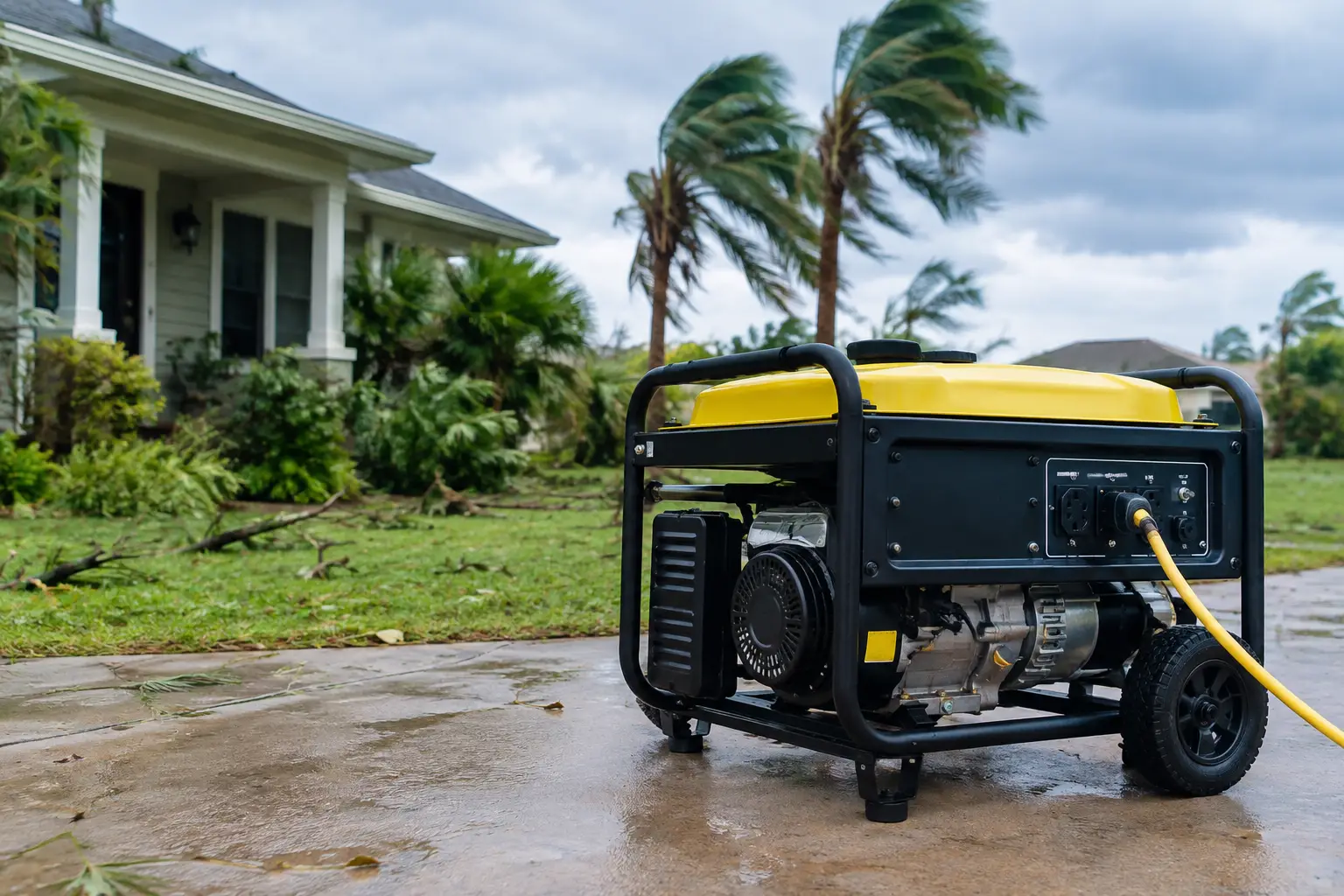
When a hurricane is moving toward the Texas Gulf Coast, the best generator features for hurricanes are not about convenience alone. They determine whether your home stays safe and livable or whether your business can continue protecting people, equipment, inventory, and operations. The right system should start automatically, carry the loads that matter, operate safely for an extended outage, and be installed correctly before severe weather arrives.
For Houston and Fort Bend County property owners, a generator is a long-term resilience decision. Hurricane outages can last far longer than a brief neighborhood interruption, and heat, humidity, fuel availability, and local permitting requirements all affect what dependable backup power looks like.
Automatic Operation Is the First Hurricane Feature to Prioritize
A home standby generator with an automatic transfer switch is usually the strongest option for hurricane preparation. When utility power fails, the transfer switch detects the outage, safely disconnects the property from the grid, and signals the generator to start. Within seconds, the system begins supplying selected circuits or the entire property, depending on the design.
That automatic response matters when an outage happens overnight, while you are away, or while conditions outside are unsafe. A portable generator may have a place for limited, short-term use, but it requires someone to bring it out, place it outdoors, connect approved cords or an inlet, start it, and manage refueling. During heavy rain, high winds, flooding, or an evacuation, those steps may not be practical.
For homes, automatic power can keep air conditioning, refrigeration, lighting, internet, security systems, garage access, well pumps, and medically necessary equipment operating. For commercial properties, it can support communications, emergency lighting, point-of-sale systems, refrigeration, servers, access controls, and other priority loads. The specific plan should be based on what your property cannot afford to lose.
The Best Generator Features for Hurricanes Start With Proper Sizing
Generator capacity is not a feature you can judge by square footage alone. A properly sized system must account for the electrical demand of the loads you want to operate, including the extra starting power required by air conditioners, refrigerators, pumps, and certain motors.
A smaller generator designed for essential circuits may be the right investment for a homeowner who wants to preserve food, remain cool in one part of the house, maintain communications, and run basic lighting. A whole-home system can provide a more complete return to normal, but it requires sufficient generator capacity and fuel supply. Neither choice is automatically better. The right choice depends on your priorities, electrical service, budget, and available fuel.
Commercial sizing requires the same discipline on a larger scale. A system that only covers a fraction of a building’s real critical loads can create operational problems during an outage. On the other hand, oversizing without a sound load plan can add unnecessary equipment and fuel costs. A site evaluation should identify both continuous demand and motor starting demand before equipment is selected.
A dependable load plan usually separates critical needs from optional comfort loads. Consider which of these must remain energized during a prolonged outage:
- Air conditioning or heating equipment needed for health, comfort, or equipment protection
- Refrigerators, freezers, pumps, and appliances that protect food or water access
- Medical devices, security equipment, communications, and internet service
- Business systems such as refrigeration, network equipment, access control, and emergency lighting
- Garage doors, gates, and other access equipment needed for safety or operations
Fuel Supply Must Match the Length of the Outage
A generator is only as useful as its fuel plan. In many Houston-area installations, natural gas offers a practical standby solution because it is supplied through a utility line and does not require routine refueling by the property owner. However, natural gas availability and pressure must be evaluated as part of the installation. The generator, other gas appliances, existing pipe sizing, and total demand all matter.
Propane is another dependable option, particularly where natural gas is unavailable or where a property owner wants an on-site fuel reserve. Propane tank size becomes a central decision. A tank that is too small may not provide the runtime you expect when temperatures are high and the generator is carrying significant loads. Tank placement, local rules, delivery access, and refill planning should all be addressed before hurricane season.
For either fuel source, do not treat runtime estimates as guarantees. Generator consumption changes with electrical load. Running one air conditioner and a refrigerator uses a different amount of fuel than running multiple HVAC systems, pool equipment, kitchen appliances, and every light in the building. Good system design gives you a realistic view of how the generator will be used when the grid is down.
Weather-Ready Construction and Placement Protect the Investment
Standby generators are designed for outdoor use, but that does not mean placement is an afterthought. Hurricane conditions bring wind-driven rain, standing water, airborne debris, and possible flooding. The generator needs a stable pad, appropriate clearances from structures and openings, and a location that supports safe service access.
Concrete pad preparation is more than a clean-looking finishing step. It gives the generator a level, durable base and helps keep the unit above surrounding ground conditions. On properties with drainage concerns, elevation and placement deserve close attention. A generator should never be installed where floodwater is likely to reach critical equipment.
The enclosure should also be selected and maintained for local outdoor conditions. Corrosion resistance is especially valuable near the coast or in areas exposed to persistent humidity. Keep landscaping, stored materials, and debris away from the unit so airflow is not restricted. During storm preparation, do not cover a running generator or block its ventilation.
Transfer Switch Protection and Electrical Work Cannot Be Skipped
The automatic transfer switch is the control center of a standby power system. It prevents generator power from backfeeding into utility lines, which can endanger line workers and damage equipment. It also directs power to the circuits the system is designed to support.
Some properties benefit from whole-home transfer capability, while others are better served by a managed-load or essential-circuit approach. Load management can temporarily prioritize major appliances so the generator is not overloaded when large equipment attempts to start. This can be a smart way to improve capability without moving immediately to a significantly larger generator.
A hurricane-ready installation also calls for properly sized conductors, breakers, grounding, connections, and surge protection where appropriate. These are not details to leave to a last-minute handyman setup. Permits, inspections, licensed electrical work, and code-compliant fuel connections protect the system’s safety and reliability when it is needed most.
Remote Monitoring Helps You Know What Is Happening
Remote monitoring is one of the most useful modern generator features, particularly for owners who travel, manage multiple properties, or oversee commercial sites. Depending on the system, monitoring can provide operating status, exercise information, maintenance reminders, fault notifications, and alerts when utility power is lost or restored.
Monitoring is not a substitute for service. It is an early-warning tool. If an alert indicates a battery issue, low fuel concern, fault code, or missed exercise cycle, addressing it before a storm is far easier than trying to arrange repairs after outages begin across the region.
For business owners and property managers, this visibility can support faster decisions during an event. You can verify that the unit is operating, send the right person to the site if needed, and document conditions for your operational response plan.
Maintenance Is a Hurricane Feature in Practice
Even an excellent generator can fail if it is not exercised and maintained. Standby units need periodic testing, oil and filter service based on manufacturer requirements and operating hours, battery inspections, enclosure checks, and review of fuel and electrical connections. A system that has not run under load for months should not be assumed ready for a multi-day outage.
Schedule maintenance before the peak of hurricane season, not after a named storm enters the Gulf. A professional service visit can identify battery weakness, error codes, worn components, fuel supply concerns, and issues with the transfer switch before they become emergency failures.
Texas Direct Generators handles standby power projects from system selection and permits through pad work, electrical installation, fuel coordination, testing, and final power-on. That single point of accountability matters because a generator is not simply a piece of equipment. It is a connected system that must work safely across electrical, fuel, and regulatory requirements.
The best time to decide what needs power is while your property is calm, accessible, and connected to the grid. Start with the loads that protect your family, tenants, customers, or operations, then build a generator plan that can carry them through the next hurricane outage with confidence.