
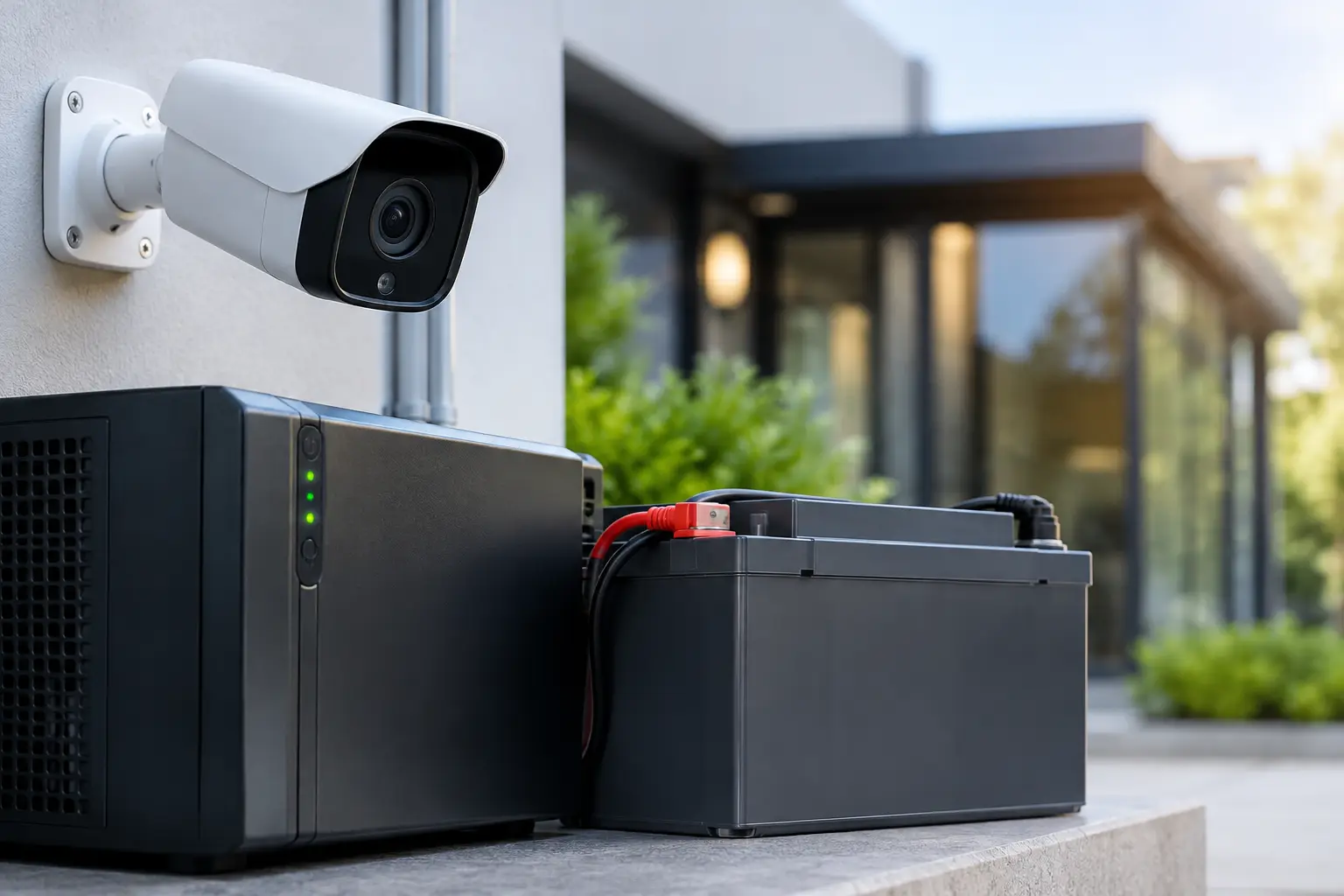
A security system can look fully protected until the utility power fails. Cameras may lose recording, access-control doors can default to an unsafe position, internet equipment can shut down, and a monitored alarm panel may be left relying on a limited battery. Backup power for security systems keeps the equipment that protects your property operating when an outage creates more risk, not less.
For Houston-area homes and commercial properties, the goal is not simply to keep a few cameras illuminated. It is to preserve the full chain of protection: power to the security panel, camera network, recording device, network hardware, communications equipment, gates, and the critical lighting or access-control equipment connected to the system.
Why Security Equipment Fails During an Outage
Most modern security systems depend on more than the alarm control panel. A panel may have a backup battery and cellular communicator, but that does not mean every part of the system will remain online. Wired cameras often rely on a power-over-Ethernet switch. The switch needs electricity. The network video recorder, modem, router, Wi-Fi access points, electronic locks, gate operators, and display monitors each have their own power needs.
When one piece drops out, the system may continue to send a basic alarm signal while losing the video, remote access, or entry control needed to verify what is happening. That distinction matters after a storm, when a dark property, downed communications lines, and extended outages can create real exposure.
A properly designed standby power plan protects the equipment that supports detection, recording, communication, and controlled entry. It also prevents the common mistake of assuming a small plug-in battery backup can carry a complete security setup for days.
Start With the Actual Security Loads
The right generator size depends on the equipment you need operating and what else the generator must support. A homeowner may want security equipment, refrigerator circuits, selected lights, internet service, and air conditioning. A business may need security and access control alongside emergency lighting, point-of-sale equipment, refrigeration, servers, or critical production loads.
Security loads can be modest on paper, but the full package adds up. A camera system may include multiple cameras, a PoE switch, an NVR, a monitor, a router, modem, cellular backup device, and a gate controller. Access-control systems can add electrified locks, door operators, intercoms, and dedicated control panels. The generator must also account for startup demand from motors, compressors, and other selected loads elsewhere in the building.
That is why equipment selection should begin with an on-site load assessment rather than a guess based on square footage alone. The system needs enough capacity to carry its designated circuits without forcing you to choose between safety equipment and essential comfort or operations.
Security Circuits to Prioritize
For many properties, the best approach is to identify the security equipment that cannot be allowed to go down. That usually includes the alarm panel and communicator, internet and network hardware, camera recorder, PoE switches, exterior cameras, access-control panels, key entry points, and gate operators where applicable.
You may also choose to protect exterior lighting, garage doors, a monitored fire or life-safety system, and a dedicated workstation used for remote camera viewing. Commercial properties should review these choices with their facilities team and security provider, especially when equipment serves tenant areas, restricted spaces, or emergency procedures.
A Generator and UPS Serve Different Jobs
A standby generator is built for sustained outages. It detects utility failure, signals the automatic transfer switch, and begins supplying power to selected or whole-property electrical loads after a short startup period. With an appropriately sized natural gas or propane fuel supply, it can support long-duration outage protection.
A UPS, or uninterruptible power supply, fills a different role. It provides immediate short-term battery power while the generator starts and transfers the building to backup power. For sensitive electronics such as an NVR, router, modem, PoE switch, or security control panel, that brief bridge can prevent an unnecessary reboot or recording interruption.
For the strongest setup, use both where appropriate. The generator provides endurance, while UPS units protect critical low-voltage equipment during the transition. A UPS alone is not a substitute for standby power during a multi-hour or multi-day outage. Its runtime depends on battery capacity and load, and it declines as batteries age.
Fuel Planning Determines How Long Protection Lasts
A generator cannot protect your security system if its fuel supply is undersized, interrupted, or improperly connected. Natural gas is often an excellent choice where reliable utility gas service and adequate line capacity are available. It offers continuous fuel without refilling a tank during an outage.
Propane is a practical option for properties without natural gas or for owners who prefer on-site fuel storage. The tank size, generator load, and expected runtime all affect how long the system can operate. A propane plan should account for more than average daily use. Severe weather can delay deliveries, restrict travel, and extend outage timelines.
Fuel coordination is a technical part of the project, not an afterthought. Correct gas-line sizing, pressure verification, tank placement, and local code requirements help ensure the generator can perform under load when it is needed.
Automatic Transfer Protects the Property and the Equipment
An automatic transfer switch is the control point that separates your property from the utility grid during an outage and connects generator power safely. It prevents dangerous backfeeding and manages the transition back to normal utility service once power is restored.
For security systems, automatic operation is especially valuable. An outage may occur when no one is home, after business hours, or while a facility manager is unable to reach the site. A manual portable generator requires someone to be present, move equipment outside, start it, connect it safely, and manage fuel. That process is not dependable protection for a monitored property.
A permanently installed standby generator can start automatically whether you are at home, on the road, or responding to another priority. Depending on the design, the transfer switch can power the whole home or building, or it can prioritize selected critical circuits. Load management may be used when large appliances or HVAC equipment need to share available generator capacity.
Installation Details Matter as Much as Generator Size
A dependable system is built through disciplined planning from permits to power-on. The generator needs a correctly prepared concrete pad, proper location and clearances, approved electrical connections, code-compliant fuel work, transfer-switch installation, and final testing under operating conditions.
For commercial sites, the planning may also involve coordination with property management, tenant operations, security vendors, fire protection requirements, local inspection authorities, and existing electrical infrastructure. A facility with access control should confirm how doors behave during an outage. Some doors must unlock for life safety, while others may need battery-backed control or carefully designed fail-secure operation. Those decisions should align with code requirements and the property’s emergency plan.
Texas Direct Generators manages these details as a turnkey project, including generator selection, permitting, pad preparation, automatic transfer switch installation, fuel connections, testing, and final power-on. That single-accountability approach helps prevent the gaps that occur when separate parties assume someone else handled a critical connection or approval.
Test the System Before a Storm Tests It
A generator that starts once a week is not necessarily a generator that is ready for a real outage. Regular exercise confirms that the unit starts, but periodic maintenance and load testing provide a clearer picture of system readiness. Batteries weaken, oil and filters require service, fuel components need inspection, and connections can deteriorate over time.
Your security equipment should be included in those checks. Verify that cameras resume recording after transfer, remote viewing remains available, the cellular or internet communication path works, gates respond as expected, and UPS units hold through the transfer interval. Check dates and battery health for alarm panels and UPS devices, since their batteries are often the first weak point in an otherwise well-designed plan.
For businesses, document the test results and assign responsibility for reviewing alerts. A generator notification is only useful if someone recognizes it and schedules service before the next outage.
Plan for the Outage You Hope Never Comes
The best time to evaluate backup power is when the cameras are recording, the gates are functioning, and utility power is stable. Identify what must stay protected, calculate the full load behind those systems, and choose a standby solution designed for the fuel, electrical capacity, and operating needs of your property. A properly installed and maintained generator gives your security system the time and power it needs to keep doing its job when the grid cannot.