
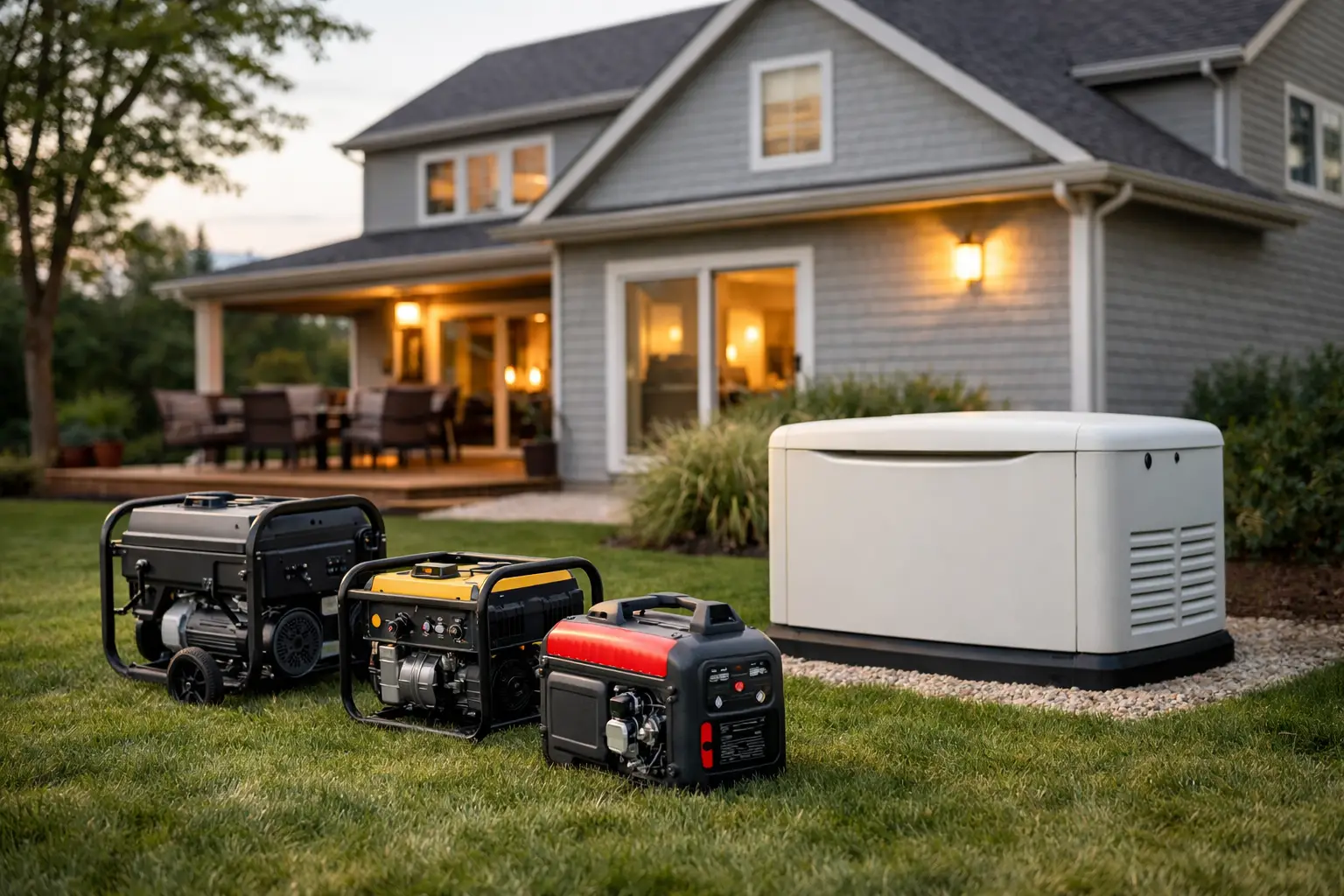
A Houston-area outage gets serious quickly when the air conditioning stops, refrigerators begin warming, and the internet goes down. If you are asking, “what size generator do I need,” the right answer is not simply the largest unit that fits the budget. It is the generator that can safely carry the electrical loads you need, manage high-demand equipment, and operate reliably with your home’s fuel supply and electrical system.
For many homeowners, that means planning for more than lights and a refrigerator. It may include central air conditioning, well or pool equipment, medical devices, security systems, garage doors, Wi-Fi, and the circuits that keep daily life moving. For businesses, the calculation can include refrigeration, communications, point-of-sale systems, safety equipment, servers, and critical operations. Proper sizing protects comfort, equipment, and continuity when utility power is unavailable.
What Size Generator Do I Need? Start With Your Loads
Generator capacity is measured in watts or kilowatts. One kilowatt equals 1,000 watts. The goal is to identify the equipment that must run during an outage, determine how much power it requires, and account for appliances and motors that need extra power when starting.
A home does not necessarily need enough generator capacity to run every electrical item at once. Some families want selected essential circuits, while others want a whole-home standby system that restores normal operation with few compromises. The difference between those two goals has a major effect on generator size, installation design, and cost.
A practical first step is to separate loads into three groups: critical items that must remain on, comfort items that you strongly prefer to run, and nonessential loads that can stay off during an outage. Critical loads often include refrigeration, lighting, internet equipment, a garage door, security systems, and medically necessary equipment. Comfort loads may include central air conditioning, electric cooking appliances, laundry equipment, and pool equipment. Nonessential loads may include extra refrigerators, workshop tools, or equipment that can wait until utility power returns.
Running Watts and Starting Watts Matter
Every electrical load has a running wattage, which is the power it uses after it is operating. Motors and compressors can also have a starting requirement, sometimes called surge wattage. Air conditioners, refrigerators, freezers, sump pumps, well pumps, and some power tools can draw substantially more power for a short time when they start.
That is why adding the wattage printed on a few appliance labels is not always enough. A generator may appear large enough based on running loads but still struggle if a compressor and pump start at the same time. Professional sizing considers the actual equipment in the home, motor demands, electrical panel capacity, and whether load-management controls can prevent certain large loads from starting together.
For example, a refrigerator may use a modest amount of power while running, but its compressor needs a higher starting load. A central AC system is often the largest factor in a Texas home’s generator plan. Its size, efficiency, age, starting characteristics, and the number of HVAC units all affect the final recommendation. A house with one properly managed AC unit has very different needs from a large home with two or three systems.
Typical Standby Generator Ranges for Homes
There is no universal generator size for a certain square footage. Two houses of the same size can have entirely different electrical demands based on HVAC equipment, electric appliances, pumps, pool equipment, insulation, occupancy, and lifestyle. Still, these general ranges help frame the conversation.
A smaller standby generator in the approximately 10 to 14 kW range may support carefully selected essential loads. This approach can work for homeowners who are comfortable managing what runs during an outage and do not expect to power all high-demand appliances at once.
A generator in the approximately 18 to 22 kW range is commonly considered for many homes seeking broader coverage, including one central air conditioning system along with everyday household loads. The exact result depends on the AC unit and the home’s electrical profile.
Larger homes, homes with multiple air conditioners, electrically heated equipment, well pumps, substantial pool equipment, or a true whole-home expectation may require a larger system or load-management strategy. The best choice may be a higher-capacity residential unit, a system that prioritizes critical loads, or a combination of both.
The key is to avoid sizing by square footage alone. A 2,500-square-foot gas-appliance home can require less backup capacity than a smaller all-electric home with a large AC system and high-demand equipment.
A Better Way to Calculate Generator Capacity
Start by making a realistic outage-day inventory. Walk through the home or facility and list what needs power, not just what happens to be plugged in. Include fixed equipment that is easy to overlook, such as HVAC systems, attic ventilation, lifts, gates, pumps, alarms, network equipment, and water heaters.
For each item, gather the electrical information from its nameplate, owner’s manual, or manufacturer documentation. Record voltage, amps, watts, and whether the item contains a motor or compressor. Watts can often be estimated by multiplying volts by amps, but certain equipment has power-factor and starting-demand considerations that make a straightforward estimate incomplete.
Next, identify what may operate at the same time. This is where practical planning matters. During a summer outage, many Houston households expect refrigeration, lighting, communications, and air conditioning to run together. If the home also has electric ovens, clothes dryers, electric water heating, or a pool pump, decide whether those loads need automatic coverage or can be managed.
Finally, leave room for real-world operation. A generator should not be planned so tightly that normal load changes create nuisance shutdowns or force your family to constantly choose between basic needs. A professionally designed standby system balances capacity, budget, fuel use, and the level of convenience you expect during an extended outage.
Whole-Home Coverage vs. Essential-Load Coverage
Essential-load coverage is often the practical choice when the goal is to protect the most important circuits while controlling project cost. The automatic transfer switch can be configured to supply designated circuits, allowing you to keep refrigeration, lighting, communications, security, and selected HVAC equipment running without trying to energize every large appliance.
Whole-home coverage offers a more complete experience, but it requires honest planning. “Whole home” does not always mean every appliance can run simultaneously without limits. Depending on the generator size and household loads, smart load management may temporarily prioritize air conditioning over an electric dryer, or delay a pool pump while the AC compressor starts. That is not a compromise in safety. It is a deliberate design method that helps the generator serve the loads that matter most.
Commercial properties need the same level of discipline. A generator for an office, retail space, restaurant, medical practice, or multifamily property should be based on a defined continuity plan. Identify what must remain open, what protects inventory, what supports life safety, and what can remain offline. A commercial system that is too small can disrupt operations; one that is oversized without a reason can add unnecessary upfront and operating costs.
Generator Size Is Only One Part of the Project
A correctly sized generator still needs a correctly designed installation. The transfer switch must match the electrical system and coverage plan. The fuel source must deliver sufficient natural gas or propane volume under load. Local permits, clearances, concrete pad preparation, electrical connections, and final testing all affect whether the system performs as intended when the power fails.
Fuel planning deserves special attention. Natural gas is convenient for many homes, but the existing gas line may need evaluation or modification to support generator demand. Propane systems require tank sizing and fuel-use planning, especially for longer outages. Generator capacity, fuel type, and expected runtime should be considered together rather than as separate decisions.
This is also why a site assessment is more reliable than selecting a generator based solely on an online calculator. A qualified contractor can inspect the electrical service, evaluate major equipment, review placement options, identify permitting needs, and explain where load management provides the best value.
Plan for Maintenance Before the Next Outage
A standby generator is a mechanical and electrical system that needs regular attention. Scheduled exercise runs, oil and filter service, battery checks, fuel-system inspection, and operational testing help ensure it is ready when storms or grid disruptions arrive. Maintenance also provides an opportunity to catch changes in your power needs, such as a new AC unit, pool equipment, home addition, or business expansion.
Texas Direct Generators helps homeowners and businesses move from load evaluation through permits, installation, testing, and ongoing service. The most useful next step is a professional assessment based on what you truly need to keep running – so when the lights go out, your backup power plan is already in place.