
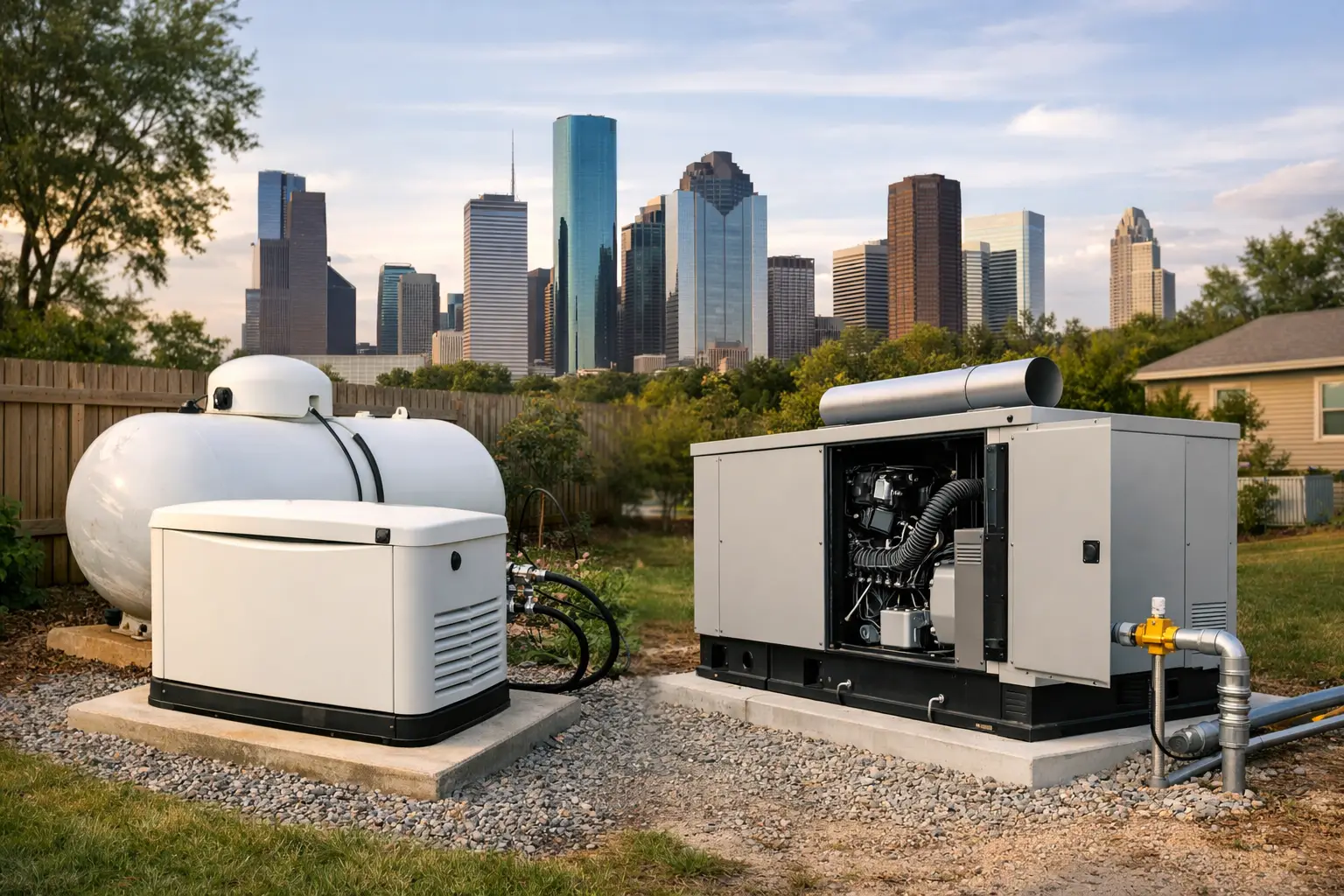
A standby generator can only protect your home or business for as long as it has fuel. That makes propane versus natural gas generators a practical decision, not a minor detail on an equipment quote. For Greater Houston property owners preparing for hurricanes, severe thunderstorms, heat-related outages, and grid disruptions, the right answer depends on the utility service at your address, the loads you need to protect, and how much fuel independence you want.
Natural gas is often the simplest choice for properties already served by a reliable gas utility. Propane can be the stronger option where natural gas is unavailable, capacity is limited, or on-site fuel storage provides greater confidence. Both can power an automatic Generac standby generator effectively when the system is properly sized, permitted, installed, and maintained.
Propane Versus Natural Gas Generators: The Core Difference
A natural gas standby generator connects to an existing utility gas line. When utility gas remains available, the generator has a continuous fuel source and can operate for extended outages without a homeowner arranging fuel deliveries or monitoring a tank level.
A propane generator draws fuel from a dedicated storage tank installed on the property. The tank may be leased or owned, depending on the fuel provider and project arrangement. Because the fuel is stored on-site, the generator can run even when nearby utility infrastructure is affected, provided the tank contains enough propane.
Neither fuel is automatically better in every situation. The correct choice starts with the site. A home in Sugar Land with sufficient natural gas pressure and meter capacity may be an excellent natural gas candidate. A property outside utility gas service, a rural facility, or a site where gas capacity cannot support the planned generator may be better served by propane.
When Natural Gas Makes Sense
For many Houston-area homes and commercial properties, natural gas offers day-to-day convenience. There is no tank to refill, no fuel delivery schedule to coordinate, and no concern about estimating how many gallons an extended outage will require. Once the generator starts, the utility line supplies fuel continuously.
Natural gas can be especially attractive for households that want whole-home coverage during long outages. Air conditioning, refrigeration, lighting, internet equipment, security systems, and selected appliances can remain available without the owner managing fuel inventory. Businesses also value the ability to maintain critical operations without arranging repeated fuel deliveries.
The main question is not simply whether natural gas is available on the street. The existing gas service must have enough capacity to support the generator along with other gas appliances, such as furnaces, water heaters, ranges, pool heaters, and fireplaces. Pipe diameter, distance from the meter, gas pressure, and generator size all affect whether the installation will perform correctly under load.
A gas line that appears adequate for normal household use may not be adequate for a 22 kW or larger standby generator. A professional site assessment should verify the load calculation and determine whether a meter upgrade, larger line, or different fuel plan is needed. Skipping that step can lead to low fuel pressure, nuisance shutdowns, or equipment that cannot deliver its rated output when you need it.
Natural gas is generally reliable because distribution lines are commonly underground, but no fuel source should be treated as guaranteed under every emergency condition. Major events can affect utility service, infrastructure access, or local supply. The advantage is convenience and potentially unlimited runtime while service remains available.
When Propane Is the Better Choice
Propane is a proven standby-generator fuel for homes and businesses without natural gas access. It is also an excellent option for customers who prefer fuel stored under their control at the property.
A properly sized propane tank gives you a known amount of available fuel before an outage begins. That can be reassuring during a hurricane watch, when roads, delivery schedules, and local demand may become less predictable. With propane, preparedness includes maintaining the tank level before storm season, not waiting until an outage has already started.
Tank size matters. A small tank may be sufficient for limited backup loads or short outages, but it may not provide the runtime expected for a whole-home system operating air conditioning in Texas heat. Generator size, electrical load, exercise cycles, outdoor temperature, and the appliances drawing power all influence fuel consumption.
For that reason, propane planning should include realistic runtime expectations. A contractor can help estimate consumption at partial and full load, then match the generator and tank size to the level of protection you expect. If the generator is intended to run essential loads for several days, the tank strategy should be designed around that goal rather than selected as an afterthought.
Propane also requires room for a code-compliant tank location. Setbacks from buildings, property lines, ignition sources, and equipment openings apply. Tank placement must work with the generator location, electrical routing, local requirements, access for delivery, and the layout of the property. A turnkey contractor coordinates these details before installation, not after equipment arrives.
Cost Is More Than the Price per Gallon
Fuel price matters, but it should not be the only factor in the decision. Natural gas is often priced lower per unit of energy than propane, though utility rates and propane market prices change over time. The greater cost difference may come from the installation itself.
If natural gas capacity is already sufficient near the planned generator location, the connection may be straightforward. If the project requires a long gas run, meter upgrade, extensive trenching, or utility coordination, those costs can change the calculation.
Propane adds tank-related costs or lease terms, delivery arrangements, and periodic refilling. However, propane may avoid expensive gas utility upgrades or make standby power possible where natural gas cannot be extended. For some properties, it is not a comparison of two equal choices. Propane is simply the available path to dependable backup power.
It is also wise to distinguish between fuel cost and outage cost. A family protecting medical equipment, refrigerated medication, air conditioning, and security may place a high value on extended runtime. A business protecting inventory, communications, life-safety systems, or customer operations may find that the cost of even one prolonged interruption outweighs the difference in fuel pricing.
Generator Sizing Changes the Fuel Decision
The fuel choice and generator size must be evaluated together. Larger generators consume more fuel, particularly when carrying high-demand loads such as central air conditioning, electric heat, well pumps, large refrigeration equipment, or commercial motors.
A load assessment identifies what must stay on during an outage and what can remain off. Some homeowners want essential circuits only: refrigeration, lighting, a few outlets, internet, security, and one air conditioner. Others want whole-home backup with automatic operation. Commercial customers may need only critical panels, or they may require broad facility coverage.
The automatic transfer switch is equally important. It detects utility failure, starts the generator, transfers selected electrical loads, and returns the property to utility power when service is restored. Correct sizing of the generator, transfer switch, electrical panels, and fuel supply prevents a system from being overpromised or underbuilt.
Installation Details That Protect Reliability
A dependable standby system is more than a generator placed beside the building. It requires a concrete pad, compliant clearances, electrical and gas work, transfer-switch installation, permits, inspections, startup testing, and final commissioning. For propane systems, it also requires tank placement and fuel coordination. For natural gas systems, it requires confirmation that the utility service and piping can carry the required demand.
Local codes, HOA requirements, flood considerations, drainage, access, and noise placement can affect the plan. In areas prone to heavy rain, the location and elevation of equipment deserve careful attention. Commercial projects may add more complex electrical distribution, larger fuel demand, and operational requirements that should be addressed before selecting equipment.
Texas Direct Generators manages these steps from permits to power-on, so customers are not left coordinating an electrician, gas contractor, concrete crew, fuel provider, and inspection schedule on their own. The goal is a system that starts automatically and performs as designed, not simply a generator delivered to the property.
Maintenance Matters With Either Fuel
Natural gas and propane generators both need scheduled maintenance. Oil, filters, batteries, spark plugs, exercise settings, coolant on liquid-cooled units, and transfer-switch operation all require professional attention. Fuel supply components also deserve inspection, including regulators, valves, flexible connections, and any signs of corrosion or damage.
Propane owners should keep the tank at a sensible pre-storm level and understand their delivery process. Natural gas customers should report suspected leaks immediately and should not modify gas piping themselves. If a generator displays a fault, fails an exercise cycle, or behaves differently during an outage, prompt service helps prevent a small issue from becoming a no-start event.
Choose the Fuel That Fits Your Property
Start with the protection you need: essential home loads, whole-home comfort, critical business systems, or broad facility continuity. Then evaluate available gas service, propane tank placement, expected outage duration, generator size, installation requirements, and ongoing fuel management.
The best fuel is the one that gives your property a properly engineered, code-compliant source of backup power with a realistic plan for runtime. A careful site evaluation before storm season gives you time to make that decision without pressure – and confidence that your generator will be ready when the lights go out.